Venue schedules, operating machines and responsible-gambling duties are separate facts, and the available information does not confirm specific opening hours.
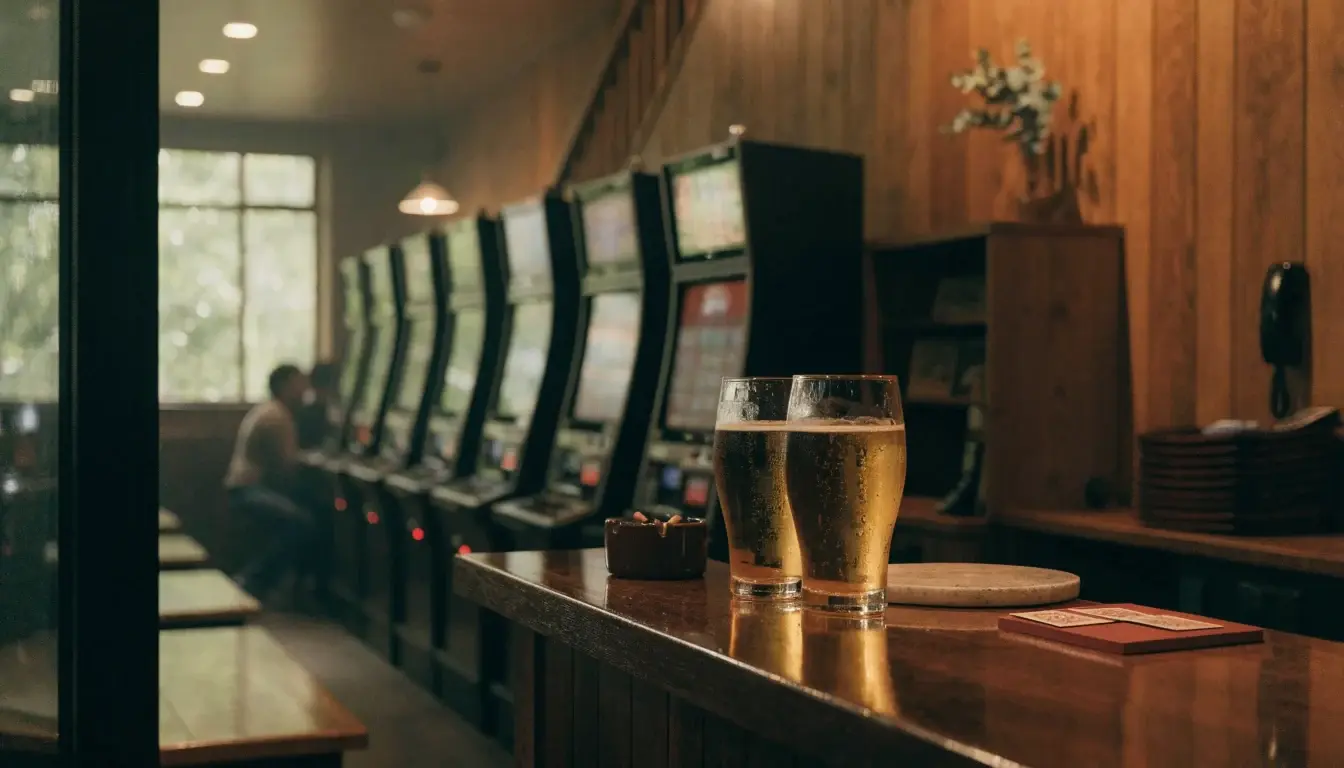
When Tasmanian Gaming Venues Are Open
A venue’s operating status and the status of its pokies are related, but they are not the same measure. A premises may be accessible for other purposes while gaming machines are not operating. The responsible-gambling requirements described here attach to the period when the machines are operating; they do not establish whether a particular Tasmanian venue is open at a particular time.
A report by regionriverina.com.au describes a requirement for venues with more than 20 gaming machines to have a dedicated responsible gambling officer (RGO) on duty while those machines are operating. The trigger is the number of machines at the venue, and the duty period is tied to machine operation. It is not framed as a requirement that applies only at a particular hour or only when a patron asks for assistance.
That distinction matters when interpreting a claim that pokies are open. A posted venue schedule, a staffed premises and operating machines are separate questions. The RGO requirement concerns the last of these for venues above the stated machine threshold. It does not, by itself, establish a venue’s trading hours, confirm that machines are running, or mean that a venue is open now.

The same report describes a one-month grace period for venues to remove signage and introduce responsible gambling officers. That transition period concerns implementation of the measures; it should not be read as a general period during which the requirements cease to matter whenever machines are operating. The practical focus is the venue’s arrangements during machine operation, rather than a promise about when patrons can enter or play.
An RGO’s presence is one part of the venue’s responsible-gambling framework, not a measure of how likely a machine is to pay. It does not change the result of a spin or establish that a venue offers better returns. Keeping those questions separate avoids turning an operational safeguard into a claim about game performance.
The report also describes a gambling incident register for recording occurrences, including behaviour indicating that a patron may be at risk of, or affected by, gambling harm. The register makes the response to an incident part of the venue’s record-keeping, rather than leaving the matter solely to informal recollection. It is a venue obligation associated with responsible-gambling oversight, not a public schedule of when machines are switched on.
 Pokies & Games: Online Slots and Casino GuidesExplore guides to slot formats, volatility, keno, live dealer games, payout speed and casino options across Australian cities and states.
 Pokies in New South Wales: Venue Checks and AccessLearn why a venue’s published hours do not confirm live gaming, and how NSW access, age checks and location searches affect what…
Signage has its own limits in the operating environment. A sign directing patrons to a gaming lounge must not be within sight of an ATM or EFTPOS terminal; a sign directing patrons to an ATM must not be within eyesight of gaming machines. These restrictions matter because signs can influence movement between cash access and play. They do not provide an opening time or indicate whether machines are operating.
For someone assessing whether a venue is open for pokies, the RGO rule is therefore a condition attached to machine operation at venues with more than 20 machines, not a timetable. The incident register and signage controls describe further responsibilities around that activity. None of these measures makes the venue’s doors, other facilities or gaming area available at a particular hour.
This is a narrower and more useful reading of “open” than treating every reference to a venue as proof that play is available. A venue’s general business hours do not alone confirm machine operation, and the presence of a responsible-gambling officer does not certify that a venue is currently open. The RGO duty is tied to operating machines; it is not an announcement of current status.
The operating context also should not be confused with a recommendation. Compliance measures describe duties and records, not a ranking of venues or a reason to prefer one over another. For a venue above the threshold, the reported requirement is specific: a dedicated RGO must be on duty while its gaming machines operate. The register records incidents, while signage restrictions limit directions around cash access and gaming areas. Each item addresses a different part of the environment.
Accordingly, a search for pokies available early or late cannot be answered by the responsible-gambling rules alone. Those rules explain what must accompany machine operation in the circumstances described; they do not establish a statewide schedule or confirm the status of any individual venue. Availability is a separate, venue-specific matter, while the operating safeguards apply during play.
What “Best-Paying” Can—and Cannot—Mean
Finding pokies to play in Tasmania in 2026 means weighing what is known about each casino, including its licence and any stated payment details. Use these brief notes as a starting point when considering your options.
-
JeetCity Casino
- License
- Curacao eGaming (Dama N.V.)
JeetCity Casino is listed with a Curacao eGaming licence held by Dama N.V.
-
House of Pokies
- License
- international iGaming licence – jurisdiction not named in the source
- Payout speed
- PayID 1-24 hours
- Min. deposit
- A$30 (PayID from A$10)
House of Pokies lists an international iGaming licence, though the source does not name the jurisdiction. PayID withdrawals are stated as taking 1–24 hours, and the minimum deposit is A$30, or A$10 for PayID.
-
LuckyVibe
- License
- Curacao Gaming Control Board OGL/2023/176/0095 (Hollycorn N.V.)
LuckyVibe is listed under Curacao Gaming Control Board licence OGL/2023/176/0095, held by Hollycorn N.V.
-
Rollero Casino
- License
- Curacao Gaming Control Board OGL/2023/176/0095 (Hollycorn N.V.)
Rollero Casino is listed under Curacao Gaming Control Board licence OGL/2023/176/0095, held by Hollycorn N.V.
-
Bizzo Casino
- License
- Curacao Gaming Control Board (TechSolutions Group N.V.)
Bizzo Casino is listed with a Curacao Gaming Control Board licence held by TechSolutions Group N.V.
-
Kingmaker
- Payout speed
- crypto ~90 minutes, fiat 1-5 days
- Min. deposit
- A$30
Kingmaker lists crypto payouts at around 90 minutes and fiat payouts at 1–5 days. Its minimum deposit is A$30.
-
Lucky Dreams
- License
- Curacao
- Min. deposit
- A$20 (POLi)
Lucky Dreams lists a Curacao licence and a minimum deposit of A$20 when using POLi.
-
SkyCrown
- License
- Tobique Gaming Commission
- Payout speed
- crypto ~10-15 minutes, fiat 1-5 days
- Min. deposit
- A$30
SkyCrown lists a Tobique Gaming Commission licence. Its stated payout times are around 10–15 minutes for crypto and 1–5 days for fiat; the minimum deposit is A$30.
-
DragonSlots Casino
- License
- Curacao Gaming Authority (Jumpman Gaming Ltd)
DragonSlots Casino is listed with a Curacao Gaming Authority licence held by Jumpman Gaming Ltd.
-
MrPacho
- Payout speed
- crypto 30-120 minutes, fiat 24-72 hours
- Min. deposit
- A$30
MrPacho lists crypto payouts at 30–120 minutes and fiat payouts at 24–72 hours. Its minimum deposit is A$30.
“Best-paying” sounds like a ranking, but a game’s name, theme or recent run of wins cannot establish that it will return more to a player. A title may be familiar across casinos, and one session may end ahead, yet neither detail reveals the return setting in use or predicts the next result. For Tasmania, that distinction matters: claims about the best pokies are meaningful only when they refer to comparable, attributable information about the specific game and its configuration.
A pokie uses a Random Number Generator to determine each spin. The result of one spin does not make a later spin more or less likely to produce a win. A sequence of losses does not create a pending win, and a recent payout does not mean the machine is “hot” or due to pay again. Past results describe what has already happened; they do not provide a reliable forecast of what comes next.
Return to player, or RTP, is a theoretical measure of how much a game is designed to return across a very large number of plays. It is not a promise about the result of an individual session. A player’s experience can differ substantially from that long-run measure because a short run of spins represents only a small set of independent outcomes. A high RTP figure, if accurately reported, therefore does not mean that a player will receive that share back during a visit.
The figure also needs context. A specialist review has reported that some game providers let casinos select between different RTP settings for the same pokie. If that applies to a title, the game name alone does not identify which setting is being used at a particular casino. The same named game could therefore have a different theoretical return in different casino configurations. That report is not evidence that a particular Tasmanian venue uses a particular setting.

This is why a general claim that one game is among the best-paying pokies in Tasmania needs more than a title and a percentage. The setting must be linked to the particular version and casino, and the basis for the claim must be clear. Without that connection, a figure may describe another configuration, another operator, or information that cannot be applied to the game being considered. A precise-looking number is not useful if its subject is unclear.
The same test applies to lists of “best” games. A ranking based on popularity, appearance or a player’s anecdote does not establish a better return. Nor does a past jackpot prove that the game is more generous: a large win is an observed outcome, not a measure of what the next spin will do. A ranking can support a return comparison only if it identifies relevant, comparable settings and explains what the measure represents.
For anyone comparing casino pokies in Tasmania, the practical distinction is between a game’s identity and its return configuration. The title identifies the product; it does not, on its own, reveal the setting chosen by a casino. Even when a published RTP is associated with a game, it describes a theoretical long-run rate, not a personal result or a reliable short-term advantage.
“Best-paying” can therefore describe a properly supported comparison of theoretical return settings. It cannot mean that a game is due to pay, that its past results predict a future win, or that its name guarantees the same return wherever it appears. A claim that omits the casino-specific setting leaves the central comparison unresolved.
Getting to a Venue from the Airport or CBD
A venue described as “near the airport” is only useful if the listing identifies which airport and gives a verifiable street address. Tasmania is not a single arrival point: a broad location label does not establish that a particular venue is close to an airport, or even which airport the result means. The same applies to listings described as near the CBD. Without a named suburb or address, “near” is a label, not a usable travel detail.
For a trip beginning at an airport, the practical check is the venue’s exact address against the intended arrival airport. A map can then show the route and estimated travel time for the selected transport mode. Those results depend on the destination pin being correct; a pin placed on a suburb or general area does not confirm the location of a gaming venue. Venue name, street address and map pin should match before travel is planned.
CBD searches need the same discipline. “CBD” can refer to a central business district, but it does not identify a particular city or venue. A result may be relevant to a city centre while still requiring a separate check of its address and walking or driving route. A listing that merely says “near the CBD” does not establish how close the venue is, whether the route is direct, or whether the entrance is where the map pin appears.

“Near me” results are dependent on the location used by the device or browser. If location access is unavailable or inaccurate, results may be centred on a previous location or a broad area rather than the current position. The distance shown by a map is therefore a starting point for checking, not proof that the venue is the nearest option. Confirm the address and route on the map before relying on a proximity label.
Some location wording can also mix jurisdictions. Tasmania and Victoria are separate states, so a result mentioning both may refer to a comparison, a broad regional category, or a location setting that is not specific enough. It should not be treated as evidence that a Tasmanian venue is close to a Victorian airport or CBD. North Tasmania is similarly broad: it describes a region, not a particular town, address or route.
A useful location listing needs to identify the venue, provide its street address and place its map marker at that address. Airport and CBD labels can then be checked against the intended starting point, rather than treated as evidence on their own. Where those details do not line up, the travel estimate has no firm destination to calculate.
This distinction matters more than a small difference in map wording. “Near the airport,” “in the CBD” and “in northern Tasmania” describe areas at different levels of precision. None, by itself, supplies a verified venue location. For a physical visit, the address and destination pin do the work; the broad label does not.
Do
- Verify the venue's exact street address
- Match the venue name with the map pin
- Confirm the route via a map
Don't
- Rely on broad labels like "near the CBD"
- Assume "near the airport" is a verified location
- Trust proximity labels without address checks
Tasmanian Venues and Gaming-Machine Oversight
Venue oversight concerns what happens inside a gaming room, not whether one venue is better than another. In Tasmania, a useful measure is whether responsibilities are assigned while pokies are operating and whether incidents involving possible gambling harm are recorded. These obligations describe venue processes; they do not establish a ranking of Tasmanian pokies venues.
A report by regionriverina.com.au describes a requirement taking effect from 1 July: a venue operating more than 20 gaming machines is to have a dedicated responsible gambling officer (RGO) on duty during machine operation. The threshold matters. The requirement described in the report applies to venues above it, rather than automatically to every venue with pokies. The RGO’s presence is an operational safeguard, not a rating of the machines or a prediction about any patron’s experience.
The same report says venues will be required to maintain a gambling incident register. It is intended to capture occurrences, including behaviour suggesting that a patron may be at risk of gambling harm or already affected by it. That makes the register a record of events requiring attention, rather than a measure of how much a venue pays out or how popular its machines are.
These two duties work together. An RGO provides an identifiable staff responsibility during machine operation; an incident register creates a record of relevant events. Neither obligation, by itself, tells a visitor which venue has more machines, which games are installed, or what return setting applies to a particular game. Those are separate questions, and the compliance measures should not be mistaken for evidence about them.

For someone comparing venues, the practical distinction is between a documented responsibility and a promotional claim. A statement that a venue has an RGO on duty relates to oversight under the reported requirement. A statement that a venue is “best” needs a defined basis: oversight is not a score, and an incident register is not a customer review. Without comparable venue-level evidence, those labels cannot be turned into a financial comparison.
The register also has a specific purpose. Recording an occurrence does not mean that every patron who plays will be entered, nor does the existence of a register establish that harm has occurred in any particular venue. It provides a way for relevant incidents to be documented. The distinction is material: a process can be required without implying a finding about an individual or a business.
For Tasmania, the reported framework therefore points to two checks when considering venue oversight: whether the machine count puts the venue above the stated threshold, and whether the relevant responsibilities are in place during operation. The register adds an accountability mechanism for incidents associated with possible gambling harm. These details can inform an assessment of how a venue manages its gaming area, but they do not identify a “best pokies venue” or support claims about game quality. A compliance measure has a defined scope; it is not a payout statistic.
Spirit of Tasmania Searches and Online-Casino Claims
References to pokies aboard the Spirit of Tasmania and to casino pokies in Tasmania should be treated as separate claims, not as interchangeable descriptions of a venue. A vessel name or a casino name in a phrase does not, by itself, establish that pokies are available there. The same applies to searches combining “Crown” and “Tasmania”: the wording alone does not identify a particular Tasmanian gaming facility or confirm its machines.
That distinction matters because a claim about a physical location and a claim about online access require different evidence. The name of a ship does not establish an onboard gaming offer, and a casino label does not establish what games a particular venue operates. No inference about facilities should be drawn from the wording of a name alone.
Online offers raise a separate legal issue. The Interactive Gambling Act 2001 prohibits operators from offering real-money online pokies to people in Australia unless they hold a domestic licence. No Australian online casino licence has been issued, so there is no Australian-licensed online casino. A site describing itself as available to Tasmanian players does not change that position.
The law is directed at the operator providing the service, rather than at the individual player. Australians may legally play on offshore sites that accept them, but that does not make those sites Australian-licensed or create a local licensed casino market. The distinction is narrow but important: the legal position for a player is not the same as the legal position for a company offering the games.

Searches for real-money online pokies, or for a no-deposit bonus, therefore do not establish that an Australian-licensed service exists. A bonus is an offer attached to a particular operator’s terms; it is not evidence of a domestic licence. Nor does the phrase “available in Tasmania” establish that an online casino is authorised under Australian law. For real-money online casino games, the relevant regulatory fact is that no Australian licence is available.
Advertising is also not a neutral workaround. Real-money interactive gambling services, including online casinos, cannot be advertised to Australian audiences. That restriction does not turn an offshore operator into a domestic one, and promotional wording cannot alter the licensing position.
The practical categories remain distinct: a claim about pokies on a vessel or at a named physical venue concerns that location; an online offer concerns a service provided by an operator. Neither should be inferred from the other. In particular, an online bonus headline says nothing about onboard facilities, while a venue name says nothing about whether an online casino holds an Australian licence. The legal framework is clear even where a name or promotional phrase is not: operators cannot lawfully offer real-money online pokies to Australians without a domestic licence, and none has been issued.
Opening Hours: What the Search Results Cannot Confirm
A venue’s opening time and the hours when its pokies operate are not necessarily the same thing. A listing may describe when a club, hotel or other venue admits customers, without establishing when gaming machines are available. Those details should not be treated as interchangeable.
There is no single statewide schedule that can be applied to every Tasmanian venue. Opening times are venue-specific, and a broad claim that pokies are available around the clock would require support for each location it covers. The same applies to a claim that a particular venue is open now: it depends on that venue’s current operating status, not on a general description of Tasmanian venues.
The distinction matters when comparing a directory entry with a venue’s own information. A posted business-hours range may refer to the premises or a particular service, rather than the gaming area. A venue can also change its schedule, so an old listing is not a reliable basis for deciding that machines are operating at a particular time.
For a current visit, the useful details are the venue’s own opening hours and whether its gaming area is operating during those hours. Direct confirmation from the venue is more relevant than a general search result, especially when the visit depends on late-night or early-morning access. If those details cannot be confirmed, the practical answer is not to assume that the machines are available.
“Open now” is also a time-sensitive label. It can become inaccurate as a venue changes its hours or closes for a particular period. A map listing or directory may help identify a venue, but its status should not be read as confirmation that pokies are running. The premises may be open while the gaming area is unavailable, or the listing may not reflect a recent change.
For searches about Tasmanian pokies opening hours, the dependable unit of information is therefore the individual venue, not the state as a whole. Any claimed schedule needs to identify what it covers: the premises, the gaming area, or both. Without that distinction, a neat opening-time range can answer the wrong question. Around-the-clock availability should not be inferred from a venue’s general opening hours, and a statewide timetable should not be assumed where each venue’s schedule is separate.
Tasmanian Pokies: Separating Game Claims from Venue Facts
A description of a pokie and a description of a venue answer different questions. A game title identifies a product; it does not establish which machines a Tasmanian venue has installed, how they are configured or whether they are available there now. Likewise, a venue’s location does not identify the games on its floor.
That distinction matters when assessing claims about the “best” pokies in Tasmania. Without an identifiable game and a specific venue context, a ranking has no clear basis. A title mentioned in a general guide is not evidence that a particular Tasmanian club or gaming venue offers it. Nor does a list of familiar games establish anything about the machines currently installed at a particular site.
Maximum-bet and maximum-cash-payout claims need the same care. A figure cannot safely be treated as a Tasmania-wide rule merely because it appears beside a game name or a venue description. It must relate to the specific machine and its applicable terms. A statement about one machine does not establish the terms for every pokie with the same title, still less for all machines across the state.
The useful unit of comparison is therefore narrow: an identifiable game, an identifiable machine or configuration, and a clearly named venue. Without that chain, a claim may be plausible but cannot be assigned to a particular Tasmanian location. “Available in Tasmania” is also not interchangeable with “available at this venue”; the first is a broad market claim, the second a location-specific one.
Venue facts should be treated just as precisely. A description of a club, hotel or other gaming venue can establish where that venue is, but it does not by itself establish its machine inventory. A photograph, old listing or general promotional description may not reflect the current floor. Claims about what is installed need a date and a direct connection to the location being described.
This approach does not rank games by reputation or imply that any one title is more likely to pay. It separates three different claims: what a game is called, what terms apply to a particular machine, and what a specific venue has available. Combining them without evidence turns a general game description into a local promise.
For Tasmania, the defensible wording is consequently specific rather than sweeping. A venue claim should name the venue and the basis for the information; a machine claim should identify the machine and its terms. Anything broader risks presenting a product-level description as a verified fact about a local gaming floor.
Online Play, Mobile Access and Australian Legal Limits
A phone or browser does not change the legal position of online pokies in Tasmania. The Interactive Gambling Act 2001 prohibits operators from providing real-money online casino games to people in Australia, and no Australian licence has been issued for an online casino. There is therefore no domestically licensed online casino offering real-money pokies.
This applies whether play is attempted from a desktop, a mobile browser or an app. A service’s apparent availability on a device is not evidence that it holds an Australian licence or that its games are authorised for Australian customers. ACMA enforces the Act and blocks access to illegal offshore gambling sites; internet service providers must comply with its blocklist. A site that appears reachable should not be treated as a lawful local service.

The legal distinction is between the operator and the player. The Act targets companies that provide prohibited services, rather than making an individual player liable simply for using an offshore casino. That does not create consumer protection. If an offshore operator refuses to pay winnings, an Australian player has no legal recourse in Australia to compel payment. A displayed balance is not the same as money recoverable through a domestic licensing system.
This makes claims about “best-paying” online pokies in Tasmania a poor basis for a financial decision. A website’s payment claims do not establish that it is licensed locally, and access to a mobile site does not establish that winnings can be recovered under Australian law. The risk is not resolved by the game being described as popular, high-limit or available to local users.
BetStop is not a safeguard against that exposure: it applies to Australian-licensed operators and does not bind offshore sites. Because no Australian-licensed online casino exists, BetStop should not be understood as a way to exclude a person from offshore casino services. Its scope matters; treating it as a general block on online gambling would misstate what it can do.
For searches about online play near Tasmania or access from central locations, the relevant distinction is not physical proximity. Online services are governed by the national law, not by how close a device is to a venue. Real-money online casino services remain prohibited when offered to people in Australia, and an offshore operator’s refusal to pay leaves no domestic route to enforce the claim.
CBD Clubs and Responsible-Gambling Requirements
A club’s appeal as a place to play pokies is separate from its responsibilities while machines are in use. For clubs operating gaming machines, the relevant distinction is whether the venue falls within the reported requirements for larger machine rooms. A report published by regionriverina.com.au says that, from 1 July, venues with more than 20 machines are to have a dedicated responsible gambling officer (RGO) on duty whenever those machines are operating. The condition concerns machine operation, not simply whether the club is open.
The same report describes a requirement for venues to maintain a gambling incident register. It is intended to record events that may indicate a patron is at risk of gambling harm or is already affected by it. That makes the register a venue-level record of incidents, rather than a measure of game quality or a guide to which club has the most attractive pokies.
These obligations provide a practical frame for considering clubs in a CBD setting, but they do not establish that a particular club has a particular number of machines, or confirm its current arrangements. Nor does the presence of an RGO indicate that a venue’s pokies pay more. Responsible-gambling oversight and game returns are separate matters.
Self-exclusion is one of the standard responsible-gambling tools available in the broader gambling system. Its presence as an option should not be read as confirmation of a particular club’s process or service. Venue-specific details need to be established with that venue; a general description of club obligations cannot answer whether an individual club accepts an exclusion request, how it administers one, or what areas it covers.
For people comparing CBD clubs, the defensible distinction is between a general requirement and a venue-specific fact. The reported RGO condition applies to venues above the stated machine threshold while their machines are operating; the incident-register requirement concerns recording relevant gambling-harm events. Neither rule ranks clubs or identifies a “best” choice. The useful question is whether the club’s own information clearly explains its responsible-gambling arrangements, including how self-exclusion is handled, rather than treating the existence of a general obligation as proof of a particular service.
Cashless Play and the Limits of Available Information
“Cashless” can describe different parts of a transaction: how funds are accessed, how a venue handles payments, or how play is recorded at a machine. Those functions are not interchangeable. A payment method available for an online account would not establish that a Tasmanian venue uses the same method at its gaming machines.
PayID, for instance, is a transfer alias system within Australia’s New Payments Platform. It can route a bank transfer using an email address, mobile number or ABN. That describes a payment mechanism, not a venue’s cashless-play setup. Nor does PayID support establish that an online casino is licensed, that a pokie’s return settings are transparent, or that a venue accepts PayID for any purpose.
The legal distinction matters. Australian law prohibits operators from providing real-money online casino games to people in Australia, and no Australian-licensed online casino exists. PayID’s role as a bank-transfer mechanism does not change that position.
The phrase linking Newcastle with Tasmania also does not, by itself, identify a Tasmanian venue. A place name in a description is not evidence of a machine’s location, a venue’s payment arrangements or a particular cashless system. Venue claims need to be tied to the venue itself rather than inferred from wording.
For a sound comparison, cashless access should be treated as a separate venue feature from the games offered and their return settings. Without a clearly identified venue and a stated payment arrangement, the term alone cannot establish how funds move, whether a machine is involved, or what conditions apply. Payment convenience is not a measure of game quality; the label does not supply the missing terms.
Are online pokies legal for Australian players?
Yes, Australians can legally play on offshore sites that accept them, but no Australian-licensed online casino exists. The law prohibits operators from offering real-money online pokies to Australians without a domestic licence, and players have no legal recourse in Australia if an offshore casino refuses to pay.
What does “wagering requirement” actually mean?
It is the amount you must bet before bonus winnings can be withdrawn. For example, a $500 bonus with a 40x requirement means $20,000 in bets; if the requirement applies to a $500 deposit plus a $500 bonus at 35x, it means $35,000 in bets.
What is the best payment method for fast withdrawals in Australia?
E-wallets such as Skrill and Neteller are popular for their speed. Check the casino’s withdrawal terms before choosing a method.
Do PayID deposits qualify for bonuses?
Yes. PayID is treated like any other qualifying deposit method at the recommended sites.
What is the minimum PayID deposit?
Most operators set minimum deposits at AU$10 to AU$20, while some accept AU$5.