A guide to location claims, venue details, opening hours and why a “best” label cannot establish pokie availability or returns.

Sydney Search Radius: Nearby Does Not Mean On-Site
“Near Sydney” can describe two different things: a physical venue within a person’s chosen area, or an online service that has been associated with Sydney in its wording. Those are not interchangeable. A place name may narrow a location search, but it does not establish that a venue is inside the city, that a particular pokie is available there, or that a digital service is based there.
For an in-person visit, proximity is a practical question about a real destination. “Nearby” depends on the starting point and the journey considered: a venue might be close by road but inconvenient by public transport, or appear in a broad results area despite being outside the part of Sydney someone has in mind. Without a named, confirmed destination and current location information, there is no dependable distance to calculate. A result appearing in a Sydney list is not a measurement.
The same distinction applies to searches for pokies close to a current location. A device can supply a location, while a search service can use a broad area or a place name. The wording alone does not show which was used. Nor does “near me” mean that a result is necessarily on the same street, within walking distance, or even in the intended neighbourhood. Those details require a specific venue and reliable location data.
Choosing a place to play pokies in Sydney in 2026 means checking the details that matter to you, such as licensing and available payment information. This list offers a concise reference to help you assess the options.
-
JeetCity Casino
- License
- Curacao eGaming (Dama N.V.)
JeetCity Casino is listed with a Curacao eGaming licence held by Dama N.V.
-
House of Pokies
- License
- international iGaming licence – jurisdiction not named in the source
- Payout speed
- PayID 1-24 hours
- Min. deposit
- A$30 (PayID from A$10)
House of Pokies lists an international iGaming licence, though the source does not name the jurisdiction. Its listed PayID payout speed is 1–24 hours, with a A$30 minimum deposit or A$10 when using PayID.
-
LuckyVibe
- License
- Curacao Gaming Control Board OGL/2023/176/0095 (Hollycorn N.V.)
LuckyVibe is listed under Curacao Gaming Control Board licence OGL/2023/176/0095, held by Hollycorn N.V.
-
Rollero Casino
- License
- Curacao Gaming Control Board OGL/2023/176/0095 (Hollycorn N.V.)
Rollero Casino is listed under Curacao Gaming Control Board licence OGL/2023/176/0095, held by Hollycorn N.V.
-
Bizzo Casino
- License
- Curacao Gaming Control Board (TechSolutions Group N.V.)
Bizzo Casino is listed with a Curacao Gaming Control Board licence held by TechSolutions Group N.V.
-
Kingmaker
- Payout speed
- crypto ~90 minutes, fiat 1-5 days
- Min. deposit
- A$30
Kingmaker lists crypto payouts at around 90 minutes and fiat payouts in 1–5 days. Its stated minimum deposit is A$30.
-
Lucky Dreams
- License
- Curacao
- Min. deposit
- A$20 (POLi)
Lucky Dreams lists a Curacao licence and a A$20 minimum deposit when using POLi.
-
SkyCrown
- License
- Tobique Gaming Commission
- Payout speed
- crypto ~10-15 minutes, fiat 1-5 days
- Min. deposit
- A$30
SkyCrown lists a Tobique Gaming Commission licence. Its stated payout speeds are around 10–15 minutes for crypto and 1–5 days for fiat, with a A$30 minimum deposit.
-
DragonSlots Casino
- License
- Curacao Gaming Authority (Jumpman Gaming Ltd)
DragonSlots Casino is listed with a Curacao Gaming Authority licence held by Jumpman Gaming Ltd.
-
MrPacho
- Payout speed
- crypto 30-120 minutes, fiat 24-72 hours
- Min. deposit
- A$30
MrPacho lists crypto payouts in 30–120 minutes and fiat payouts in 24–72 hours. Its stated minimum deposit is A$30.
“On-site” has a narrower meaning than “associated with Sydney”: it refers to a physical place where the activity is offered. A listing, map pin, image, or snippet can suggest a connection without establishing the venue’s actual address or what is available there. The distinction matters because a location label is not evidence of machine availability. A nearby business may have no pokies, and a venue’s presence in an area does not identify its facilities.
Online wording changes the question again. An online service is not physically close to someone in the same way as a venue. A reference to Sydney can describe the intended audience, a location setting, or simply the terms used to find the service; it does not prove that the operator is located in Sydney or that the service is legally available to people in Australia. Real-money online casino games, including pokies, are prohibited when offered to customers in Australia under the Interactive Gambling Act 2001. Geographic language does not change that position.
This is why “online pokies near Sydney” should not be read as a local venue recommendation. It describes an online activity connected in some way with a place, not a confirmed destination to visit. Equally, a physical venue result does not establish anything about online access. The two kinds of result answer different questions and should not be combined into one assumption about local availability.

The city label itself can also be broad. Sydney may mean the central area, a suburb, a wider metropolitan region, or a travel area defined by the person making the search. “Near Sydney” therefore has no fixed boundary on its own. Adding a nearby landmark or suburb can make the intended area clearer, but it still does not confirm that a particular venue exists there or offers pokies. The place name helps describe the desired location; it does not supply the missing venue details.
The useful separation is simple: a physical-location search concerns where a venue is and what it offers; an online-location phrase concerns a service that is not a nearby physical destination. Neither wording, by itself, verifies an address, distance, machine offering, or lawful online access. Treating those as separate questions prevents a geographic label from carrying more meaning than it can support.
Online Pokies and the Australian Legal Position
A search for online pokies associated with Sydney does not establish that a local online casino exists. Australia has no domestically licensed online casino, and the Interactive Gambling Act 2001 prohibits operators from providing real-money online casino games to people in Australia without a domestic licence. No such licences have been issued. This applies to online pokies as well as other casino-style games; a Sydney reference in a site name or page does not change the legal position.
The distinction is between the operator’s conduct and the player’s position. The law targets companies providing prohibited services, rather than imposing a penalty on an individual merely for playing. That does not make an offshore service lawful in Australia, locally regulated, or a dependable place to deposit money. A foreign licence does not substitute for an Australian online-casino licence.
The Australian Communications and Media Authority (ACMA) enforces the Interactive Gambling Act. It blocks access to illegal offshore gambling sites, and internet service providers must comply with its blocklist. A blocked site may therefore be inaccessible through an Australian connection. A site appearing in a search result, or remaining reachable at a particular time, is not evidence that it is approved or protected under Australian law.
The practical risk is jurisdiction
If an offshore casino refuses to pay winnings, an Australian player has no legal recourse in Australia to compel payment. That is a material difference from using a domestic online casino: there is no Australian-licensed online casino to provide that local framework for real-money play. The issue is not simply whether a site accepts a deposit or displays a balance. It is whether a dispute over that balance can be pursued through an Australian remedy. For offshore casinos, the answer is no.
Payment access does not resolve that problem. A site accepting a payment method, including a transfer service, does not demonstrate that the operator holds an Australian licence, that its games are fair, or that a withdrawal will be honoured. Payment functionality is a transaction feature, not regulatory protection. The same applies to promotions described as a no-deposit offer: the wording does not alter the legal status of the service or create a right to collect winnings.

Terms involving cashless play, high limits or a maximum stake also do not change the jurisdictional position. They describe how an operator presents its product, not the protections available to a person in Australia. A “best paying” label is likewise not proof of a local licence or an enforceable payout obligation. These distinctions matter more than a Sydney label attached to an online product.
BetStop must be understood within its stated scope: it applies to Australian-licensed operators and does not bind offshore sites. Since there is no Australian-licensed online casino, BetStop is not a safeguard against gambling through an offshore casino. It should not be treated as a way to prevent access to those services or to enforce a self-exclusion request with them.
Online access and on-site pokies are separate matters. A search connecting Sydney with a casino or pokies does not identify a physical venue, confirm what it offers, or make an offshore website a local casino. For real-money online play, the central facts are that Australian operators cannot lawfully provide these casino services without a domestic licence, none has been issued, and offshore disputes over unpaid winnings cannot be pursued through Australian legal recourse. A deposit may be accepted; that alone settles none of the questions that matter when a withdrawal is refused.
Opening Times: What Search Results Can and Cannot Confirm
An early opening time is a specific requirement, not a general description of a venue. A hotel’s advertised opening hours do not, by themselves, establish when pokies are available. The building may open for one purpose while a particular area operates on a different schedule; a general listing may not distinguish between them.
That distinction matters when comparing Sydney venues. A result showing that a hotel is open in the morning is not enough to establish that its pokie area is open then. Likewise, a venue that operates late does not necessarily offer pokies throughout all of its trading hours. The useful detail is the schedule for the gaming area itself, rather than a broad statement about the premises.
Search terms about pokies opening early can also compress several different questions into one. They may refer to whether any venue opens at that time, whether a particular hotel has pokies available, or whether a machine area remains open after other services have closed. Those are separate conditions. A result that answers one should not be treated as confirmation of the others.
The same care applies to late-night wording. A published closing time for a hotel or club may describe the venue overall, not the last time pokies can be used. If the gaming area has separate operating hours, those need to be stated separately. Otherwise, the apparent answer may be broader than the information supports.
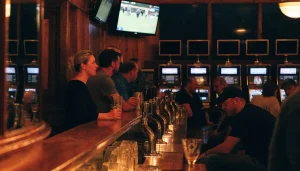
A current listing is most useful when it names the venue, identifies the relevant area and gives its operating hours directly. General directory entries can help identify a business, but they are not necessarily a precise account of every service inside it. Where the listing is unclear, the venue’s own current information is the more relevant point of reference. A dated post or an undated summary should not be treated as a standing timetable.
There is also a difference between an opening time and a guarantee of access. Even a published schedule describes planned operations; it does not establish that every service will be available without interruption. For someone comparing options, the practical question is whether the hours apply to pokies, not simply whether the doors are open.
The phrase “hotel pokies” creates another possible mismatch. It can mean pokies located at a hotel, but it can also lead to results about accommodation, dining or general hotel trading hours. Those details do not answer the machine-area question unless the information explicitly connects them. A venue name and a clear description of the relevant area are therefore more useful than a broad category label.
Do
- Identify a named venue
- Establish that the schedule applies to the pokie area
- Check that information is current
Don't
- Rely on a general hotel opening time
- Assume a late-opening venue offers pokies all hours
- Use dated or undated summaries as timetables
Opening hours also say nothing about payout percentage. A venue’s timetable and a pokie’s return setting are different subjects: one concerns operating time, the other concerns game performance. A result about hours cannot establish a return figure, and a return figure would not show when the venue is open. Combining both into one assumption would produce an answer to neither question.
For an early start, the sound comparison is narrow: identify a named venue, establish that the stated schedule applies to its pokie area, and check that the information is current. Without that link, “open” may describe only the premises. A clock time attached to the wrong part of a venue is precise, but not useful.
Pokie Returns, Randomness and the Limits of a ‘Best’ Claim
A claim that a pokie is among the best in Sydney needs a comparison that holds the relevant conditions constant. A game title alone is not enough. A specialist review reports that some providers give casinos a choice of return-to-player settings for the same pokie. Where that option is used, the same game can have different stated return percentages at different casinos. The name on the screen therefore does not, by itself, establish which setting is in use.
Return to player, or RTP, describes a theoretical share of stakes returned over extended play. It is not a forecast for a particular session, nor a promise that a set proportion will come back to an individual player. Even where a return setting is known, it does not identify what will happen on the next spin. A comparison based only on game names, or on a percentage detached from its setting and context, can give a misleading impression of precision.

Each spin is generated independently by the game’s Random Number Generator. The outcome of an earlier spin does not make a particular result due, and a run of wins or losses does not provide a reliable signal about the next one. Past results are records of what has happened, not inputs that predict the next result. A “best paying” label cannot turn random outcomes into a schedule.
This distinction matters when assessing claims about Sydney casino pokies or pokies in the CBD. A ranking would need comparable return settings for the games being considered, as well as a clear basis for comparison. Without that, the word “best” may refer to a reviewer’s preference, a game’s presentation or an unqualified RTP figure; it does not necessarily mean a higher expected return at a particular venue. No game can be declared the best-paying option simply from its title.
The same caution applies to online comparisons. A game’s published return figure may not settle what setting a particular casino has selected. Payment method, presentation and popularity are separate from RTP and do not establish the game’s return setting or predict its results. A neat percentage is useful only when its conditions are clear; otherwise, it is packaging around an unknown setting.
For anyone comparing pokies in Sydney, the defensible question is not which title has the most convincing reputation, but whether the return setting is identified and comparable. Even then, RTP describes a theoretical property across play, while the RNG determines each individual outcome independently. That leaves room to compare stated settings, but not to forecast a session or treat a “best” claim as a promise of payment.
Airport and North Sydney Searches: No Verified Venue Details
A reference to Sydney Airport does not, by itself, establish that pokies are available inside the airport. It may point to the terminal, airport grounds, nearby businesses or the wider area around the airport. Those are different locations, and a result associated with one does not confirm an offering at another.
The same distinction applies to North Sydney. A place name can describe a suburb, a wider district or a nearby venue’s location. None of those labels alone confirms that a particular premises has pokies. The practical question is the exact venue and its current offering, not whether a broad area appears in a listing.
For a visit centred on the airport, the distinction matters because travel time and access depend on the actual address. A venue described as “near the airport” is not necessarily within the airport, at a terminal or convenient to a particular flight itinerary. Likewise, a North Sydney listing should not be treated as a CBD listing: the location named needs to match the intended destination.
A sensible comparison starts with a venue’s own address and information about its facilities. A map pin or category label can help identify a place, but it is not a machine inventory. Search snippets may combine a business name, location and general casino terminology without establishing that pokies are present at that address. The label is not the premises.

The phrase “maximum cash payout” also needs careful reading. A machine’s possible prize, a venue’s payout procedure and the amount that can be received in cash are not necessarily the same thing. A headline prize does not, on its own, state how a particular venue handles payment. Without terms tied to the specific machine and premises, a maximum figure is not a usable basis for comparing locations. A number without its conditions is decoration with accounting ambitions.
The same caution applies to references to Sydney City. That wording may mean the central area generally, rather than either the airport or North Sydney. Moving between those place names changes the location under consideration; it does not establish a common venue or a common pokie offering.
For airport and North Sydney searches, the reliable unit of comparison is therefore a named premises, its exact address and information that applies to that premises. Broad geography can narrow a destination, but it cannot settle whether pokies are available there or what payout terms apply.
Crown Sydney: What This Page Can Verify
The name Crown Sydney does not, by itself, establish that a pokie room operates there or identify any machines available. A venue name and a claim about its pokie offering are separate things. Treating the first as proof of the second would turn an assumption into a venue detail.
That distinction matters for searches about Crown Sydney pokies, whether the wording refers to a casino, a particular room or a specific game. Nor is there a basis for calling any room at the venue the best in Sydney.
“Best” also needs a defined measure. It might mean a particular game, a return setting, the range of machines, or some other feature. It is a verdict without a disclosed calculation.
A useful venue description would need to distinguish between the venue’s general identity and the specific service being claimed. A current, venue-specific statement would be needed to establish whether pokies are offered, what the offering includes and whether the relevant detail applies at the time in question. A name, an old mention or an assumption based on the word “casino” does not settle those points.

The same standard applies to a claim about a separate pokie room. A room’s existence, its purpose and the machines in it are distinct details; none follows automatically from a venue name.
For anyone comparing venues, the practical distinction is between a confirmed detail and an inference. A confirmed detail identifies what the venue states about its own offering and when that information applies. An inference fills the gap from the venue’s name or reputation. Those are not equivalent inputs, and they should not be treated as such in a comparison.
Venue Operations and Responsible-Gambling Requirements
A venue’s machine count matters to its operating obligations. A report published by regionriverina.com.au says that, from 1 July, a venue with more than 20 gaming machines must have a dedicated responsible gambling officer (RGO) on duty whenever those machines are running. The requirement is tied to operation: an officer being on duty at another time does not meet the stated condition.
The same report describes a one-month grace period for venues to introduce the officer role and remove signage. That transition period is a specific part of the reported change, not evidence that every venue has completed it. Nor does the presence of an RGO, by itself, establish that a venue is a better place to play. It is a staffing requirement, not a rating of the pokies, their returns or the venue’s overall quality.
A gambling incident register is another part of the reported venue requirements. It is intended to capture details of relevant occurrences, including situations where a patron’s behaviour indicates possible gambling harm or risk. The register makes those incidents a matter for formal recording rather than an informal observation alone. The requirement concerns venue operations; it does not establish what action was taken in any particular case.
For someone comparing pokies venues in Sydney, these rules give a narrower and more useful test than the word “best”. The key operational questions are whether the venue falls above the machine-count threshold, whether an RGO is on duty while its machines are operating, and whether incidents of concern are recorded. Those conditions do not identify a particular Sydney venue or confirm that a specific venue meets them. A venue name or promotional description cannot answer those questions on its own.
The distinction also matters for venues in the CBD. A central location does not change the stated threshold or the duty attached to operating the machines. The same operational standard applies wherever a venue falls within the reported category. A ranking based on location, atmosphere or machine selection would therefore be separate from compliance with these requirements. The available operational criteria support a limited assessment: staffing and incident recording can be considered, but they do not establish which pokies venue is “best”.
24-Hour Pokies and Venue Hours: No Schedule Is Verified
A claim that a venue is open around the clock needs to cover more than its doors. It should establish that the venue is operating continuously and that pokies are available during the relevant hours. Those are separate conditions: an open venue does not, by itself, confirm that its gaming area is operating.
The wording “24-hour pokies in Sydney” is not proof that a Sydney venue offers uninterrupted access. Nor does a listing marked “open now” settle how long it will remain open or whether pokies are available at that time. These labels can describe different things, so treating them as a confirmed overnight schedule would turn a broad description into a specific operating claim.
Opening hours also depend on the particular venue and the date. A schedule for one location cannot establish the hours of another, and a general reference to Sydney does not identify a venue or its operating arrangements. Current hours are therefore a venue-level detail, not a city-wide timetable.
For a useful check, the information needs to match the intended visit: the venue’s own current hours, the day in question, and whether pokies are operating during the stated period. If those details are not aligned, “open” may answer only whether some part of the venue is accessible. It does not necessarily answer whether the gaming area is available.
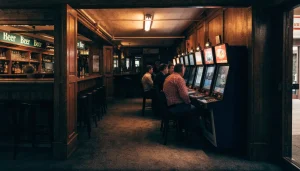
This distinction matters most for late-night and overnight plans. A venue may have operating hours that cover part of the night without running continuously, while a general description of all-day access may not specify the pokies’ hours. Without a schedule tied to a specific venue and date, neither interpretation can be assumed.
The practical distinction is simple: “open now” is a momentary status; “open 24 hours” is a continuous-hours claim; and pokies availability is a separate question. A location name or broad Sydney listing cannot substitute for those details. No Sydney venue can be identified as operating around the clock on the strength of the wording alone.
Sydney CBD Clubs and Pokies
A club’s presence in Sydney’s central business district does not, by itself, establish that it has pokies. The same distinction applies to a venue description that mentions gaming: it is not a confirmed account of the machines available at a particular location. A “best” label is therefore not a usable comparison unless it rests on details that can be checked, such as the venue’s actual offering and current conditions.
Club searches can also blur two different things: a physical venue in the CBD and online access associated with Sydney. They are not interchangeable. Real-money online casino games, including pokies, cannot lawfully be provided to people in Australia by operators under the Interactive Gambling Act 2001. The Act targets providers rather than individual players, but that does not make an offshore service an Australian-regulated option.
For a practical venue decision, the relevant details are location, entry conditions, available facilities and operating arrangements. Those are venue-specific, not consequences of the words “CBD club”. Without confirmed particulars, naming a club or describing its machine floor would turn a search label into a claim.
Self-exclusion is a separate issue from choosing a venue. It is among the standard responsible-gambling tools, alongside deposit, loss and session-time limits. BetStop has a narrower scope: it applies to Australian-licensed operators and does not bind offshore sites. That distinction matters because Australia has no licensed online casino; a BetStop registration should not be treated as a block on every gambling service accessible online.

The legal age for gambling in Australia is 18. For venue-based play, self-exclusion arrangements and other controls concern the relevant operator or venue; they should not be assumed to follow automatically from a CBD location or club membership. The same caution applies in reverse: a search for self-exclusion in Sydney does not identify a particular club’s process. A useful comparison requires the venue’s own current terms, not an inference from its category or postcode.
Parkes and Sydney Pokies: Resolving the Place-Name Ambiguity
Parkes and Sydney do not, by themselves, identify one precise place to play. A request involving Parkes may refer to a locality called Parkes, while “Sydney” may be intended as the broader area or as part of a more specific address. The wording needs a location attached to it before it can point to a particular venue.
That distinction matters because a place name is not evidence of a pokie offering. A result associated with Parkes cannot be treated as a Sydney venue simply because both names appear in the same phrase. Nor does a Sydney label establish that a venue is in the intended part of the city. Those are separate details, not interchangeable descriptions.
A useful comparison starts with the full venue name and its stated location. The next checks are whether the address matches the intended place and whether the venue itself confirms that pokies are available. Without those details, a claim that a site has the “best” pokies in Sydney—or in Parkes—has no defined basis. “Best” could refer to different things, and the place name alone settles none of them.
The same care applies when a venue appears in a directory or map listing. A listing can help distinguish locations, but it should not be read as confirmation of current machine availability. The venue’s own information is the relevant point of reference for its offering; a nearby or similarly named result does not answer that question.
For a search combining Parkes and Sydney, the practical task is therefore to identify which place is meant, then assess any named venue on its own details. Until the locality and venue are clear, a recommendation would risk sending the reader to the wrong place—or implying an offering that has not been established.
Are online pokies legal for Australian players?
Australian law prohibits companies from offering real-money online pokies to people in Australia without a domestic licence, and no such licences have been issued. The law targets operators, not individual players, but playing on an offshore site does not make it Australian-licensed or give you local legal recourse if it withholds your winnings.
What does a wagering requirement actually mean?
It is the amount you must bet before bonus winnings can be withdrawn. For example, a $500 bonus with a 40x requirement means $20,000 in bets; if the requirement applies to a $500 deposit plus a $500 bonus at 35x, it means $35,000 in bets.
What is the cost-benefit calculation of casino promotions?
Compare the bonus with the amount you must wager to unlock winnings, and check for cash-out caps. For example, a $500 bonus at 40x requires $20,000 in bets, while a 35x requirement on a $500 deposit plus a $500 bonus requires $35,000.