Opening hours and broad listings are only starting points; availability depends on current venue information and the details of each search.

Opening Hours Are a Venue Check, Not a Guarantee
A NSW venue’s opening status is a local, time-sensitive detail. There is no single statewide schedule that establishes whether pokies are available at a particular club or venue at a particular moment. A broad result saying that NSW pokies are open cannot confirm the status of an individual venue; the practical check is the venue’s own current information.
That distinction matters when the question is whether pokies are open now. A venue may have published opening hours, but those hours are not a live confirmation that it is open at the moment of arrival. Nor does a general listing establish that the gaming area is operating. The venue is the relevant source for both points, and its latest direct update is more useful than an undated summary.
Searches for early or late opening times create the same problem. A request for pokies early in the morning, or for a venue open late, does not identify one statewide answer. Opening arrangements belong to individual venues. A time that applies to one location cannot be assumed to apply elsewhere, and a past listing should not be treated as a current schedule. Without a current venue-specific confirmation, a precise opening time would be guesswork.
For NSW players considering pokies, it is worth checking what is known about an operator’s licensing and payment options before choosing where to play. This list provides a concise starting point using the details available for each operator.
-
JeetCity Casino
- License
- Curacao eGaming (Dama N.V.)
JeetCity Casino is listed with a Curacao eGaming licence held by Dama N.V. The available details are limited to its licensing.
-
House of Pokies
- License
- international iGaming licence – jurisdiction not named in the source
- Payout speed
- PayID 1-24 hours
- Min. deposit
- A$30 (PayID from A$10)
House of Pokies lists PayID withdrawals at 1–24 hours and a minimum deposit of A$30, or A$10 via PayID. Its source describes its licence as international but does not name the jurisdiction.
-
LuckyVibe
- License
- Curacao Gaming Control Board OGL/2023/176/0095 (Hollycorn N.V.)
LuckyVibe is listed with Curacao Gaming Control Board licence OGL/2023/176/0095, held by Hollycorn N.V. No other operator details are provided here.
-
Rollero Casino
- License
- Curacao Gaming Control Board OGL/2023/176/0095 (Hollycorn N.V.)
Rollero Casino is listed with Curacao Gaming Control Board licence OGL/2023/176/0095, held by Hollycorn N.V. The available details are limited to its licensing.
-
Bizzo Casino
- License
- Curacao Gaming Control Board (TechSolutions Group N.V.)
Bizzo Casino is listed with a Curacao Gaming Control Board licence held by TechSolutions Group N.V. No further details are available here.
-
Kingmaker
- Payout speed
- crypto ~90 minutes, fiat 1-5 days
- Min. deposit
- A$30
Kingmaker lists crypto payouts at approximately 90 minutes and fiat payouts at 1–5 days. Its minimum deposit is A$30.
-
Lucky Dreams
- License
- Curacao
- Min. deposit
- A$20 (POLi)
Lucky Dreams is listed with a Curacao licence and a minimum deposit of A$20 via POLi.
-
SkyCrown
- License
- Tobique Gaming Commission
- Payout speed
- crypto ~10-15 minutes, fiat 1-5 days
- Min. deposit
- A$30
SkyCrown is listed with a Tobique Gaming Commission licence. It lists crypto payouts at approximately 10–15 minutes, fiat payouts at 1–5 days, and a minimum deposit of A$30.
-
DragonSlots Casino
- License
- Curacao Gaming Authority (Jumpman Gaming Ltd)
DragonSlots Casino is listed with a Curacao Gaming Authority licence held by Jumpman Gaming Ltd. The available details are limited to its licensing.
-
MrPacho
- Payout speed
- crypto 30-120 minutes, fiat 24-72 hours
- Min. deposit
- A$30
MrPacho lists crypto payouts at 30–120 minutes and fiat payouts at 24–72 hours. Its minimum deposit is A$30.
The useful check is narrow: confirm that the particular venue is open at the intended time, and confirm that its pokies area is available then. A general business-hours panel may answer only the first question. If the listing is unclear, outdated or silent about the gaming area, direct confirmation from the venue is the more reliable next step. This is not a guarantee that conditions will remain unchanged; it is a way to avoid relying on information that does not answer the immediate question.
The wording of a listing also matters. “Open” can refer to the venue as a whole, rather than to every service or room inside it. An entry that shows operating hours therefore should not automatically be read as a statement about pokie availability. When the purpose of the visit is specifically to play, the relevant confirmation is not merely that the address is open, but that the intended area is operating.
A result can also be incomplete without being obviously wrong. It may show regular hours but omit a temporary change, or it may have been updated without making clear what the hours cover. Those possibilities are reasons to check the venue directly, not grounds for assuming that every listing is inaccurate. The calculation is simple: if the trip depends on a venue being open, uncertainty about its current status has a practical cost.
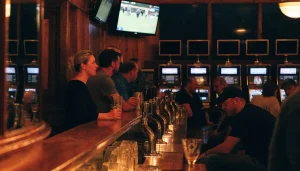
This is particularly relevant when comparing several possible destinations. A statewide phrase such as “pokies open in NSW” is too broad to settle a venue-level question. Each candidate needs its own check. A venue’s location in NSW does not make its opening hours transferable to another venue, and an earlier confirmation does not necessarily settle a later visit. The result should be treated as a snapshot of what the venue has stated, not as a standing promise.
The same caution applies when a result appears to answer a specific early-opening or late-opening query. The phrase may match the requested time without showing that the information is current or that it refers to the gaming area. A published schedule can help narrow the decision, but where timing is decisive, a direct confirmation is the stronger basis for planning. No statewide statement can substitute for that venue-level check.
Opening status should also be kept separate from claims about payout percentage. A venue’s hours do not establish anything about the return of a particular pokie, and a payout figure does not show that the venue is open. These are different questions and require different information. Combining them in one listing does not make either answer more current.
For a time-sensitive visit, the sound approach is to identify the specific venue, check its current opening information, and confirm that the gaming area is available if the listing does not say. If that confirmation cannot be obtained, the status remains uncertain. A broad NSW result may point towards places to investigate; it cannot certify that a particular venue is open now.
What Pokie Names and Return Figures Actually Tell You
A game title identifies a product, not its likely return. Dragon Link, Lightning Link, Wolf Treasure, Book of Ra, Gonzo’s Quest, Mega Moolah and Starburst can be compared by their published rules and figures, but their names alone do not establish which pays more. A familiar title is not a performance measure.
The first distinction is between a game’s mechanics and its outcomes. Mechanics describe what happens during play: how symbols form combinations, whether special features can occur and how any bonus round is entered. Those rules help explain the shape of the game, but they do not predict the result of a particular spin. A feature that sounds generous in a title or description is still a feature, not a promise of a return.
Every online pokie uses a Random Number Generator (RNG) to determine outcomes. Spins are independent: the RNG does not keep score, and a previous result does not make a particular result more or less likely on the next spin. A losing run is not evidence that a win is due; a recent win does not make another one due either. Increasing bets to recover losses changes the amount at risk, not the underlying outcome. A session budget based on the available bankroll, with no chasing losses, keeps that distinction visible.
RTP, or return to player, is a theoretical percentage of wagered money returned across a very large number of spins. It is a long-run measure, not a forecast for an individual session. A player may receive less than the theoretical return, more than it, or no meaningful indication of it over a short run. The figure cannot tell when a return will happen, how large a particular win will be, or whether a specific session will finish ahead.

That makes RTP useful only when the comparison is like for like and the figure is clearly attached to the game being assessed. Without a stated RTP for a named title, there is no basis for ranking it by return. Nor does a higher theoretical RTP, by itself, establish that a game is the “best paying” choice for a particular player: it describes an aggregate expectation over many spins, not a cash outcome on demand.
Progressive jackpot pokies have another component. A small portion of each bet is added to a pooled jackpot, which grows as play contributes to it. The growing prize is not the same thing as the game’s ordinary RTP, and its size is not a measure of how likely a player is to win it. The distinction matters when comparing a headline jackpot with the return figure: one describes a growing pool, the other a long-run theoretical return.
The names above should therefore be treated as starting points for checking game rules, not as a ranking. Where a game has a progressive jackpot, the rules should say how that feature works; where a return figure is published, it should be read as a theoretical long-run measure. A title, a feature description and an RTP answer different questions. Combining them into a single claim about which pokie pays best would turn unlike measures into a verdict the figures do not support.
Do
- Identify the game's rules
- Check for jackpot features
- Read RTP as a long-run measure
- Keep stakes within a session budget
Don't
- Use game names to predict returns
- Assume a win is due after a losing run
- Chase losses by increasing bets
- Treat RTP as a short-term forecast
For a practical comparison, the order is simple: identify the game’s rules, check whether a jackpot feature is involved, and read any stated RTP with its long-run meaning intact. Then keep the stake within a session budget. None of those details removes the independence of each spin, and none converts an uncertain result into a dependable source of money.
Online Pokies in NSW: Access, Restrictions and the Legal Boundary
An online service can display pokies without being lawful to offer them in Australia. Under the Interactive Gambling Act 2001, operators based in Australia cannot provide real-money online casino games to people located here. That prohibition covers pokies, even when a site presents itself as a NSW casino or promotes play for real money.
Offshore platforms sit on a different side of the operator question, but not outside the legal boundary. Australian players are not made criminals simply by using an offshore casino; however, those platforms are not regulated under Australian law, and their services remain prohibited for operators to supply to people in Australia. A foreign gambling licence does not turn an online casino into an Australian-authorised service. The distinction is between the player’s position and the operator’s obligations, not a local endorsement of offshore play.
That distinction matters when a site advertises a no-deposit offer or describes its games as available to NSW customers. A promotional label does not establish that the service can lawfully be supplied in Australia. Nor does a claim about high limits or the best-paying pokies establish an expected return: the offer and the legal status are separate questions, and neither is resolved by wording on a lobby page.

Access can also differ by location. Online casinos and software providers may use a player’s IP address to estimate the country of access and restrict games or entire providers accordingly. A pokie visible in one country may be absent from the lobby when the same service is opened from an Australian IP address. A game that fails to load may also be subject to a regional restriction, rather than a fault that can be solved by repeatedly refreshing the page.
A VPN can make an internet connection appear to come from another country, but that does not change the player’s physical location or the operator’s legal position. Using a VPN to reach region-blocked pokies breaches the site’s terms of service and may lead to account suspension. It can also leave an account, balance or withdrawal request exposed to a dispute about the access conditions. A changed IP address is not a change of jurisdiction.
The legal position should not be confused with the availability of sports betting. Online casino-style games are treated differently under Australian law; the fact that one gambling product can be offered online does not make pokies lawful for an Australian-run casino to provide. All gambling sites operating lawfully in Australia must hold an ILGA licence, but that requirement does not create an Australian online-casino licence for real-money pokies.
The practical result for NSW is narrow: an offshore site may be technically reachable, and its games may sometimes appear, but reachability is not authorisation. A licence issued overseas does not place the service under Australian regulation, and regional access controls can remove games from view. “Online pokies near NSW” therefore describes no meaningful local category of lawful online venue; online access is governed by the operator’s location, Australian law and the site’s own restrictions.
Searching Near an Airport, the CBD or Across the Border
A venue described as “near the airport” could mean a club within the airport precinct, a venue in a nearby suburb or somewhere reachable by road. Those are different location claims. A broad NSW pokies listing does not, by itself, identify which venue is closest to an airport or establish that poker machines are available inside an airport.
The same distinction applies to a CBD search. “In the CBD” suggests a venue within a central business district; “near the CBD” can cover a much wider area. Without a named venue and a confirmed address, neither phrase gives a dependable measure of distance. A venue’s presence in a statewide list is not evidence that it is central, close to a station or convenient from a particular address.
“Near me” is even more dependent on the location being measured. The result can change with the starting point, the route and whether distance means a straight line or a journey by road or public transport. A map pin may establish where a venue is located, but it does not establish the availability of pokie machines there. Those are separate details and need to be checked separately.

Border searches need the same care. Northern NSW and the NSW–Victoria border refer to very different parts of the state. A result for one area should not be treated as a result for the other, and a venue’s proximity to a state boundary does not establish which side of it the venue occupies. Statewide wording can conceal that distinction rather than resolve it.
The practical check is to narrow the place first: the airport, suburb, CBD or border town, followed by the venue’s confirmed address. Then establish whether the venue actually has Electronic Gaming Machines (EGMs). A place name, map result or broad category label cannot settle both questions. Until both location and offering are confirmed, “near” is a description without a measured distance.
This matters most when a search appears to return a definitive answer. A prominent result may be prominent because it matches the wording, not because it is the closest venue. Results can also combine different meanings of “near”: a short road trip, a neighbouring suburb or an area that shares the same regional label. None is interchangeable with a verified proximity comparison.
For airport and CBD searches, the useful distinction is therefore between a venue’s address and a claim about its distance from the requested landmark. For border searches, it is between regional association and an exact location on the relevant side. Without those particulars, naming a nearest venue would imply precision that the location information does not support.
NSW Pokies Venues: What the Verified Club Count Shows
For a statewide comparison of clubs, one measurable distinction is available: Club Liverpool leads NSW clubs in the number of poker machines currently operating. That places it first on a count of machines, not on a general measure of venue quality. The distinction matters because a larger machine floor does not, by itself, establish better games, better value or a better overall experience.
A count answers a narrow question: how many machines are operational at a club? It does not describe the individual games, their mechanics or their return figures. Nor does it establish how a venue compares on facilities, atmosphere or other features that may matter to a visitor. Those are separate measures, and the machine count cannot stand in for them.
This makes the phrase “best pokies venue in NSW” less precise than it sounds. Best by what measure: machine availability, a particular game, the venue itself, or another preference? The confirmed statewide comparison supports only one answer: Club Liverpool has the largest operational machine count among NSW clubs. Treating that as an all-purpose ranking would turn a factual distinction into a claim it does not support.
The word “operational” also narrows the meaning of the comparison. It refers to machines in service, rather than every machine a club might own or have on its premises. A venue’s count can therefore be useful when the question is specifically about scale, but it does not settle whether a particular visit will suit someone’s needs. Scale is a quantity, not a verdict.
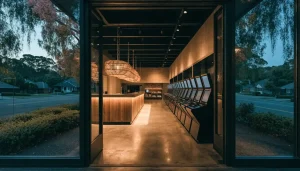
For a practical comparison, separate the questions before drawing a conclusion. A machine-count comparison can identify the club with the largest operating floor. Game-specific questions require information about the games themselves. Judgments about the venue require criteria beyond the number of machines. Combining these into a single ranking obscures what the evidence actually measures.
That distinction is especially relevant when a statewide result is used to infer something about an individual venue. Club Liverpool’s position among NSW clubs is a clear count-based result; it is not evidence that every visitor will find it preferable, or that its machines offer a particular outcome. No machine count can make a game’s next result predictable.
The defensible comparison is therefore deliberately limited. Club Liverpool is the NSW club with the greatest number of operational poker machines. That fact can guide a comparison based on venue scale. It cannot, on its own, identify the best venue for every purpose. A ranking that goes further would need additional measures, and those measures should be stated rather than smuggled into the word “best.”
Age Checks and the Limits of 24-Hour Searches
A listing that appears to describe a venue as open around the clock does not, by itself, establish that poker-machine play is available at every hour. A venue’s general operating status and the hours applying to its Electronic Gaming Machines (EGMs) are separate details. The distinction matters when planning a visit: a result marked “open now” is not a confirmed schedule for play.
- Electronic Gaming Machines (EGMs)
-
Electronic poker machines used in NSW venues, which may have different operating hours than the venue itself.
No statewide schedule can be inferred from a broad description of NSW venues. Hours may be specific to an individual venue, and a label or directory entry may not answer whether gaming is available at the time of arrival. The practical check is with the venue itself, using its current information rather than treating a general “24-hour” description as a guarantee. If that detail cannot be confirmed, the opening status remains uncertain.
The same caution applies to searches for NSW pokies opening hours. A search result may identify a venue or repeat an operating-hours label, but it should not be read as proof of machine access throughout those hours. “Open” and “pokies available” are not interchangeable statements. For a time-sensitive visit, only information that specifically covers the relevant venue and gaming hours answers the question.
Age is a separate condition, and it is clear: gambling on poker machines in NSW is restricted to people aged 18 or older. Being old enough does not establish that a venue is open or that its machines are available; it only meets the age threshold for play. Likewise, an apparent 24-hour listing does not change that threshold.
A venue may check identification to establish eligibility. Age should therefore be treated as a condition of access, not as a detail to resolve after arriving. Anyone under 18 is not legally eligible to gamble on poker machines in NSW. For eligible adults, time and age remain separate checks: the venue’s current hours determine whether a visit is viable, while the age requirement determines whether play is permitted.

A sensible decision sequence is therefore narrow: confirm the specific venue’s current operating information, establish whether that information covers EGM availability, and account for the NSW age requirement. A broad claim of continuous opening cannot substitute for those checks. Nor does a result appearing current provide a reliable basis for assuming that conditions will remain the same at arrival. Where the venue does not confirm the relevant hours, a planned visit cannot be treated as assured.
Pokies in Parkes: What Can Be Confirmed
A NSW-wide description cannot establish what is available in Parkes. State-level information and town-level venue details answer different questions: the first concerns the broader market, while the second depends on the particular club or venue and its Electronic Gaming Machines (EGMs).
That distinction matters when comparing the best pokies in NSW with options in Parkes. A game’s name or reputation does not show that it is installed at a particular venue. Nor does a statewide statement about clubs establish a Parkes machine count, a specific address or a local operating schedule. Those are separate venue details, not conclusions that follow from general NSW information.
A useful Parkes comparison would therefore be built from venue-specific details: whether a named venue has EGMs, which games are available there, and whether the information applies to the venue at the time of the visit. Without those details, a ranked list of Parkes venues would imply a level of local comparison that has not been established. The same restraint applies to claims that one local venue has the widest choice or is the town’s “best” option.
The broader category of NSW pokies can still provide context, but it should not be mistaken for a local inventory. A statewide club comparison, for instance, cannot be converted into a Parkes ranking simply because both concern NSW. Machine counts and venue positions only mean something when tied to the places and scope they describe.
Port Macquarie is also a separate local question. Information about one town cannot be carried over to the other, and a general account of NSW venues does not prove that a particular game or machine is present in either location. Treating the two places as interchangeable would turn a broad label into a false local claim.
For Parkes, the defensible distinction is between general NSW context and details attached to an individual venue. Any statement about a particular club, its machines or its games needs to be supported at that same local level. Where that connection is absent, the honest result is not a recommendation or ranking, but a narrower description of what the statewide information can—and cannot—say.
Crown NSW Searches and the Evidence Gap
The name Crown can point to a casino operator, but that alone does not establish which Crown property or pokie facilities are available in New South Wales. Crown Sydney is a named casino operator in the state context; its name is not evidence of a particular pokie room, machine selection or payout rule.
That distinction matters when comparing venues. A search for Crown pokies may combine several separate questions: whether a venue operates poker machines, which games it has, whether a dedicated room exists, and what conditions apply to cash payouts. Those details need to be tied to a specific venue and current terms. A brand name cannot answer them by itself.

Nor does “best pokies room” have a single measurable meaning. It could refer to game choice, location, facilities or payment conditions, each of which would require separate evidence. Without a stated comparison measure, calling one room the best is a promotional label rather than a useful assessment.
Maximum cash payout is another condition that should not be inferred from a game name or casino brand. A payout ceiling, where one applies, is a venue or operator term; it can also differ from the amount a machine may display as a potential prize. The distinction is financial, not cosmetic: a headline jackpot does not by itself describe how winnings are paid.
The broader legal setting also limits what a NSW Crown search can mean. The Interactive Gambling Act 2001 prohibits operators from providing real-money online casino games, including pokies, to people physically located in Australia. That rule concerns online services; it should not be confused with claims about a physical venue. Conversely, the existence of a Crown-branded property does not establish an online pokie service for Australian players.
A useful comparison therefore needs a named venue and a specific condition to assess. Brand recognition may help identify what a person intends to investigate, but it does not verify the room, game catalogue or cash-payout maximum. Treating those as established from the name alone would turn a search phrase into a venue claim—and a weak basis for a money decision.
Understanding Cash Payouts
Maximum cash payouts are venue or operator terms and may differ from the potential prize displayed by a machine. These conditions are separate from the casino brand name.
CBD Clubs and the Statewide Venue Comparison
A club with pokies in a central business district is a local option; a statewide comparison answers a different question. A venue’s position in a state-level machine-count comparison does not establish that it is in a CBD, nor does it show that it suits someone looking for a nearby club.
The confirmed statewide comparison places Club Liverpool first among NSW clubs for operational poker machines. That is a machine-count fact, not a rating of game quality, service or location. It does not make Club Liverpool a CBD venue, and it cannot be used to rank clubs within a particular city centre.
For a CBD choice, the relevant details are venue-specific: its address, whether it operates poker machines and any conditions for entry or play. A statewide count cannot supply those details. Nor does the word “best” resolve the comparison: without a stated criterion, it could mean location, machine numbers or something else, and those are not interchangeable measures.

Age is a separate condition. Poker-machine gambling in NSW is restricted to people aged 18 or older, and venues must check identification. Someone below that legal age cannot lawfully play; a venue may refuse access to the machines when age requirements are not met.
Self-exclusion should not be confused with the state’s mandatory pre-commitment system. Pre-commitment requires a player to set a loss limit before playing. That is a safeguard relating to a limit on losses, not evidence that a particular CBD club offers a self-exclusion process or that a statewide machine comparison ranks venues by such support. Details of any venue-based self-exclusion arrangements need to be confirmed with the relevant venue or responsible gambling service.
The practical comparison is therefore narrow. Club Liverpool’s position describes operational machine numbers among NSW clubs. It does not identify the best pokies in a CBD, establish which CBD clubs have machines, or measure the safeguards available at each location. A local decision and a statewide count should remain separate calculations.

Newcastle Searches and Cashless Play Are Separate Questions
A Newcastle venue search and a cashless-gaming search concern different things. One is about location; the other is about how play is funded or managed. Combining the terms does not establish that a particular venue offers cashless play, or that a cashless option determines which venue is best.
The relevant NSW safeguard is mandatory pre-commitment: a player must set a loss limit before playing. That condition concerns the limit set for gambling. It is not a cashless payment method, and it does not show that a machine accepts digital payments or that a venue has introduced cashless gaming.
The distinction matters because the two terms can sound related while answering separate practical questions. Cashless gaming describes a way of handling play without relying on cash at the machine. Pre-commitment sets a boundary on losses before play begins. A loss limit is therefore a gambling-control condition, not proof of a payment feature.
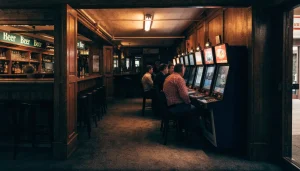
For comparisons involving Newcastle, venue location and machine or payment features should be assessed independently. A list of venues, even if it identifies places in the city, would not by itself establish cashless availability. Conversely, a general statement about cashless gaming would not identify a Newcastle venue. Treating either as evidence for the other turns an unconfirmed feature into a recommendation.
The statewide pre-commitment requirement is the concrete point relevant to play in NSW: the loss limit is set before gambling begins. It should not be read as a promise that losses will stop at a particular amount under every circumstance, nor as confirmation of a venue’s cashless setup. Newcastle-specific decisions and cashless capability remain distinct questions, with separate information needed for each.
For a clear comparison, the useful categories are location, the venue’s actual facilities, and the required pre-play loss-limit setting. Keeping those categories separate avoids treating a safeguard as a payment system or treating a city name as proof of a particular machine feature.
What is the legal age to play pokies in NSW?
You must be 18 or older to gamble on poker machines in NSW.
What are the different types of pokies?
Examples include progressive jackpot pokies, which add a portion of bets to a growing jackpot, and buy-bonus games, which let players pay to enter a bonus round directly.
What is pokies region blocking?
Region blocking restricts access to games based on a player's detected location, commonly identified through their IP address. Blocked games may be missing from the lobby or fail to load.
Are pokie machine outcomes random?
Yes. Online pokies use a Random Number Generator, and each spin is independent, so previous results do not affect the next one.
Which pokies are geo-blocked from Australia?
Examples include NetEnt progressive jackpot games Mega Fortune and Hall of Gods, and NYX Gaming/Next Gen games such as Foxin’ Wins and Doctor Love.
Is there a way around region-blocked pokies?
A VPN can make it appear that you are connecting from another country, but offshore platforms are not regulated under Australian law and a casino or provider may still restrict access.