Game settings, venue information and Australian rules all affect what can be reliably said about South Australian pokies.

How Pokie Returns and Randomness Work
A return percentage is not a promise about the result of a particular session. It describes a game’s configured theoretical return across play, rather than the amount any one person will receive from a set of spins. That distinction matters when comparing pokies associated with South Australia: the title on the screen alone may not establish the return setting in use.
A specialist review reports that some game providers give casinos a choice of more than one return-to-player setting for a pokie. Under that arrangement, the same title can be configured with different return percentages at different casinos. The report is not evidence that every provider offers this choice, or that every venue selects a different setting. It does show why a percentage attached to a game should not automatically be treated as universal across venues.
The practical issue is configuration, not the name of the game. A published figure is useful only if it refers to the version actually offered and the setting selected for it. If the setting is not identified, the game title by itself cannot settle the comparison. This applies whether the subject is a casino pokie in South Australia or a game discussed more generally; a venue-specific figure cannot be inferred from a familiar title.
Choosing pokies in South Australia means weighing the details that are actually available about each operator. This list offers a concise reference to help you decide which options merit a closer look.
-
JeetCity Casino
- License
- Curacao eGaming (Dama N.V.)
JeetCity Casino is listed with a Curacao eGaming licence held by Dama N.V.
-
House of Pokies
- License
- international iGaming licence – jurisdiction not named in the source
- Payout speed
- PayID 1-24 hours
- Min. deposit
- A$30 (PayID from A$10)
House of Pokies lists PayID payouts of 1–24 hours and a minimum deposit of A$30, or A$10 when using PayID. Its source describes its licence as international but does not name the jurisdiction.
-
LuckyVibe
- License
- Curacao Gaming Control Board OGL/2023/176/0095 (Hollycorn N.V.)
LuckyVibe is listed with Curacao Gaming Control Board licence OGL/2023/176/0095, held by Hollycorn N.V.
-
Rollero Casino
- License
- Curacao Gaming Control Board OGL/2023/176/0095 (Hollycorn N.V.)
Rollero Casino is listed with Curacao Gaming Control Board licence OGL/2023/176/0095, held by Hollycorn N.V.
-
Bizzo Casino
- License
- Curacao Gaming Control Board (TechSolutions Group N.V.)
Bizzo Casino is listed with a Curacao Gaming Control Board licence held by TechSolutions Group N.V.
-
Kingmaker
- Payout speed
- crypto ~90 minutes, fiat 1-5 days
- Min. deposit
- A$30
Kingmaker lists crypto payouts at around 90 minutes and fiat payouts in 1–5 days. Its minimum deposit is A$30.
-
Lucky Dreams
- License
- Curacao
- Min. deposit
- A$20 (POLi)
Lucky Dreams is listed with a Curacao licence and a minimum deposit of A$20 when using POLi.
-
SkyCrown
- License
- Tobique Gaming Commission
- Payout speed
- crypto ~10-15 minutes, fiat 1-5 days
- Min. deposit
- A$30
SkyCrown is listed with a Tobique Gaming Commission licence. It lists crypto payouts at around 10–15 minutes, fiat payouts in 1–5 days, and a minimum deposit of A$30.
-
DragonSlots Casino
- License
- Curacao Gaming Authority (Jumpman Gaming Ltd)
DragonSlots Casino is listed with a Curacao Gaming Authority licence held by Jumpman Gaming Ltd.
-
MrPacho
- Payout speed
- crypto 30-120 minutes, fiat 24-72 hours
- Min. deposit
- A$30
MrPacho lists crypto payouts in 30–120 minutes and fiat payouts in 24–72 hours. Its minimum deposit is A$30.
“Return” also does not mean that a machine pays back a fixed share of each player’s stake during a short visit. A theoretical percentage is a summary over play, not a schedule assigning a certain return to each spin or player. Individual results can therefore differ sharply from the figure associated with a game. A strong result in one session does not establish a high setting, just as a poor result does not prove that the setting is lower.
The other part of the calculation is randomness. Each spin is generated independently by a Random Number Generator (RNG). In practical terms, the outcome of a spin is not a step in a sequence that can be read from the previous result. A run of wins does not make a loss due next, and a run of losses does not make a win due. The machine is not correcting an earlier result to bring a session closer to its theoretical return.
That independence is easy to misread during play because outcomes arrive one after another and people naturally look for patterns. But order is not a forecast. Repeated symbols, near misses or a long interval without a notable win do not, on the stated mechanics, provide a reliable signal about the next spin. Treating recent outcomes as evidence of what must happen next gives past results a predictive role they do not have.

This also explains why a return percentage cannot be used as a personal target. It does not tell a player how many spins are needed to receive a particular amount, when a win will occur, or whether a session will end ahead. Those are questions about individual outcomes, while the percentage describes a property of the game configuration over play. The two measures are not interchangeable.
For anyone comparing the best-paying pokies in South Australia, the useful distinction is between a game’s identity and its setting. A title may be familiar across venues, while the return percentage attributed to it may depend on the configuration selected for that version. Without a confirmed setting tied to the specific offering, a venue-to-venue comparison based only on game names is incomplete. A ranking cannot be responsibly inferred from titles alone.
The same reasoning applies to claims about a game being “hot” or “due.” An independent RNG outcome gives no basis for treating the latest sequence as a signal. Nor does a theoretical return percentage promise that a particular venue’s next session will produce results close to that figure. The return measure and the RNG answer different questions: one concerns the configuration’s theoretical return over play; the other determines each spin’s individual outcome.
For South Australian players, then, a meaningful comparison needs more than a popular name or a result seen in a short session. The relevant return setting must be known for the actual version being played, and any individual outcome remains uncertain. A percentage can describe the terms of a game; it cannot schedule a payout.
Do
- Distinguish between a game's identity and its specific venue setting
- Use confirmed settings tied to a specific offering
- Treat each spin as an independent RNG outcome
Don't
- Treat a theoretical return percentage as a universal figure
- Use recent outcomes to predict the next spin
- Use return percentages as personal payout targets
What “Open Now” Can Confirm
“Open now” is a request for a current status, not a general description of South Australia’s pokies venues. The answer depends on the operating information for a particular venue at the time it is checked. A statewide statement cannot establish whether a specific venue is open, whether its pokies are operating, or whether either status has changed since the information was published.
The distinction matters because a venue’s doors being open and its pokies being available are not identical claims. A listing that says a venue is open does not, by itself, confirm that gaming is operating at that moment. Conversely, a general statement about gaming machines does not establish that a particular venue has opened. Neither conclusion follows from the other without current, venue-specific information.
For South Australia, no particular venue’s present opening status can be established here. That leaves searches for pokies open now, early opening or late opening unanswered at the level that matters: whether a named location is accessible at the time in question. A broad description of the state’s gambling environment cannot fill that gap, and a result that does not identify its timing or venue should not be treated as a live confirmation.
The wording “open now” also has a short useful life. It refers to a status at a particular moment; a page or listing may have been prepared earlier and may not reflect a later change. That is not a special feature of pokies. It is a basic limit of time-sensitive information. A statement can be accurate when published and still fail to answer whether the doors are open at the moment it is read.
There is a further separation between the venue’s operating hours and the availability of gaming. A venue may have different areas or services, while a general venue listing may not specify which are operating. Without a current statement that addresses pokies specifically, “open” is not enough to confirm machine access. Treating the two as interchangeable would turn an incomplete status into a stronger claim than it supports.
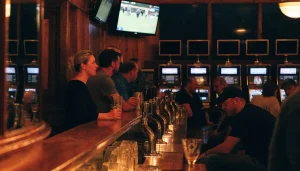
The same standard applies to searches about opening early. A venue’s general business information cannot establish that pokies are available at a particular early hour. Nor does a claim about gaming-machine operation in general identify a venue, confirm its schedule, or show that its machines are operating at the time of a particular search. A time written in a search phrase is a condition to be checked, not evidence that any venue meets it.
The useful unit of information is therefore a named venue, a current operating update and a clear indication of whether the update refers to the venue itself or to pokies. If one of those elements is absent, the claim has a limited scope. An undated directory entry may identify a venue but cannot settle its present status; a general operating rule may concern machines but cannot supply a venue’s hours. Precision in the question does not make an imprecise answer current.
This also affects comparisons between venues. A statement that one place is open does not show that another is open, and a statewide label cannot be applied to every venue without specific support. Search results may place old and current information beside one another, but their position on a page does not establish that they have equal freshness. The status itself needs to be tied to the location and the relevant time.
The practical reading is narrow. “Open now” can be confirmed only by information that is current and specific enough to answer the question being asked. A venue listing may be useful for identification, but it does not automatically confirm that pokies are operating. A reference to machine operation may be relevant to gaming, but it does not establish a venue’s opening hours. Without both points being made clearly, the result remains incomplete.

For searches about South Australia, that distinction prevents a false level of certainty. General information cannot confirm a particular venue’s current hours or the present availability of its pokies. The claim should not be extended beyond what it says: venue open, if that is what the update confirms; pokies operating, only if the information explicitly covers them. An “open now” label is not a substitute for that detail.
Airport and CBD Proximity: What the Available Information Can Establish
“Near” is a relative description, not a location. For a pokie venue to be meaningfully described as close to an airport, a central business district or another destination, both points need to be identifiable. A venue name alone does not establish its position in relation to a traveller’s arrival point or intended destination.
Airport proximity can also mean different things. A venue might be close to an airport’s boundary without being close to its terminal, or close in straight-line distance but less convenient by road. Without a confirmed venue address and a defined airport reference point, a claim of airport convenience has no measurable basis. No transport time or route should be inferred from the word “near”.
The same distinction applies to CBD searches. “Central” may refer to a city centre, a particular district or simply a place described that way in a listing. A CBD comparison needs a named centre and a venue location that can be checked against it. Without those, “central” is an impression rather than a useful distance assessment.
South Australia is a state-level location, while an airport, CBD or neighbourhood is a more specific point. A result described only as being in South Australia cannot establish that it is near any particular destination within the state. The broader the place name, the less it says about practical proximity.
Directions such as north also depend on a starting point. “North of” a city, airport or CBD can describe different areas depending on which reference point is intended. A north-South Australia description, without a named locality or address, does not settle where a venue sits or whether it is convenient for a particular journey.

Place-name ambiguity can create a similar problem. A location name may refer to more than one place, or may be entered with a state label that does not resolve the intended destination. For a place such as Parkes, the relevant question is not merely whether the name appears alongside South Australia, but whether the specific location has been identified. The spelling of a place in a listing is not, by itself, a distance measure.
A useful proximity check therefore depends on a clear sequence: identify the venue, identify the destination, then compare their locations using the same mapping basis. If the venue’s address is unconfirmed, the comparison cannot be reliable. If the destination is vague, the result cannot answer a precise “near me” need. A search result can surface a possible match; it does not by itself establish the relationship between two places.
This matters most when travel plans depend on the claim. A venue described as airport-adjacent may still require a separate journey from the terminal; a CBD label may not indicate how close it is to the specific part of the centre being visited. Those are questions of location, not of the venue’s name or category.
The practical standard is modest: proximity language should rest on identifiable places and a checkable location comparison. Without both, claims about airport, CBD, central or northern access should be treated as unmeasured descriptions, not confirmed directions or distances.
The Legal Limits on Online Pokies in Australia
The legal distinction is between the company providing online pokies and the person playing them. Under the Interactive Gambling Act 2001, an operator cannot lawfully offer real-money online pokies to people in Australia without a domestic licence. No domestic licences for online casinos have been issued, so there is no Australian-licensed online casino.

That restriction does not make an individual player liable simply for playing on an offshore site that accepts Australians. The law targets the operator, not the player. This difference matters: a player’s lack of liability does not make the service lawful for the operator, nor does it provide the player with the protections or remedies associated with a locally licensed casino. Illegal offshore gambling sites may also be blocked in Australia.
South Australia does not have a separate online-casino licensing route that changes this national position. Whether the game is described as a pokie, a casino game or a real-money slot, the relevant issue is where the customer is located and whether the operator is legally permitted to provide the service there. A claim that a site is licensed overseas does not make it an Australian-licensed online casino.
Searches for online play may include offers described as no-deposit bonuses, high limits or maximum bets. Those labels concern an operator’s terms; they do not establish that the operator can legally provide real-money pokies in Australia. Nor does a bonus offer alter the legal position. It is a commercial condition attached to a service, not a domestic licence.
The practical risk is clearest when winnings are disputed. If an offshore casino refuses to pay, Australian players have no legal recourse in Australia against that operator. A displayed balance or a stated withdrawal policy is not the same as an enforceable local remedy. The money at stake may therefore depend on the offshore operator’s own processes, without an Australian court remedy available to recover unpaid winnings.
This is why the distinction between player liability and player protection should not be collapsed. A person may not be committing an offence merely by playing, while still facing a serious practical disadvantage if the operator withholds funds or fails to honour its terms. Acceptance of Australian customers is not evidence of domestic authorisation, and an overseas licence does not fill that gap.
For anyone assessing a real-money offer, the central legal point is not the game’s advertised payout, bet range or bonus wording. Australia has no locally licensed online casino, and operators are prohibited from providing these services to Australian residents without a domestic licence. Since none has been issued, there is no lawful Australian-licensed online-pokies market to distinguish one such offer from another.
What Venue-Level Reporting and Safeguards Cover
Venue safeguards are obligations attached to how a venue operates, not a measure of whether its pokies offer better value. A responsible gambling officer (RGO) on duty and a record of gambling-related incidents describe oversight and documentation. Neither tells a patron what a particular machine will return or establishes that a venue has any particular opening hours.
A report published by regionriverina.com.au describes a rule requiring venues with more than 20 gaming machines to have a dedicated RGO on duty while the machines are operating, with the requirement taking effect from 1 July. The report also describes a one-month grace period for venues to remove signage and introduce responsible gambling officers. Those details should be read as the reported requirements, not as proof that the same rule applies to every venue in South Australia. The report does not identify a South Australian venue or establish how the rule applies there.
The threshold matters because the requirement is not described as applying to every venue regardless of size. It is tied to the number of machines and to the period when they are operating. A venue with more than 20 machines would fall within the described category; a venue at or below that threshold would not meet that condition. That distinction concerns the reported rule only and does not establish what other obligations might apply.

The same report describes a gambling incident register for recording occurrences, including behaviour indicating that a patron may be at risk of, or affected by, gambling harm. The register turns an observed incident into a documented event. It is not a public scorecard of venues, a record of machine performance, or evidence that every concern will be detected. Its stated purpose is to capture relevant occurrences; the account does not specify a public reporting process or a particular response to each entry.
For someone assessing a South Australian venue, these requirements therefore have a narrow use. They explain what an officer-on-duty arrangement and an incident register are intended to cover where the reported rule applies. They cannot establish that a named club has the required staffing, that it maintains a register, or that a specific interaction has been recorded. Those are venue-level facts, not conclusions that follow from a general report.
The distinction between policy and proof is material. A written requirement sets a standard; it does not independently confirm compliance at a particular site. Nor does the existence of an officer or register rank a venue as the best choice. For South Australia, the reported details do not identify which venues meet the machine threshold or confirm the operation of these safeguards at any particular premises. A claim about a specific venue would need evidence about that venue, rather than an inference from a regional report.
Why a 24-Hour Claim Needs Current Venue Evidence
A claim that a South Australian venue is open around the clock is a statement about its operating hours, not a general description of pokies in the state. It needs to be tied to the particular venue and supported by information that is current. State-wide rules, machine-operation requirements and general venue descriptions cannot establish that a specific location admits patrons at every hour.
The distinction matters because “open” can refer to different things. A venue may have public areas operating while a particular service is unavailable; a listing may describe usual hours rather than a temporary change; and a page that mentions pokies may not say when they can be played. None of those details can be collapsed into a reliable 24-hour claim without evidence about the venue’s actual schedule.
The wording “24-hour pokies in South Australia” therefore does not identify a confirmed venue or prove continuous access. The same applies to a claim that pokies are available through the night. A reference to machines operating under particular conditions says nothing by itself about whether a venue is open to the public throughout the day, or whether those machines are accessible at every hour.
A useful confirmation would identify the venue, specify its opening and closing times, and show when that information was checked or updated. A current statement from the venue itself is more relevant to its schedule than an undated directory entry or a general description of local gaming rules. If the information does not distinguish venue access from machine availability, it does not resolve both questions.
Hours can also change. A past schedule is evidence of a past schedule, not a standing guarantee. Public holidays, temporary closures and operational changes may affect access, so a round-the-clock label should not be treated as permanent simply because it appears on a listing. The difference is practical: a venue’s address or general profile may remain correct while its hours have changed.
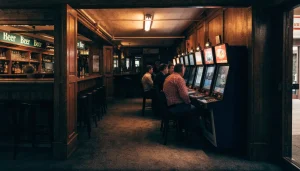
For anyone assessing a 24-hour claim, the useful detail is not the label itself but the current, venue-specific operating information behind it. Without that, the claim remains unconfirmed. No South Australian venue can be described as open all day and night merely because pokies are mentioned, because a rule addresses machine operation, or because a listing uses broad language about availability. A schedule needs direct support; a statewide inference is not a substitute.
Crown Searches: No Verified South Australian Venue Details
A Crown casino in South Australia should not be assumed from the wording “Crown South Australia”. The phrase can express an intended connection, but it does not identify a South Australian address, a local pokie room or a particular set of machines. Those are separate claims and require specific venue information.
The same distinction applies to references to pokies at Crown. A brand name in a heading, listing or discussion is not enough to establish that the named machines are available at a South Australian venue. Nor does it establish which games are present, what their settings are or whether a particular room exists locally. Treating those details as settled would turn a label into evidence.
“Best pokies room” is also not a location description. It signals a comparison, but a useful comparison depends on knowing which venues and facilities are actually being compared and on what basis. Without a clearly identified South Australian venue, a ranking would have no local subject. Familiarity with a brand cannot fill that gap.
A maximum cash payout is a different question again. It concerns a defined machine or venue and the terms that apply to a payout. A Crown-related search phrase does not establish a South Australian payout amount, nor whether a particular limit applies. No figure should be attached to a local venue on the strength of the brand name alone.
This matters because several distinct ideas can be compressed into one short phrase: brand association, local presence, machine availability, room quality and payout conditions. Each needs its own support. Confirmation of one would not automatically confirm the others. A reference to Crown elsewhere, for example, would not on its own demonstrate a South Australian pokies offering.

The careful reading is narrow: Crown-related wording may describe what someone is trying to find, but it does not establish a Crown casino or Crown pokies in South Australia. Specific claims about a local room, its games or its cash payouts should therefore be tied to an identifiable South Australian venue and its stated terms. Without that connection, neither a recommendation nor a payout figure can be treated as a grounded description of the state’s venues.
CBD Clubs and Pokies: The Limits of the Available Evidence
A club described as being in Adelaide’s CBD is not, by that description alone, evidence of a particular pokie offering. Location, venue type and machine availability are separate claims. A club name or a CBD label cannot establish whether pokies are present, how many machines operate there, or what games are available.
That distinction matters when comparing South Australian clubs. A list of venues without reliable, venue-specific details may look like a ranking while leaving its central point unresolved: whether each named club has the machines being sought. Nor does the word “best” establish a measurable basis for comparison. Without comparable information about the games or their terms, presenting a CBD club as having the best pokies would be an unsupported judgement.
Machine counts also need to be tied to a particular venue and a current record. They should not be inferred from the club’s size, its location, or a description of its facilities. A count attached to one club cannot be transferred to another, and a general statement about South Australia cannot supply a CBD-specific figure.
Local reporting presents the same issue. A rule or report that applies to venues under stated conditions does not, by itself, establish which CBD clubs meet those conditions or how a particular venue implements its obligations. General requirements and venue-level details answer different questions.
Self-exclusion is another distinct topic. It concerns restricting a person’s access to gambling, not identifying which CBD clubs have pokies or documenting their machine counts. Treating a reference to self-exclusion as evidence about a club’s facilities would confuse a personal safeguard with a venue description.
Accordingly, claims about South Australian CBD clubs should be read narrowly. A named venue, a machine count, a list of games and a comparative ranking each require evidence suited to that specific claim. Where those details are not established, the responsible description is limited: the location label does not confirm a pokie offering, and a general account of clubs does not settle the particulars of any one venue.
Cashless Payments and PayID Are Not the Same Thing
“Cashless pokies” describes a way of handling payments at a physical venue. PayID is a bank-transfer identifier: it lets a payment be directed using an email address, mobile number or ABN instead of entering account details. It operates over Australia’s New Payments Platform (NPP). The two terms refer to different things, and one does not prove the other is available.
A reference to cashless pokies in South Australia does not, by itself, establish that a particular venue accepts cashless payments, how its machines work or which payment methods it supports. Those are venue-specific claims. PayID’s role as a transfer alias says nothing about payment arrangements at a gaming floor.
The distinction matters online as well. A payment option is not evidence that a gambling service is licensed, lawful, fair or transparent about game returns. Real-money online casino games are prohibited services when offered to people in Australia, and the existence of a payment route does not change that position. PayID should not be treated as an endorsement or a compliance check.
Technically, using PayID for a real-money transaction with an Australian online casino would require linking the PayID to a bank account first. That describes the payment setup only; it does not make the underlying gambling service lawful. Nor does it establish that a transaction will be accepted.
A useful test for any cashless-payment claim is to separate the instrument from the venue or service using it. PayID identifies how a bank transfer may be addressed. It does not confirm that South Australian pokies accept it, that a venue has adopted cashless play, or that an online operator has any Australian authorisation. Payment terminology is not a substitute for evidence about the activity being paid for.
Age and Play Limits That Apply Across Australia
The minimum legal age for gambling in Australia is 18, including for pokies played online. That age threshold is a basic eligibility rule, not a measure of whether gambling is affordable or manageable for an individual.
Responsible-gambling tools can set boundaries before money or time is spent. A deposit limit caps how much can be put into an account over a chosen period; a loss limit sets a ceiling on losses; and a session time limit restricts how long a playing session can continue. The precise settings and how they operate depend on the service offering them, so a displayed limit should be read as a condition to check, not as proof that every form of gambling is covered.
Self-exclusion is a separate measure: it allows a person to restrict their own access to gambling. Its reach depends on the scheme and operator involved. BetStop applies only to Australian-licensed operators and does not bind offshore sites. It therefore cannot be treated as a universal block on access to gambling.
These tools address different exposures. A deposit cap controls funds entering an account; a loss cap addresses losses; a time limit addresses duration; self-exclusion addresses access. None changes the underlying uncertainty of gambling outcomes, and none makes participation risk-free. Limits are useful only to the extent that they are understood and actually apply to the relevant service.
For South Australian pokies, the same national age threshold applies. A search for the best pokies does not alter that threshold or establish that a particular venue or service offers any specific limit. The practical baseline remains straightforward: legal gambling starts at 18, while deposit, loss and time limits, alongside self-exclusion, are distinct tools for setting boundaries.
What is the legal age for online gambling in Australia?
You must be 18 or older to gamble online in Australia.
Are online pokies legal for Australian players?
Australian companies cannot legally offer real-money online pokies without a domestic licence, and none have been issued. The law targets operators rather than players, so Australians can play on offshore sites that accept them, but they have no legal recourse in Australia if a site withholds winnings.
What’s the best strategy for playing pokies?
There is no strategy that can predict or control the next spin: each outcome is independently generated at random. You can compare the confirmed return setting for the specific game version and use deposit, loss or session limits to manage your play.
What does “wagering requirement” actually mean?
It is the amount you must bet before bonus winnings can be withdrawn, usually expressed as a multiplier. For example, a $500 bonus with a 40x requirement means $20,000 in bets; if the requirement applies to a $500 deposit plus a $500 bonus at 35x, it means $35,000 in bets.
What is the minimum PayID deposit?
Most operators accept deposits of AU$10 to AU$20, while some accept AU$5. PayID is treated like other qualifying deposit methods, so the minimum depends on the operator’s deposit terms.