Casino-linked listings can mean different arrangements, so hotel identity, package inclusions and booking conditions need to be checked separately.

Hotel Rooms, Packages and the Cost of Staying On-Site
The phrase “Melbourne casino hotel” can refer to a hotel associated with a casino, a room offer presented alongside casino access, or simply a hotel stay planned around a casino visit. Those are different arrangements. A casino connection in a listing or search result does not, by itself, establish that a room is on the casino site or that a package includes anything beyond accommodation.
For a stay described as on-site, the first item to establish is the hotel’s identity and its relationship to the casino. The distinction matters because the room’s booking terms belong to the accommodation provider, while casino access or other inclusions may have separate conditions. A shared brand, nearby location or promotional description is not a substitute for clear booking terms.
What a room price needs to show
A displayed rate is only a starting figure. The useful comparison is the amount payable for the stay, together with the conditions attached to it. A room offer should state the dates it covers, what is included, whether payment is required in advance, and what happens if the booking is changed or cancelled. If any of those points is absent, the advertised price cannot be treated as a complete cost.
Choosing an online casino from Melbourne calls for checking the details that matter to you, including licensing and payment information. This list offers a concise starting point for reviewing the available options.
-
JeetCity Casino
- License
- Curacao eGaming (Dama N.V.)
JeetCity Casino is listed with a Curacao eGaming licence held by Dama N.V.
-
House of Pokies
- License
- international iGaming licence – jurisdiction not named in the source
- Payout speed
- PayID 1-24 hours
- Min. deposit
- A$30 (PayID from A$10)
House of Pokies lists PayID withdrawals at 1–24 hours and a A$30 minimum deposit, with PayID deposits from A$10. Its source describes the licence as international but does not name the jurisdiction.
-
LuckyVibe
- License
- Curacao Gaming Control Board OGL/2023/176/0095 (Hollycorn N.V.)
LuckyVibe is listed under Curacao Gaming Control Board licence OGL/2023/176/0095, held by Hollycorn N.V.
-
Rollero Casino
- License
- Curacao Gaming Control Board OGL/2023/176/0095 (Hollycorn N.V.)
Rollero Casino is listed under Curacao Gaming Control Board licence OGL/2023/176/0095, held by Hollycorn N.V.
-
Bizzo Casino
- License
- Curacao Gaming Control Board (TechSolutions Group N.V.)
Bizzo Casino is listed with a Curacao Gaming Control Board licence held by TechSolutions Group N.V.
-
Kingmaker
- Payout speed
- crypto ~90 minutes, fiat 1-5 days
- Min. deposit
- A$30
Kingmaker lists crypto payouts at around 90 minutes and fiat payouts at 1–5 days. Its minimum deposit is A$30.
-
Lucky Dreams
- License
- Curacao
- Min. deposit
- A$20 (POLi)
Lucky Dreams is listed with a Curacao licence and a A$20 minimum deposit for POLi.
-
SkyCrown
- License
- Tobique Gaming Commission
- Payout speed
- crypto ~10-15 minutes, fiat 1-5 days
- Min. deposit
- A$30
SkyCrown is listed with a Tobique Gaming Commission licence. Its stated payout times are around 10–15 minutes for crypto and 1–5 days for fiat, with a A$30 minimum deposit.
-
DragonSlots Casino
- License
- Curacao Gaming Authority (Jumpman Gaming Ltd)
DragonSlots Casino is listed with a Curacao Gaming Authority licence held by Jumpman Gaming Ltd.
-
MrPacho
- Payout speed
- crypto 30-120 minutes, fiat 24-72 hours
- Min. deposit
- A$30
MrPacho lists crypto payouts at 30–120 minutes and fiat payouts at 24–72 hours. Its minimum deposit is A$30.
Packages need the same scrutiny. The word “package” does not define its contents. Any claimed inclusion should be specified in the offer, with its availability and conditions made clear. An item that is optional, subject to separate booking, or available only under a condition should not be valued as though it were automatically included. A discount is meaningful only against a stated comparison price and a stay that can actually be booked on the relevant terms.
Room descriptions also need to match the booked product. The room category, occupancy conditions and any restrictions should be visible before payment. General promotional language cannot resolve a mismatch between the description and the confirmation. The confirmation is the practical record of what has been purchased; its details matter more than a headline attached to the offer.
Separating accommodation from casino spend
The room bill and gambling expenditure are separate budgets. A hotel package does not make casino play part of the accommodation value unless its terms explicitly say so, and casino activity should not be treated as a way to offset the cost of a stay. The calculation is straightforward: accommodation is a committed expense; gambling is a separate discretionary outlay with no guaranteed return.
That distinction also prevents a bundled offer from obscuring its real cost. A room may appear cheaper because the presentation gives weight to an additional benefit, but the comparison still depends on the amount payable and the benefit’s actual terms. If the inclusion would not otherwise be purchased, its advertised value does not reduce the cash cost of the booking.
 Best Casino in Perth: Hotels, Dining and FacilitiesCompare casino accommodation, rate conditions, dining, events, facilities and travel details. Room availability and prices vary by booking dates.
 Casino in Canberra: rooms, access and practical detailsThis guide separates verifiable Canberra casino information from searches about rooms, costs, games and access; a room rate needs a named hotel,…
A practical comparison
For any proposed on-site stay, the decision can be reduced to a short record: the named accommodation provider, the exact room being booked, the total payable, the cancellation and payment conditions, and the written terms for each claimed inclusion. If the offer does not state these clearly, there is no sound basis for comparing it with another room rate.
This approach is more useful than assuming that “casino hotel” describes a standard product. It may describe a genuine on-site room, a commercial partnership or only a convenient way to describe the trip. The distinction affects what is included, who is responsible for the booking and which terms govern a change or cancellation. Until those details are explicit, a package headline is packaging—not a final amount.
Poker Rooms and Tournament Information
A Melbourne casino poker room and a poker tournament are separate propositions. A room may host cash games, scheduled events, or both; a tournament listing does not, by itself, establish that cash games are running. The distinction matters because the format determines how entry, play and the end of a session are handled.
In a cash game, players join a table and play with chips that represent money. In a tournament, entrants pay an entry fee and receive a tournament stack; play continues under the event’s rules until a player is eliminated or the tournament ends. Those formats should not be treated as interchangeable when assessing a venue listing.
Cash Games
Players join a table and play with chips that represent money.
Tournaments
Entrants pay an entry fee for a tournament stack and play until elimination or the event ends.
A useful tournament notice identifies the event format, registration conditions, starting time, entry cost, prize arrangements and any rules for late registration or re-entry. It should also make clear whether the event is open to new entrants or requires advance booking. Without those terms, a headline announcing a poker tournament gives little basis for estimating the total cost or deciding whether the event fits a particular schedule.
Cash-game information needs a different set of details: the games offered, table limits, minimum buy-in, seat availability and any waiting-list process. These are operating terms, not decorative extras. A listed poker room does not establish that a preferred game is running at a particular time, and a tournament calendar does not confirm that a cash-game table will be available alongside it.
For searches about poker at a Melbourne casino, the practical distinction is between a confirmed venue schedule and a general description of poker. Room names, tournament dates and entry terms should come from a current venue notice, with the date and conditions attached to the information. Old event pages can remain visible after a schedule changes; a past listing is evidence of a past event, not a current seat or session.
Online poker has a different legal position. Under the Interactive Gambling Act 2001, operators may not provide real-money online poker to people physically located in Australia. That restriction concerns online services; it does not establish whether a particular Melbourne venue offers in-person poker. Nor does a casino search result establish that an event is operating today. A time-sensitive listing needs an explicit current date and status rather than an undated result.
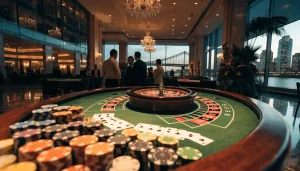
The economics of an event are best read from its full terms. The entry fee is only one part of the calculation if the rules also permit additional entries or impose other charges. Prize descriptions should state how the prize pool is formed and how it is distributed. Where those points are absent, a headline prize figure alone does not show the likely return to any individual entrant.
Poker remains gambling, not an income plan. A session budget should be set in advance from available bankroll, and losses should not be chased by increasing stakes or buying back into play. Once the budget is spent, the financial calculation is finished; a tournament’s remaining duration does not alter it.
Getting There and Parking
A trip to a casino in Melbourne depends first on identifying the venue and its current public entrance. An address, car-park entrance, valet service or free-parking offer cannot be inferred from the words “casino” and “Melbourne” alone. Those details affect the route and the likely cost, so they need confirmation from the venue’s own current information before travel is planned.
Parking terms are separate from the cost of gambling. A free-parking claim needs conditions attached: eligibility, validation requirements, time limits and any exclusions can change the final amount. Valet parking is also a distinct service, not a synonym for ordinary parking. Without confirmed terms, neither should be included in a trip budget as a guaranteed saving or facility.
The same applies to arrival logistics. A reliable plan needs the correct street address, the entrance open to visitors, and any access instructions for the chosen transport method. A map result or an old listing can point to an outdated entrance or a nearby property rather than the venue itself. If those details are uncertain, the route is not yet a sound basis for a departure time or parking decision.
Searches for casino dining or bingo do not settle the arrival question. They describe activities, not the address, access arrangements or car-park terms. These should be checked independently rather than treated as evidence that a particular facility or service is available.
The distinction matters for “online casino” searches as well. An online service does not have a visitor car park, and its availability does not establish that a physical venue is open or accessible. Under the Interactive Gambling Act 2001, operators cannot provide real-money online casino games, including pokies and table games, to people located in Australia. These services are prohibited interactive gambling services, not a substitute route to a Melbourne venue. Sports betting has a different legal position, but it does not change the rules for online casino games.
For a physical visit, the useful calculation is the full arrival cost: parking charge, any required validation, transport to the entrance and the time needed to reach it. If any component is unconfirmed, the total is not known. A headline such as “free parking” is not a final price until its conditions are clear.

There is also no financial reason to let travel costs dictate gambling decisions. Parking or transport expenditure is already spent once incurred; increasing bets to recover it only adds a separate risk. A session budget should be set from available funds before play, and losses should not be chased. Money intended for rent, groceries or other essentials is not a gambling budget.
For a page titled “best casino in Melbourne 2026”, the word “best” cannot resolve these practical uncertainties. A venue comparison needs current, attributable details about location and access, not assumptions based on a name or an old listing. Until the address and parking terms are confirmed, a precise route, valet claim or free-parking estimate would be guesswork rather than useful travel information.
Accommodation Near the Casino
Accommodation near a casino and a room inside a casino hotel are different booking decisions. A nearby stay is a separate property reservation; it does not, by itself, include casino access, a gaming offer or any venue benefit. A package advertised with a casino reference should be assessed by its written inclusions, not by the name used in its promotion.
“Near” is not a cost category. It describes a location only in relation to a destination and a route. Before comparing Melbourne accommodation, establish the exact casino destination being used and check how the property’s stated location relates to it. A map pin or a broad description such as “city centre” does not settle the time, route or practical distance involved. The useful comparison is between the actual lodging address and the intended destination, with the journey evaluated on its own terms.
Do
- Compare full booking totals for the same dates
- Verify the exact property address
- Check specific cancellation deadlines
Don't
- Rely on nightly rates as the final cost
- Assume "city centre" defines the distance
- Trust "free cancellation" without visible conditions
Price comparisons also need the same basis. A nightly rate is not necessarily the amount charged for the stay. Compare the full booking total for the same dates, room occupancy and cancellation conditions, and check whether taxes, service charges or other compulsory costs are included in the displayed amount. A lower headline rate can lose its advantage once restrictions or extra charges are counted.
Cancellation terms have a direct financial value. A refundable booking preserves an option to change plans; a restricted booking may exchange that flexibility for a lower price. The difference matters only when the terms are clear. Check the cancellation deadline, any amount retained after cancellation and whether changes are permitted. “Free cancellation” is useful only when its conditions and cutoff are visible before payment.
Casino accommodation deals require the same scrutiny. A promotion should identify what the price buys, which dates and room types qualify, and whether any casino-related benefit has separate conditions. A discount is not a saving if the required booking costs more than a comparable room without the promotion, or if the included item has no value to the guest. The final amount payable is more informative than the advertised percentage or headline wording.
Searches for a Melbourne casino location, opening times or gaming machines concern the venue, not the accommodation contract. They should not be treated as evidence that a lodging reservation includes entry, access to gaming areas or extended venue hours. Keep those decisions separate: confirm the destination and its arrangements independently, then compare lodging on total price, location and booking terms.

A practical comparison can be reduced to four entries: the full reservation cost, the property address, the cancellation conditions and any specific inclusion attached to the rate. If one entry cannot be established before booking, the offers are not yet comparable. Nearby accommodation is best judged as a standalone stay, with any casino connection treated as a condition to verify rather than an assumed benefit.
Contact Details and Venue Enquiries
A venue enquiry needs to identify the business being contacted before a telephone number, map pin or email address can be treated as useful. “Melbourne casino” may refer to a physical venue, an online service or a third party discussing either. Those are not interchangeable: a contact channel for one does not establish the identity, facilities or terms of another.
For a physical venue, contact details should be matched against the venue’s own published information. Check that the business name is consistent across its contact page, map listing and any booking or event material. A phone number copied into an unrelated directory is not confirmation that it reaches the venue. The same applies to a map pin: its label and location should correspond to the venue’s official address rather than a similarly named business or a nearby car park.
Enquiries about a bar, concerts, baccarat or craps should be made as separate questions. A mention of a service in a third-party listing does not confirm that it is offered, available on a particular date or covered by the number being called. For an event, the useful details are the event name, date and venue confirmation; for a game, the enquiry should establish whether the question concerns a physical gaming floor or an online product. No contact channel should be treated as proof of a facility.
The legal distinction matters for online enquiries. Under the Interactive Gambling Act 2001, operators cannot provide real-money online casino games—including pokies, poker and table games—to people physically in Australia. That restriction concerns the operator’s provision of the service; it does not make a physical venue’s phone number or map listing evidence that an online casino is lawful. A site presenting itself as a local contact point for real-money online casino play should not be confused with a licensed Australian venue.
A sensible contact record contains the business name, the channel used, the date of the enquiry and the answer given. For bookings or other commitments, written confirmation is more useful than an unrecorded call because it preserves the stated terms. If a number redirects to a payment request or asks for account credentials unrelated to the enquiry, the identity of the recipient should be established before any information is shared.
A request for a “Melbourne casino contact number” is therefore incomplete until the intended business and purpose are clear. A venue enquiry, event question, map check and online-gambling query require different checks. Keeping those categories separate avoids attributing a bar, concert, car park or table game to a business on the strength of a search result alone.

Breakfast, Buffet Searches and Casino Jobs
Breakfast, buffet and employment searches describe separate decisions. A breakfast or buffet claim concerns a meal and its conditions; a job listing concerns an employer, role and contract. The word “resort” does not establish that either is part of a particular Melbourne casino offering, and a rewards label alone does not establish a breakfast entitlement.
Breakfast and buffet claims
A useful breakfast listing identifies where the meal is served, when it is available, what is included and what the charge covers. A buffet description should make clear whether it is a breakfast buffet or another meal service, and whether access depends on a booking, accommodation package or membership. Without those terms, “breakfast” and “buffet” are labels, not a priceable offer.
The same distinction applies to searches for a casino resort. “Resort” may appear in promotional wording, but it does not by itself confirm a specific accommodation, meal or leisure package. Each component needs its own conditions. A meal included with a stay, for instance, is not necessarily available as a separate purchase; an advertised benefit may also depend on eligibility or booking terms. The value cannot be calculated until the included service and any conditions are stated.
Rewards should be assessed as a set of terms rather than as a general promise of savings. The relevant details are what earns a benefit, what can be redeemed, where it can be used and whether any conditions apply. A points balance or membership status is not equivalent to a cash discount unless the redemption terms say so. Breakfast access should not be inferred from the existence of a rewards programme.
Reward Programme Terms
Rewards are a set of terms rather than a general promise of savings. Key details include what earns a benefit, what can be redeemed, where it can be used, and applicable conditions.
Employment searches
Casino job listings require a different check. A role should identify the employing organisation, work location, duties, employment type and applicable pay or benefits. The title alone does not establish whether a position is directly with a casino operator, a contractor or another business associated with a venue. That distinction affects who sets the terms and who is responsible for the employment relationship.
For a vacancy to be assessable, its description should also set out required qualifications, roster expectations and the process for applying. Those details should be confirmed in the listing or with the named employer; a general reference to “casino jobs” is not evidence of an open position. Search results can combine current vacancies, older advertisements and roles in different parts of the hospitality industry, so the employer and location matter more than the headline.
Breakfast, buffet and job searches can therefore return language that sounds connected while referring to unrelated offers. A meal benefit is not established by a resort label, and a vacancy is not established by a venue-related job title. The decision depends on the specific terms: what is provided, by whom, under which conditions, and at what stated cost or rate.
Opening Hours, Events and Venue Updates
Opening hours, event dates and reopening announcements are time-sensitive. A reliable update needs to identify the venue, state when the information applies and distinguish a confirmed change from a proposal. Without those details, a claim that a Melbourne casino is open, closed or due to reopen cannot be treated as a current status report.

For an opening-hours check, the useful information is the operating date and the hours that apply on that date. A general hours notice may not settle whether a particular event is running or whether access arrangements have changed. Event listings also need a date and venue, not just a title: otherwise, an old listing can look current when it is not. The date attached to an announcement matters as much as the announcement itself.
Development news requires a separate distinction. A proposal, planning process or reported intention is not the same as an approved project, work in progress or completed change. A reopening announcement is narrower still: it should specify what is reopening and when. Those distinctions prevent a headline about future plans from being read as evidence that the venue is operating now.
Entertainment listings should be assessed on the same basis. A performance or event being advertised does not by itself establish the venue’s general opening hours, and a venue’s operating status does not confirm that a particular event is scheduled. Employment notices are another separate category; they do not establish either opening status or an entertainment programme.
A venue review is useful only for the period and subject it actually covers. A review based on an earlier visit cannot confirm current hours, upcoming events or later development work. Menus and dining details belong to a different check: an event announcement or opening-hours notice does not establish what food is available. Those details require current, venue-specific information.
The legal distinction is also important. The Interactive Gambling Act 2001 prohibits operators from providing real-money online casino games, including slots and table games, to people physically in Australia. That restriction concerns online gambling services; it does not verify the opening status, events or development plans of a physical Melbourne venue. An online page should not be treated as proof that a physical casino is open.
For any current decision, the status, date and venue need to match. If one of those elements is absent, the information cannot settle whether a Melbourne casino is open, reopening or hosting an event on a particular day.
Restaurants and Dining Options
A restaurant described as being at a Melbourne casino is not necessarily inside the casino. The label can refer to a dining room within the venue, a separately operated business in the same complex, or a restaurant elsewhere in the city. Those distinctions affect the practical comparison: location, menu, booking arrangements and the final bill may belong to different operators.
For a useful comparison, each listing needs to establish what it is selling. A menu shows the available dishes and prices; service charges or other stated fees affect the amount payable. Without those details, words such as “premium”, “casual” or “fine dining” do not provide a cost basis. They describe positioning, not the amount due.
The same applies to cuisine labels and photographs. A sample menu is more useful than a broad category, while current menu information is more useful than an old image with no date. Dietary descriptions should be treated as claims to confirm with the restaurant, rather than inferred from a dish name or promotional copy.

Location wording deserves similar care. “At the casino” suggests a different arrangement from “near the casino”, but a search result may use either phrase loosely. A restaurant in a surrounding precinct may have a separate entrance, operator and booking process. A venue name alone does not establish that it is part of the casino or that casino access is required.
The cost comparison should use the whole meal, not just the cheapest listed dish. Menu prices, drinks, any stated service charge and the number of diners all affect the total. If only selected menu items are visible, the resulting estimate is incomplete. A booking offer should also be read for the conditions attached: the eligible service, any required booking method and what is included in the stated price.
For the phrase “Melbourne casino restaurant”, the useful answer is therefore not a generic claim that dining is available, but a verifiable listing with an identifiable operator, current menu and clear location. Restaurant names, opening times and prices should be checked against the venue’s own published information before a decision is made. Nearby options should be compared separately from dining inside a casino complex; combining them under one label makes the choice look simpler than it is.
A restaurant listing is only as valuable as its terms. If the location is vague or the price excludes relevant charges, the apparent comparison cannot be reconciled with the bill. Treating each restaurant as a separate purchase keeps the calculation clear: identify the operator, establish where it is, read the current menu and compare the complete stated cost.
Restaurant Comparison
-
1
Identify the Operator
Establish whether the restaurant is inside the casino, separately operated in the complex, or located elsewhere in the city.
-
2
Review the Menu
Check the current menu for available dishes and prices to establish a cost basis.
-
3
Calculate Total Cost
Include menu prices, drinks, and any stated service charges to determine the final amount payable.
Spa, Bars and Dress-Code Queries
Spa, bar and dress-code searches do not establish that a particular Melbourne casino provides those facilities or has a specific policy. The distinction matters: a search result, an old listing or a third-party description is not confirmation of current venue arrangements.
A day spa is a separate service from casino gaming. Before treating one as part of a casino visit, the relevant checks are whether the spa is operated at the venue, whether it accepts non-hotel guests and what booking conditions apply. The same applies to bars: a bar listing should be checked for its current location, service and entry conditions rather than taken as proof that it is open or accessible. A name or photograph alone does not settle any of those terms.
Dress codes can differ between areas and occasions. General casino entry, a bar and a ticketed event may not share the same standard. Where a venue publishes a policy, its wording is more useful than a broad claim that a casino is “smart casual” or formal. Any stated restrictions should be checked before departure, particularly if the visit includes more than one area.
Address searches require similar care. Melbourne venue names can be confused with nearby businesses or similarly named properties, so the address should be matched to the intended operator through an official venue listing before travel. A map result or an address copied into an older directory may not resolve whether it refers to the casino itself, an adjoining business or another site.
Careers searches also need to be separated from general venue information. A listing should identify the employer, role location and application route; a page about the wider hospitality industry is not evidence of a current casino vacancy. Recruitment terms belong to the specific job advertisement, not to the venue name as a whole.

For games, spa services, bars and dress requirements, the useful distinction is between a confirmed, current offering and a phrase used to describe the venue. Without that confirmation, claims about facilities, access or policy should not be treated as settled.
Food-Court and Pool Searches
Food-court and pool searches point to specific facilities, not simply somewhere to eat or spend time. Neither should be treated as a confirmed feature of a Melbourne casino on the strength of the wording alone. A listing, photograph or passing mention may refer to a different venue, a past arrangement or a nearby business; it does not establish what is available at the casino itself.
The same distinction applies to general food searches. They do not verify a food court, a particular food offer or access to a pool. Those details matter because they change the practical value of a visit: a pool is a separate leisure facility, while a food court implies a particular kind of dining setup. Without reliable venue-specific information, neither belongs in a description as an existing amenity.

Online casino services are a separate issue from visiting a physical venue. Under the Interactive Gambling Act 2001, operators must not provide real-money online casino games, including pokies and table games, to people in Australia. That legal position does not establish anything about food or recreational facilities at a Melbourne venue, and online gambling should not be presented as a substitute for an in-person visit.
A careful comparison therefore keeps confirmed facilities apart from assumptions. Food availability, a food-court layout and pool access each require direct confirmation from the venue before they can inform a decision. If no current venue statement identifies them, the accurate description is that their availability is unconfirmed—not that they are included, excluded or standard. For a cost-conscious assessment, an unverified amenity has no dependable value in the calculation.