Venue addresses, opening status and location claims help distinguish confirmed details from broad search labels and nearby landmarks.

Getting to Pokies Near Melbourne Airport
A request for pokies near Melbourne Airport is first a location question: does a particular venue sit at the airport, within its surrounding area, or somewhere else in Melbourne? Those are different claims. A result mentioning the airport may simply use it as a landmark or as a broad area label. The wording alone does not establish that a venue is inside the airport or close enough to be a practical stop.
The same distinction applies to searches about Melbourne Central, Port Melbourne or the CBD. A place name can help narrow a search, but it is not proof of a venue’s address. Before making plans around a listing, the useful detail is the venue’s own current street address, not a heading, image caption or map pin that may refer to a nearby landmark. If the address is absent or inconsistent across listings, proximity remains unconfirmed.
Treat the address as the starting point
A map can show the relationship between a venue and a named place, but the result needs to be checked against the venue’s own information. Search-result labels may be broad, abbreviated or based on a nearby suburb rather than the actual site. A pin can also mark a general area rather than an entrance. None of these details, by themselves, settles whether a venue is conveniently located for a particular journey.
Choosing an online pokies site from Melbourne involves checking the details that matter to you, including available licensing and payment information. Use these verdicts as a concise reference when considering the options on this page.
-
JeetCity Casino
- License
- Curacao eGaming (Dama N.V.)
JeetCity Casino is listed with a Curacao eGaming licence held by Dama N.V.
-
House of Pokies
- License
- international iGaming licence – jurisdiction not named in the source
- Payout speed
- PayID 1-24 hours
- Min. deposit
- A$30 (PayID from A$10)
House of Pokies lists PayID payouts in 1–24 hours and a minimum deposit of A$30, or A$10 with PayID. Its source describes its licence as an international iGaming licence but does not name the jurisdiction.
-
LuckyVibe
- License
- Curacao Gaming Control Board OGL/2023/176/0095 (Hollycorn N.V.)
LuckyVibe is listed under Curacao Gaming Control Board licence OGL/2023/176/0095, held by Hollycorn N.V.
-
Rollero Casino
- License
- Curacao Gaming Control Board OGL/2023/176/0095 (Hollycorn N.V.)
Rollero Casino is listed under Curacao Gaming Control Board licence OGL/2023/176/0095, held by Hollycorn N.V.
-
Bizzo Casino
- License
- Curacao Gaming Control Board (TechSolutions Group N.V.)
Bizzo Casino is listed with a Curacao Gaming Control Board licence held by TechSolutions Group N.V.
-
Kingmaker
- Payout speed
- crypto ~90 minutes, fiat 1-5 days
- Min. deposit
- A$30
Kingmaker lists crypto payouts at around 90 minutes and fiat payouts in 1–5 days. Its minimum deposit is A$30.
-
Lucky Dreams
- License
- Curacao
- Min. deposit
- A$20 (POLi)
Lucky Dreams lists a Curacao licence and a minimum deposit of A$20 when using POLi.
-
SkyCrown
- License
- Tobique Gaming Commission
- Payout speed
- crypto ~10-15 minutes, fiat 1-5 days
- Min. deposit
- A$30
SkyCrown is listed with a Tobique Gaming Commission licence. It lists crypto payouts at around 10–15 minutes, fiat payouts in 1–5 days, and a minimum deposit of A$30.
-
DragonSlots Casino
- License
- Curacao Gaming Authority (Jumpman Gaming Ltd)
DragonSlots Casino is listed with a Curacao Gaming Authority licence held by Jumpman Gaming Ltd.
-
MrPacho
- Payout speed
- crypto 30-120 minutes, fiat 24-72 hours
- Min. deposit
- A$30
MrPacho lists crypto payouts in 30–120 minutes and fiat payouts in 24–72 hours. Its minimum deposit is A$30.
The practical check is to match the listed venue name and street address across its official information and a mapping service. Then inspect the route from the precise starting point: an airport terminal, a station, a hotel or a street address. “Near Melbourne Airport” has little value without knowing which point the journey begins from and where it ends. A venue that appears close at city scale may be less straightforward on the ground; a map view is not a travel plan.
Transport information should be checked separately from the venue address. Routes and access arrangements can change, and a map’s suggested journey is not a guarantee of current service. Where a trip depends on public transport, road access or a particular entrance, the relevant transport provider or venue is the appropriate place to confirm those details. No transport method should be inferred from a venue’s proximity label.
Airport wording is not an airport address
“Pokies in Melbourne Airport” can mean a search for facilities inside the airport, but it can also be used loosely for places somewhere in the wider airport area. Those interpretations should not be treated as interchangeable. An airport name in a result does not confirm that the venue is located within the terminal complex, and a nearby suburb name does not establish how long the journey would take.
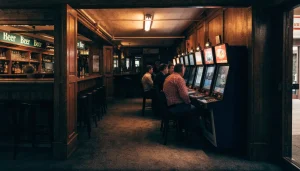
The same caution applies to a search for pokies near Melbourne Airport. The phrase describes an intended area, not a verified list of venues. A useful result needs a specific address and a route that can be checked from the relevant terminal or other starting point. Without both, “near” is only a label.
Melbourne Central is another example of why the exact location matters. A listing associated with the shopping or transport landmark may refer to a venue elsewhere in the city. Confirm the street address rather than relying on the landmark name, and check the route from the actual entrance or meeting point. The question is not whether a result contains the right place name; it is whether its address matches the destination being considered.
For Port Melbourne, the suburb name narrows the geography but does not identify a particular venue. A listing should be verified at street level before it is used to plan a visit. The same approach works for a broader request for pokies near the Melbourne CBD: establish the address first, then judge the route from the intended point in the city. A suburb or district label cannot substitute for that check.
Make “near me” specific
A “near me” result depends on the location being used by the device or service. It may not correspond to the place from which the journey will actually begin. Someone checking from home, a hotel or a terminal could receive different results, even while looking for the same area. The result should therefore be compared with the intended starting address rather than treated as a fixed recommendation.
Do
- Match the venue name and street address across official info and mapping services
- Inspect the route from a precise starting point like a terminal or station
- Check transport information separately from the venue address
Don't
- Rely on broad labels like "near Melbourne Airport" as proof of proximity
- Use a map pin or image caption as a verified street address
- Infer transport methods solely from a venue's proximity label
A sensible location check has three parts: the exact venue address, the precise starting point and a current route between them. If any part is unclear, the distance and access remain uncertain. This does not require a venue ranking; it requires enough reliable location information to distinguish a genuine destination from a broad search label.
For travellers arriving at Melbourne Airport, the airport should be entered as the actual starting point, not assumed from a general Melbourne map view. For people already in the city, a nearby landmark or suburb should likewise be replaced with the precise starting location. That keeps the decision grounded in an address and route rather than in wording that may cover a much larger area.
Checking Whether Melbourne Pokies Are Open Now
A result saying that Melbourne pokies are open now is a lead, not confirmation that a particular gaming area is operating at the moment. Search listings can display scheduled hours, cached information or details about a venue’s broader business. None of those necessarily confirms that pokies are available when the information is checked.
The distinction matters because “open” can refer to different things: the premises may be accessible, a bar or dining area may be trading, or the gaming area may be operating. A listing that gives a venue’s general status may not specify which of these it covers. The practical question is therefore not just whether a place appears open, but whether the relevant area is currently available.
What counts as current confirmation
The strongest check is direct information from the venue that applies to the present visit. An official website or social account may publish a temporary closure or service update; a direct call can clarify whether the gaming area is operating now. If a third-party map or directory is the starting point, its status should be treated as provisional until confirmed through a venue-controlled channel.
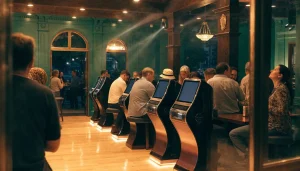
A search result can still be useful for identifying what needs checking. It can surface a listed venue, its contact details or a published schedule. But a green “open” label, a recent-looking listing or a result near the top of a page does not establish that the gaming area is available at that moment. The display may reflect ordinary scheduled hours rather than a live operational update.
It is also worth distinguishing a published schedule from an exception. A venue may have a listed opening pattern and still be affected by a temporary change. Conversely, a result that lacks a current status does not prove that the venue is closed. Without direct, timely confirmation, the status remains uncertain; inferring it from a search display turns an estimate into a fact.
Early and late availability
Requests for pokies early in the day or late at night need the same check. A phrase such as “open early” describes a desired time, not a verified service. Search results may bring up venues with hours that seem relevant, but the schedule itself should be checked against an official source, and any current exception should be confirmed directly.
A time-specific search can also produce results for a different kind of business or for premises whose overall hours do not match the gaming area’s availability. That is why the wording of a listing matters. If it only states that a venue is open, it may not answer whether pokies are operating. If the listing gives a schedule but no indication of its source or freshness, it should not be treated as a live update.
For a visit planned around a particular time, the useful confirmation is a clear response about the gaming area at that time. If the information is ambiguous, the ambiguity is the result: there is not enough to call the status confirmed. A displayed schedule and an answer about present operation are different records, and neither should be silently substituted for the other.
What an open result does not establish
An open-status result says nothing reliable about a pokie’s payout percentage, the machines available, or whether a particular game is operating. Those are separate questions. Opening status is about access at a point in time; it is not a measure of game performance or a promise about what will be available inside.
Likewise, a result for Melbourne generally does not confirm conditions at every venue across the city. A broad location label may cover places with different schedules and different current circumstances. Confirmation needs to match the actual venue and the intended visit, rather than relying on a city-wide impression.
The useful standard is modest: treat search listings as pointers, check the venue’s own current information, and seek direct confirmation when the timing matters. Until that confirmation is available, “open now” remains a displayed status, not proof that pokies are operating.
What a Pokie’s Return Percentage Can—and Cannot—Tell You
A return-to-player percentage is a theoretical measure of how much a pokie is designed to return across play over time. It describes an expectation built into the game’s mathematics, not a promise about the result of a session. A higher stated return may look like a clear way to identify the best-paying pokie, but the figure is useful only if it applies to the particular version being played.
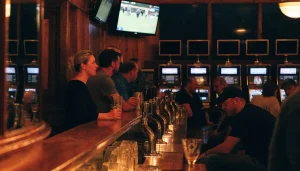
A specialist review reports that some game providers let casinos choose among different return settings for the same pokie. The title alone, therefore, may not identify its return percentage. Two casinos could offer a game with the same name but different settings. Without a figure confirmed for the specific version, ranking Melbourne casino pokies by name would give a false impression of precision.
That distinction matters when comparing games described as the best pokies in Melbourne. A title may be familiar, widely available or associated with a particular style of play; none of those details establishes its return setting. Nor does a game’s reputation show what setting a particular Melbourne venue has selected. Claims about the best-paying pokies in Melbourne need evidence tied to the actual game configuration, not merely a list of recognisable names.
What the percentage describes
RTP is a long-run theoretical measure. It does not mean that a particular player will receive that share of their stake back, or that losses will be balanced by a later win. It is not a session target, a payout schedule or a forecast for the next spin. Treating it as any of those would turn a statistical property into a personal promise.
Each spin is generated as a separate random outcome by the game’s Random Number Generator. The result of one spin does not make a win on the next spin more likely, and a run of losses does not create an obligation for the game to pay. The same applies after a win: the previous result does not set the next one. A return percentage does not override that independence.
This is why short-term results cannot reliably confirm whether a game has a high or low RTP. A session may finish well above or below a theoretical expectation without revealing the setting. A small run of results is not a substitute for the configured return figure, and a conspicuous win does not demonstrate that a game pays more generously overall.
What a comparison can establish
A useful comparison needs the return setting for the exact version, along with confidence that the information relates to the game being considered. If only a title is supplied, the comparison stops there: it can identify the game, but not establish its setting. If the setting is not disclosed or cannot be matched to that version, a ranking of the best pokies in Melbourne is not supportable on RTP grounds.
This applies to searches for pokies in Melbourne, in the CBD or around the city. Location does not resolve the setting question, and a venue’s general reputation cannot answer it. A game-level percentage is not evidence about every version of that game at every Melbourne venue.
The practical limit is straightforward: RTP can help describe a game’s theoretical return when the applicable setting is known. It cannot predict a particular result, compensate for random variation or prove that one named pokie will deliver better outcomes in an individual session. A “best-paying” label without a verified, version-specific figure is a ranking without its decisive measurement.

What Melbourne Pokies Venues Must Record and Staff
A venue’s machine count and its operating procedures are more useful facts than a label such as “best pokies venue”. A name or a room full of machines does not show how gambling-related concerns are handled. The relevant checks are concrete: whether a staffing requirement applies and whether incidents involving possible gambling harm are recorded.
A report by regionriverina.com.au describes a requirement for venues with more than 20 gaming machines to have a dedicated responsible gambling officer (RGO) on duty while those machines are operating, from 1 July. The threshold is based on the venue’s machine count, and the duty period is tied to machine operation. It is not a general statement that an RGO is present at every venue or at all times.
That distinction matters when comparing Melbourne pokies venues. A venue below the stated machine threshold is not covered by that particular staffing rule as described in the report; a venue above it has a specified on-duty role while its machines run. The requirement does not, by itself, establish the quality of a venue’s practices, its machine settings or the experience offered to patrons. Those are separate questions.
The same report describes a gambling incident register for recording occurrences, including situations in which a patron’s behaviour indicates possible risk of, or harm from, gambling. The register is a record of incidents, not a public scorecard. Its existence would not establish that an individual venue has had no incidents, nor does it provide a basis for ranking venues by safety or performance.
Responsible Gambling Requirements
Venues with more than 20 gaming machines are required to have a dedicated responsible gambling officer (RGO) on duty during machine operation. Additionally, venues must maintain a gambling incident register to record occurrences where a patron's behaviour indicates a possible risk of gambling harm.
For anyone assessing Melbourne pokies venues, the practical distinction is between a published procedure and evidence about a particular venue. A general report can describe the requirement, but it cannot confirm that a named venue has a particular machine count, an RGO on duty at a particular moment, or a complete register. Those details should not be inferred from a venue’s size, reputation or promotional description.
The reporting duty also concerns conduct and circumstances, rather than a machine’s performance. An entry may relate to behaviour suggesting that gambling is affecting a patron; it does not indicate that a particular pokie is more likely to pay, or that a venue offers better returns. Venue oversight and game-level return percentages answer different questions.
This is why “best pokies in Melbourne” has no simple operational answer. Staffing and incident recording can be described as obligations, but they do not produce a verified league table. Without reliable, venue-specific information, calling one location the best would turn a compliance description into a recommendation the evidence does not support. A formal role on duty is a defined measure; it is not a quality rating.
The register is similarly limited as a comparison tool. Its purpose, as reported, is to document relevant occurrences, including signs that a patron may be at risk or affected by gambling harm. A record’s presence should not be treated as proof of misconduct, while the absence of publicly visible information should not be treated as proof that no incidents occurred.
For visitors comparing Melbourne venues, these requirements offer a narrow but useful frame: machine-count thresholds determine whether the reported RGO duty applies, and the incident register is intended to capture specified gambling-related occurrences. Neither fact identifies a top venue, confirms the current arrangements at a particular address or says anything about individual pokies’ returns.

Crown Melbourne: What Can Be Verified About Its Pokies
A game’s name alone cannot establish the return percentage of a pokie at Crown Melbourne. A specialist review reports that some providers let casinos choose between different RTP settings for the same game. That possibility explains why a title’s published return may not identify the setting used at a particular venue. It does not show which games Crown offers or which settings, if any, apply there.
The distinction is between a game’s theoretical configurations and a venue’s actual machines. A provider may make several configurations available; that is not evidence that every casino uses them, or that any particular venue selects a specific one. A claim about Crown’s returns therefore needs venue-specific documentation that identifies the game and its applicable setting. A game title, a provider’s general information or a broad RTP figure cannot fill that gap.
The same standard applies to descriptions such as “best pokies room.” That phrase is a ranking, not a measurable finding. Without comparable information about the games and settings available at the venue, it cannot establish that one room offers better returns than another. Nor does a room’s reputation, presentation or selection of titles demonstrate a higher return. Those are separate claims requiring separate evidence.
A careful assessment of Crown Melbourne pokies should therefore separate three questions: which titles are available, what RTP setting applies to each title, and what evidence supports that setting. A game list can address availability, but not necessarily configuration. A provider’s information can explain possible settings, but not necessarily the venue’s choice. Only evidence that connects a particular title and setting to Crown can support a Crown-specific RTP claim.
This leaves a narrow but useful conclusion. The possibility of different settings at different casinos is relevant when interpreting game-level return claims; it is not proof of Crown Melbourne’s settings. Any comparison that presents a specific Crown return, or labels its room the best, should be supported by clear, venue-specific information rather than inferred from a game name or a general provider statement. Without that link, the claim remains unsubstantiated, regardless of how confidently it is phrased.
Online Pokies, Cashless Play and the Australian Legal Position
A pokie played through an internet service is not the same thing as a machine inside a Melbourne venue. The distinction matters because the legal rules apply to the service being provided, not to whether a game resembles a land-based pokie or whether a payment is made in cash.
Under the Interactive Gambling Act 2001, companies cannot lawfully offer real-money online pokies to people in Australia without a domestic licence. No Australian online-casino licences have been issued, so there is no Australian-licensed online casino. Descriptions such as “Melbourne casino online pokies” do not change that position: an Australian location in a website’s wording is not evidence of an Australian licence.
An offshore operator’s presence on the internet is not proof that its service is authorised in Australia. Nor does a payment option establish that a gambling service is licensed, fair or transparent. These are separate questions, and a cashless payment method answers none of them.
There is also a material financial risk if an offshore casino withholds a balance or refuses a withdrawal: Australian players have no legal recourse in Australia to recover winnings from that operator. The absence of a domestic licensing route is therefore not a technicality. It affects what protections and remedies are available when a dispute concerns money.
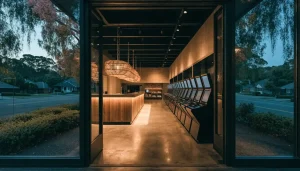
“Cashless pokies” can refer to different arrangements, from paying electronically at a physical venue to playing through an online service. The word cashless alone does not identify where the game is hosted or which legal rules apply. No conclusion about a Melbourne venue’s payment arrangements follows from the phrase, and an online payment method should not be treated as evidence that a physical venue offers cashless play.
Likewise, a request for the best-paying or high-limit pokies does not establish the return settings, limits or terms of any particular game or venue. Those claims require specific, reliable information about the product and its conditions. A game name, a Melbourne reference or a payment logo is not a substitute for that evidence.
The practical distinction is between the location of a venue and the location of an online gambling service. A land-based venue search concerns a physical place; an online service concerns an operator providing gambling over the internet. The two should not be merged simply because both use the word “pokies.”
For money decisions, the relevant checks are the nature of the service, the operator’s legal position in Australia and the available remedy if funds are disputed. On the online-casino question, the position is clear: there is no Australian-licensed online casino, and operators have no domestic licence under which to offer real-money online pokies to Australians.
How to Check Melbourne Pokies Hours
A venue’s published hours describe its schedule; they do not establish that it is open at a particular moment. Those are separate checks. A listing that labels a venue as operating around the clock is a claim about its stated schedule, not confirmation that the information is current or that access to pokies is available whenever the doors are open.
Checking Venue Hours
-
1
Review official sources
Check the venue's own current information to see if hours are clearly attached and recently maintained.
-
2
Resolve conflicts
If third-party directories conflict with official info, treat the status as unconfirmed.
-
3
Seek direct confirmation
Call the venue to verify if the general opening hours specifically apply to the gaming area.
For Melbourne pokies opening hours, the most useful starting point is the venue’s own current information. Check whether the hours are clearly attached to the venue and whether the page appears recently maintained. If a listing gives no date or indicates that its details may be old, treat the schedule as unconfirmed rather than filling gaps with assumptions.
A phone call can clarify an unclear or conflicting schedule. The useful point to confirm is whether the published hours apply to the venue generally and whether pokies are available during those hours. A venue may have different operating arrangements for different parts of its premises; opening the building does not, by itself, prove that every service is available.
Third-party directories can help identify a possible schedule, but they should not settle a discrepancy. If a directory says a venue operates around the clock while the venue’s own information gives different hours, the conflict remains unresolved until the venue confirms it. Repeated copies of the same listing do not amount to independent confirmation.
Claims about 24-hour pokies in Melbourne need the same scrutiny. Check that the claim refers to a specific venue, not a broad area or a search label, and look for a current schedule from that venue. If the information only says “open 24 hours” without making clear what is open, it does not establish that pokies are available continuously.
Scheduled hours can also be affected by changes that are not reflected immediately in older listings. Where timing matters, confirmation from the venue is more useful than relying on an undated directory entry. If no clear schedule is available and the venue cannot confirm it, its operating hours remain unknown. That is a more defensible result than treating an unverified “24 hours” label as a standing guarantee.

Pokies Across Melbourne’s Eastern and Western Areas
Melbourne’s eastern suburbs, south-east, western suburbs and St Kilda are separate location scopes, not interchangeable labels for one area. A venue search framed around the east does not establish anything about the south-east or west; St Kilda is a distinct locality rather than a substitute for either broad suburban region. Naming a part of Melbourne alone does not identify a particular pokie venue.
Newcastle and Melbourne are also separate city searches. Combining their names does not define a single local area, so a result about one should not be read as information about the other. Location wording needs to be precise before it can support a useful comparison.
A separate distinction applies to “best”. That label does not identify a measurable feature by itself. A meaningful comparison would need a defined basis, such as a stated game setting or a specific venue attribute. Without that, “best in the east” and “best in the west” are claims without a shared measure. Geographic proximity cannot establish a machine’s settings or performance.
The maximum bet is another matter altogether. It is a feature of an individual pokie, not a reliable description of an entire suburb. A location label cannot establish the maximum stake available at a particular machine, and a high maximum is not evidence that a game is better. These are separate questions: where a venue is, what machines it has, and what stake settings apply.
Responsible gambling tools include deposit limits, loss limits, session time limits and self-exclusion. Those controls concern managing gambling activity; they do not resolve questions about a venue’s location or a machine’s maximum stake.
For searches focused on Melbourne’s east, south-east, west or St Kilda, the useful comparison is therefore specific: the area being considered, the particular venue, and the pokie feature being assessed. Broad labels and a “best” ranking cannot replace those distinct details.
Pokies in Melbourne’s CBD and Clubs
Searches for pokies in Melbourne’s CBD or at local clubs often combine two different questions: where machines are available, and whether a particular venue suits the person searching. A club label alone does not establish what machines it has, how many are operating, or what conditions apply. Nor does a central address make one venue objectively the best.
A useful comparison starts with information that can be checked directly: the venue’s own current details, its stated entry conditions and any published information about facilities. If machine availability or access is material, confirmation from the venue is more reliable than an old directory entry or a broad description of Melbourne’s entertainment options. A name appearing in a listing is not evidence of a specific machine offering.
Club searches can also refer to different kinds of organisations and premises. The word “club” by itself does not establish that a venue has pokies. Venue-level details need to be confirmed individually rather than inferred from a category, neighbourhood or recommendation. Without comparable information, a “best pokies” ranking would be a preference presented as a finding.
Self-exclusion is a separate consideration from locating a venue. Deposit limits, loss limits, session time limits and self-exclusion are recognised responsible-gambling tools, but the availability and operation of a venue-specific process should be checked with the relevant venue. A broad claim that a person can exclude themselves from every Melbourne venue would need evidence covering those venues and their arrangements.

BetStop has a narrower scope: it applies to Australian-licensed operators and does not bind offshore sites. It should not be treated as a universal venue-exclusion service. For land-based play, the relevant question is what exclusion process the venue itself provides and how that process applies.
The legal minimum age for gambling in Australia is 18. Beyond that threshold, location searches do not establish suitability, machine choice or safeguards. CBD and club listings can help identify places to investigate, but a defensible comparison depends on current, venue-specific information—not on the number of search results or the confidence of a ranking.
Pokies in North and South Melbourne
North Melbourne and South Melbourne are separate location labels, so a result described simply as “Melbourne” does not establish that a venue is in either area. For a location-specific comparison, the suburb attached to the venue’s street address matters more than a broad city tag or a map pin displayed near a boundary.

Listings can use different labels for the same general part of the city. That makes the address the useful check: confirm the suburb written in the venue’s own details, then compare it with the area being considered. A result appearing in a nearby map view is not, by itself, proof that the premises are in North Melbourne or South Melbourne.
The same distinction applies when comparing pokies. A venue’s suburb does not establish its machine selection, returns, or other operating conditions. Those are separate details and should not be inferred from a place name. Without a confirmed address and venue-level information, naming a local option or ranking one above another would turn a geographic label into a recommendation it cannot support.
For North Melbourne, keep the search area tied to addresses explicitly identified with that suburb; apply the same standard to South Melbourne. If a listing gives only a city-wide description, it does not resolve which side of the distinction it belongs to. Precise suburb identification is a modest check, but it prevents a broad Melbourne result from being mistaken for a local one.
Are online pokies legal for Australian players?
Yes, Australian players can legally use offshore sites that accept them, but operators cannot legally offer real-money online pokies to Australians without a domestic licence, and none have been issued. Players have no legal recourse in Australia if an offshore casino withholds winnings.
What is the legal age for online gambling in Australia?
You must be at least 18 years old to gamble online in Australia.
What does “wagering requirement” actually mean?
It is the amount you must bet, usually expressed as a multiplier, before bonus-related funds or winnings can be withdrawn. For example, a 40x requirement on a $500 bonus means $20,000 in bets.
What is the best payment method for fast withdrawals in Australia?
E-wallets such as Skrill and Neteller are popular for their speed, though that does not guarantee a particular withdrawal time.