Understand the difference between staying at a casino hotel and booking separate accommodation, alongside dining, games and venue information.
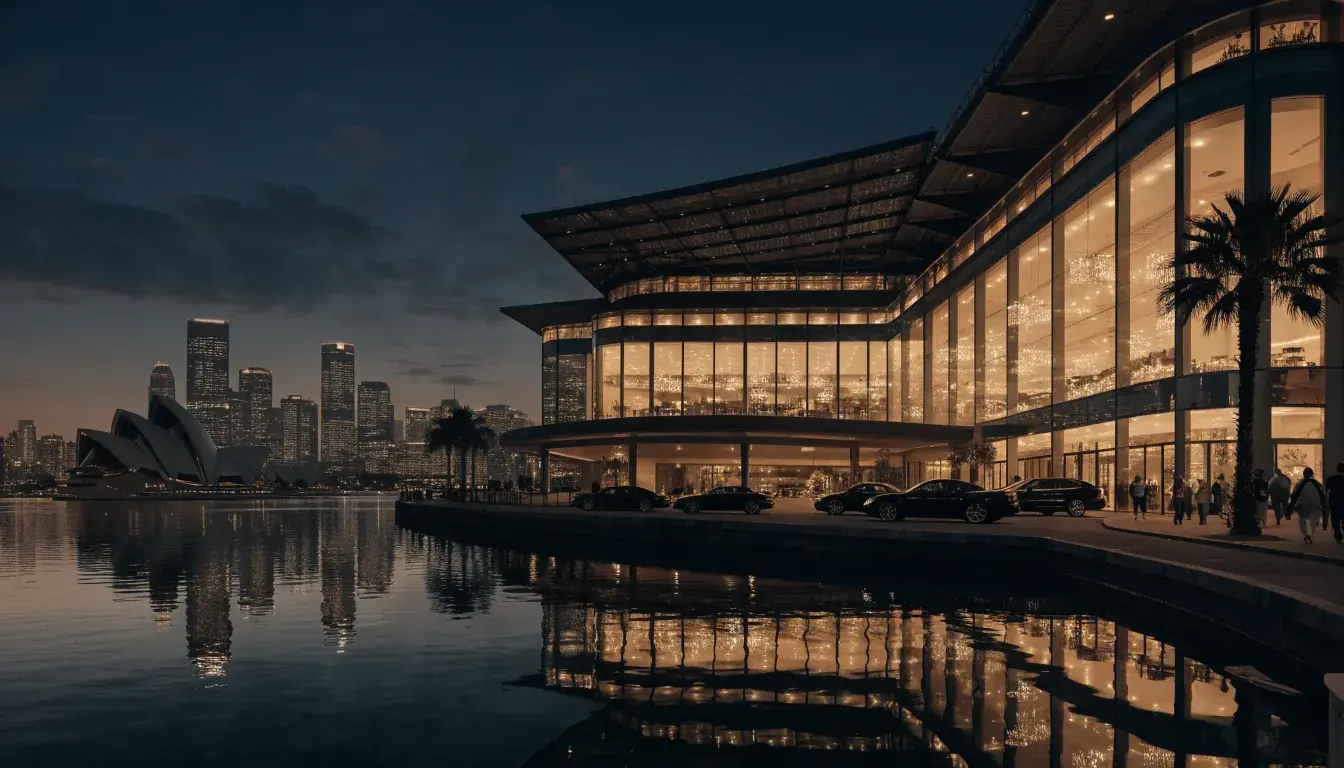
Hotel Rooms and Casino-Stay Deals
A casino hotel and a hotel near a casino are different products. In the first, the accommodation and gaming venue are part of the same property; in the second, the hotel is a separate booking, and reaching the casino is an additional part of the plan. That distinction matters before comparing prices: a low room rate does not establish that a stay includes casino access, a special offer or any other benefit.
For a Sydney casino stay, the practical question is whether the booking is for an on-site room or simply a city hotel chosen for its location. Search results and promotional wording can blur the two. The property name, booking address and room description should identify what is actually being sold. If the hotel and casino are separate, convenience depends on the route between them, not on the word “casino” appearing in a listing.
What a hotel deal needs to show
A deal is a set of conditions, not a price label. Its value can be assessed only after the full amount payable and the inclusions are clear. A headline rate may not be the final bill, and a package description alone does not establish what the room price covers. Before treating an offer as a saving, compare the same stay dates and room basis, then account for any stated taxes, fees, deposits, cancellation terms and required payment dates. If those details are not displayed, the apparent saving cannot be calculated reliably.
Choosing a casino for Sydney play calls for a clear look at the information available about each operator. Use these concise profiles as a starting point when considering your options.
-
JeetCity Casino
- License
- Curacao eGaming (Dama N.V.)
JeetCity Casino lists a Curaçao eGaming licence held by Dama N.V. This provides a specific licensing detail to consider.
-
House of Pokies
- License
- international iGaming licence – jurisdiction not named in the source
- Payout speed
- PayID 1-24 hours
- Min. deposit
- A$30 (PayID from A$10)
House of Pokies lists PayID payouts in 1–24 hours and a minimum deposit of A$30, or A$10 via PayID. Its source describes an international iGaming licence but does not name the jurisdiction.
-
LuckyVibe
- License
- Curacao Gaming Control Board OGL/2023/176/0095 (Hollycorn N.V.)
LuckyVibe lists a Curaçao Gaming Control Board licence, OGL/2023/176/0095, held by Hollycorn N.V.
-
Rollero Casino
- License
- Curacao Gaming Control Board OGL/2023/176/0095 (Hollycorn N.V.)
Rollero Casino lists a Curaçao Gaming Control Board licence, OGL/2023/176/0095, held by Hollycorn N.V.
-
Bizzo Casino
- License
- Curacao Gaming Control Board (TechSolutions Group N.V.)
Bizzo Casino lists a Curaçao Gaming Control Board licence held by TechSolutions Group N.V.
-
Kingmaker
- Payout speed
- crypto ~90 minutes, fiat 1-5 days
- Min. deposit
- A$30
Kingmaker lists crypto payouts at about 90 minutes and fiat payouts in 1–5 days. The stated minimum deposit is A$30.
-
Lucky Dreams
- License
- Curacao
- Min. deposit
- A$20 (POLi)
Lucky Dreams lists a Curaçao licence and a minimum deposit of A$20 when using POLi.
-
SkyCrown
- License
- Tobique Gaming Commission
- Payout speed
- crypto ~10-15 minutes, fiat 1-5 days
- Min. deposit
- A$30
SkyCrown lists a Tobique Gaming Commission licence. Its stated payout times are about 10–15 minutes for crypto and 1–5 days for fiat, with a minimum deposit of A$30.
-
DragonSlots Casino
- License
- Curacao Gaming Authority (Jumpman Gaming Ltd)
DragonSlots Casino lists a Curaçao Gaming Authority licence held by Jumpman Gaming Ltd.
-
MrPacho
- Payout speed
- crypto 30-120 minutes, fiat 24-72 hours
- Min. deposit
- A$30
MrPacho lists crypto payouts in 30–120 minutes and fiat payouts in 24–72 hours. The stated minimum deposit is A$30.
The same discipline applies to packages described as casino-stay deals. The word “package” does not, by itself, confirm that a room, gaming credit, food or another service is included. Each item needs to appear in the booking terms, with any restrictions attached to it. A benefit that cannot be used on the planned dates or under the stated conditions has no practical value for that stay.
Room categories also need to be read as booking terms rather than assumptions. A “room” listing does not establish its size, view, bed configuration or facilities. Those details should be checked in the specific room description before payment. Availability and rates can change with dates and booking conditions, so an old advertisement or a general description is not a substitute for the terms shown for the intended stay.
Separate the room booking from casino access
An overnight stay may make a visit to a casino more convenient, but it does not turn the hotel booking into a promise about gaming access or operating times. Room access and casino opening hours are separate matters. A hotel may have its own check-in and check-out conditions, while the gaming venue follows a different schedule. Neither should be inferred from the other.

This distinction is especially useful when comparing a Sydney casino hotel with other hotels in the city. The relevant calculation is the accommodation cost plus any separate travel and booking costs, set against the actual convenience gained. A hotel near a casino may suit a stay without being part of the casino property; an on-site room may reduce the need to travel between the two, but the booking terms still determine what has been purchased. Distance alone does not prove that a hotel is affiliated with a venue.
For anyone searching for Sydney casino hotel rooms or a hotel stay linked to a casino, the dependable comparison is therefore document-based: property identity, room description, final payable amount, included services and conditions. Opening hours should be confirmed separately rather than treated as part of a room deal. If a listing does not state an inclusion or condition, it should not be counted in the value calculation. The result is less dramatic than a headline offer, but it is the amount and arrangement that can actually be relied on.
Poker Rooms, Tournaments and NSW Machine-Gambling Rules
A search for poker at a Sydney casino can refer to two different activities: playing poker against other people, or using an Electronic Gaming Machine (EGM), commonly called a poker machine in Australia. The shared word does not make the products equivalent. Poker-room and tournament information concerns a particular game, format and event; NSW machine-gambling rules apply to poker machines.
A tournament entry or room listing should be read for its specific terms, rather than treated as evidence that every form of poker is available at a venue. Relevant details include the game format, registration arrangements, start time and any entry conditions. Those particulars determine whether an event suits a player’s plans; the word “tournament” alone does not establish them. Schedules can change, so an old event reference is not a reliable indication of what is running today.
The same distinction applies to searches for a casino sports bar or a venue being open now. A bar listing does not establish that poker is being played there, and a poker event listing does not confirm that a particular room or bar is operating at the time of a visit. Venue access, gaming activity and event schedules are separate details. Each needs current confirmation from the relevant venue before travel is planned around it.
NSW rules for poker machines
In NSW, a person must be at least 18 to gamble on poker machines. The state also requires pre-commitment: a player sets a loss limit before starting to play. That limit is a control on machine gambling, not a tournament schedule or a poker-room booking condition. Keeping those categories separate matters because a search result using “poker” may refer to either one.

Pre-commitment makes the intended loss boundary part of the decision before play begins. It is not a prediction of how a session will end, nor does it change the independent outcome of an individual game. A planned limit is meaningful only when it is treated as a ceiling rather than a target to revise after losses. Increasing bets to recover money changes the exposure, not the odds; losses should not be chased, and a session budget should remain within the available bankroll.
Club Liverpool is a useful NSW comparison for machine-gambling scale: it has the highest number of operational poker machines among clubs in the state. That comparison concerns a club and its machines. It does not make Club Liverpool a Sydney casino, establish a poker room there, or provide a ranking of casino poker tournaments. Machine count is also not a measure of poker-room quality or event suitability.
For a Sydney casino poker room, the practical distinction is therefore between the activity sought and the rules attached to it. A live poker tournament is not an EGM session merely because both may be described using the word “poker”; the NSW age and pre-commitment requirements stated here concern poker-machine gambling. Event participation and machine play should not be conflated when comparing venue information.
An “open today” label also answers only a limited question: it does not by itself confirm that a poker room is open, that a tournament is scheduled, or that a sports bar is serving at the relevant time. Those are separate operating details, and a general casino status should not be treated as confirmation of each service. The useful comparison is between confirmed event terms and the intended activity—not between loosely related labels.
Breakfast, Buffets and Rewards
Breakfast, a buffet and a rewards programme are separate propositions, even when they appear under the same Sydney casino resort search. Each needs its own terms. A breakfast listing describes a meal and its service conditions; a buffet listing describes a particular format and may apply only at specified times; rewards describe benefits governed by programme rules. Treating these as one package can make a headline offer look more complete than it is.
Do
- Verify the venue, service period, and inclusions for breakfast
- Check if the buffet price covers the full selection
- Subtract only the genuinely redeemable amount from rewards
Don't
- Assume "casino breakfast" is served on the gaming floor
- Treat a low headline price with unclear access as a saving
- Value points or credits at face value without checking rules
For breakfast, the useful details are the venue, service period, price, inclusions and whether the meal is available to non-guests. A phrase such as “casino breakfast” does not establish that breakfast is served on the casino floor, that it comes with a stay, or that it is available every day. Those are different arrangements, and the distinction affects both cost and planning. A stated price is only comparable when the same inclusions and access conditions are clear.
A buffet breakfast also needs to be assessed separately from a general buffet. The word “buffet” identifies a service style, not the dishes, hours, price or eligibility. Before treating it as a fixed-cost meal, the terms need to show whether the price covers the full selection, whether access is limited to particular guests, and whether service is operating on the intended date. Without those details, the value cannot be calculated. A low headline price with unclear access conditions is not a saving; it is an incomplete quote.

The same arithmetic applies to casino rewards. A benefit has a usable value only when the qualifying activity, restrictions, expiry and redemption method are understood. Points or credits should not be valued at face value unless the rules permit that conversion. If a reward requires spending before it can be used, the relevant comparison is the additional spend against the benefit actually redeemable—not the promotional figure printed beside it. An award that cannot be used for the planned meal has no practical value for that meal.
Membership can also involve conditions that change the calculation. A reward may be limited to particular outlets or dates, or may not combine with another offer; those possibilities need confirmation in the programme terms before a benefit is counted. The comparison is straightforward: record the cash price, identify the eligible reward, subtract only the amount that can genuinely be redeemed, then account for any extra spend needed to qualify. A discount is not a saving if the required purchase costs more than the discount.
For anyone comparing a Sydney casino resort with a standalone meal, the sensible unit is the total outlay for the same occasion. Keep food, access eligibility and any required purchase in separate lines. Do not assign value to a reward merely because it is described as complimentary. “Complimentary” has a precise financial meaning only when no additional qualifying spend is required.
Employment searches sit apart from breakfast and rewards. Casino jobs in Sydney concern the operator’s recruitment process, not guest benefits; vacancies, duties and employment conditions need to be assessed through the relevant employer’s current careers information. A rewards page cannot establish a job opening, and a hospitality role does not establish access to a meal offer.
The practical comparison is therefore not “breakfast included” versus “breakfast free” until the conditions support those labels. It is the stated meal cost, access rules and redeemable reward value, calculated independently. When any term remains unclear, the unconfirmed benefit should carry no value in the budget.
Parking Queries and the Online-Casino Legal Distinction
Parking and online gambling are separate questions, even when both are attached to a search for the best casino in Sydney in 2026. A venue visit concerns physical access: whether parking is available, whether valet service is offered, and whether any parking is free. Those details can change and should be confirmed with the venue before setting out. A search for “free parking” does not establish that complimentary parking is included, while “valet parking” is a service to verify rather than an assumption to build into a travel plan.

The same distinction applies to dining and bingo. Restaurant access is a question about on-site services; bingo is a separate activity. Neither tells anything about whether an online casino can lawfully serve someone in Australia. Combining venue terms with “online casino” in one search does not make the legal position the same for both.
Under the Interactive Gambling Act 2001, operators based in Australia cannot offer real-money online casino games to people located in Australia. That restriction covers casino-style games such as pokies, blackjack and roulette. Sports betting remains widely accessible and legal, but it is a different category of gambling and does not make online casino games lawful.
Offshore casino platforms sit outside Australian regulation. Their position is often described as a grey area for players: using one is not technically illegal for the player, but the service is not regulated under Australian law. That distinction is material. An offshore operator is not an Australian-regulated casino simply because its website loads or accepts an account.

For a Sydney visit, parking arrangements should be treated as a practical venue enquiry and checked against current information from the venue. For online access, the relevant issue is the law governing the operator and the service, not the availability of a local car park. A venue’s physical presence in Sydney does not establish that it may offer online casino games to customers in Australia.
The calculation is straightforward: parking affects the cost and logistics of attending in person; online gambling raises a separate question about whether the service may be offered to people in Australia. No ranking of a “best” Sydney casino can be inferred from either a parking search or an online-casino listing. The first requires current venue details; the second is governed by the Interactive Gambling Act, not by the wording of a website’s advertising.
Accommodation Near the Casino
A stay near a casino and a room inside the casino are different arrangements. The first means booking with a separate accommodation provider and travelling between the property and the venue. The second, where available, means staying on site. Treating both as “Sydney casino accommodation” can blur the costs and practicalities that determine whether a booking suits the visit.
For an off-site stay, the useful comparison is not the word *near* in a listing but the property’s precise location relative to the intended venue. Check the accommodation address and the casino location separately, then assess the route between them. A map result, a neighbourhood label or a promotional description is not a substitute for a route that matches the planned journey. The relevant distance may differ depending on whether the trip is made on foot, by public transport or by car.
The total cost also extends beyond the room price. A separate stay can involve transport and other costs that do not apply in the same way to an on-site room. Conversely, an advertised room rate alone does not establish that an on-site stay is the lower-cost option. A comparison needs the full booking total and the travel arrangements for the same dates. Without those figures, a claim that one option is cheaper is packaging, not arithmetic.
Comparing Accommodation
-
1
Identify the property
Check the actual address and location relative to the venue rather than relying on the word "near".
-
2
Calculate total costs
Sum the room price with separate travel and booking costs for both on-site and off-site options.
-
3
Review booking terms
Compare the same stay dates, room occupancy, cancellation terms, and payment timing for both choices.
A search for accommodation near Sydney Casino may return properties with different meanings of “near”, different booking conditions and different inclusions. Compare the actual property, not just the listing label. Check the dates, room occupancy, cancellation terms, payment timing and any extra charges shown before confirming a reservation. These conditions determine what the quoted amount buys and what remains payable if plans change. The same discipline applies to a Sydney casino accommodation deal: a discount is only useful if its final price and conditions compare favourably with a standard booking for the same stay.
Casino promotions should be assessed separately from accommodation offers. A promotion associated with gaming does not, by itself, establish that lodging is included or discounted. Any claimed accommodation benefit needs explicit booking terms: what is included, when it applies, and whether other conditions affect the total. Without those details, the promotion cannot be treated as a reduction in the cost of a stay.
Timing can affect the practical choice, but venue opening times or trading hours should not be inferred from a hotel listing. Those are separate details to confirm through the relevant venue’s current information. Likewise, searches mentioning gaming machines or poker machines do not establish anything about nearby lodging or its availability. The booking decision remains a comparison of accommodation, travel and stated terms.
For a stay outside the casino, the final calculation is the room total plus the cost and time of reaching the venue. For an on-site stay, it is the room total under its own conditions. Comparing those totals on the same dates is the only sound basis for deciding which arrangement offers better value; proximity alone supplies no price information.

Contact Details, Table Games and Getting There
A contact number, map pin or venue listing is useful only if it matches the casino being considered. Sydney casino-related searches can lead to different operators and third-party listings; a result labelled “casino” does not establish that it is current or official. For enquiries about entry, services or access, the operator’s own published contact channel is the appropriate starting point. A number copied from an undated directory has no reliable update trail.
The same distinction matters when looking for a map or planning a trip. A map result can identify a destination, but it does not confirm current access arrangements, parking availability or the route in use. Those are separate details and can change independently. Confirm the destination and travel arrangements through current operator information before setting off; do not treat a search-result pin as a transport plan.
Baccarat and craps
Baccarat and craps are table-game terms, not confirmation that either game is available at a particular Sydney venue. A listing, photograph or old discussion may describe a past offering rather than the present floor. Game availability can also be a narrower question than whether a casino operates table games at all. For a specific game, the operator’s current information is the relevant check; an assumption based on the name of the venue is not.
The distinction is practical: a game-specific enquiry needs a game-specific answer. If baccarat is the priority, confirmation of baccarat is needed. The same applies to craps. Neither term establishes a schedule, table location or operating status, and no such detail should be inferred from a general casino description.
Bars, concerts and related enquiries
A bar search and a concert search concern different services. A bar result does not establish its current hours or availability, while a concert listing does not establish that a casino is hosting the event or that access arrangements are unchanged. These details should be checked against the relevant operator or event organiser rather than combined into a single assumption about the venue.
For a direct enquiry, identify the precise issue before contacting the operator: a game, a bar, an event, a map or travel access. That makes the answer easier to assess and avoids treating a general contact listing as confirmation of every service. Where a result does not identify its publisher or date, it is weak evidence for a current decision.
“Best casino in Sydney” is not resolved by finding a phone number, a car-park reference or a table-game name. Those are practical details, each requiring its own current confirmation. The defensible comparison is based on information that can be checked for the exact venue and purpose, not on search wording or an outdated listing.
Opening Hours, Events and Entertainment
Whether a Sydney casino is open is a date-specific question, not a permanent feature of a venue. Operating status, trading hours and access arrangements can change, so an older review or an undated directory entry is weak evidence for a visit planned in 2026. A reliable check needs a current notice from the venue or the relevant authority, with the date and the part of the property covered. “Open” may refer to a particular facility rather than every service on site.

The same distinction matters for searches about a reopening. A report that a venue is expected to reopen, a development proposal, and confirmation that trading has resumed are different stages. A reopening claim should be supported by a dated announcement that states what is operating and from when. Without those details, the word “reopen” describes an expectation, not a usable schedule.
Events and entertainment
An events listing is most useful when it identifies the event, its date, location and ticket conditions. A headline announcing entertainment without those particulars cannot establish whether a performance is happening on a chosen night or whether entry is available. Event information also needs to be separated from general casino access: a ticketed performance does not, by itself, confirm that every venue facility is open.
For a review of Sydney casino entertainment, the relevant measure is not the size of an event calendar but whether individual listings are current and sufficiently specific to plan around. A past performance is evidence of past programming only. It does not establish a recurring schedule, future bookings or a regular entertainment offer.
Development and employment
Development reports should be read according to their status. A proposal, an approval, construction work and a completed project are not interchangeable. The practical question is whether a change has been completed and is operating, rather than whether it has been discussed or announced. Dates and the exact scope of a project matter; broad language about a “new” development may conceal that distinction.

Employment information has a similar boundary. A general statement that a venue employs staff does not establish current vacancies. A usable vacancy notice identifies the role, location, closing date and application route. Those details can expire, so a saved listing is not proof that applications remain open.
A casino menu is also separate from an events programme. A menu mention in an event notice should not be treated as a complete or current food offer; that requires its own dated venue information. The same standard applies to reviews: publication date, what was actually assessed and whether the account describes current conditions all affect its value. In practical terms, the decision rests on dated operating information, not on a confident headline.
Spa, Address and Dress-Code Searches
A Sydney casino address, a spa facility and an entry dress code are separate details, not interchangeable parts of a single venue profile. Each needs confirmation against the particular property being considered. A broad reference to a “Sydney casino” is not enough to identify an address or establish that a spa, bar or specific game is available there.
For an address, use the venue’s own current listing and match the property name to the destination before arranging travel. Similar wording in maps, directories or older pages can refer to different businesses or outdated details. The address itself is a practical fact: if it cannot be confirmed, a confident-looking pin or copied listing does not resolve the uncertainty.
Spa searches require the same distinction between a casino and facilities that may be associated with a wider hotel or entertainment complex. A casino’s presence does not, by itself, establish that it operates a day spa, offers treatments or provides access to one. Those are separate services, with their own availability and conditions. The label “casino spa” is not evidence of a bookable facility.

Dress-code wording also needs to be venue-specific. A general impression about what people wear in Sydney does not establish an entry rule, and a rule for one area may not apply to another. Before relying on a clothing requirement, check the venue’s published guidance for the intended area and visit. If no clear policy is available, the precise requirement remains unsettled; assumptions are not a substitute for an entry condition.
Queries about bars and casino games should be checked in the same property-specific way. A bar listing does not establish its current service or access conditions, while a general casino description does not confirm which games are available at a particular venue. Names, hours and access can change, so an old directory entry is a weak basis for planning. That is a verification issue, not a reason to infer a service from the property’s name.
The useful comparison is therefore not a speculative list of spas or dress rules. It is whether each detail is explicitly stated for the exact venue and area: destination, spa service, bar, games and entry policy. Where that information is not stated, the sensible conclusion is limited to what is known. The search phrase “best casino in Sydney 2026” cannot supply an address, confirm a spa or turn an unstated dress code into a rule.
Restaurants and Dining Options
A restaurant search connected with a Sydney casino needs to resolve a specific question: which dining venue is operating, what it serves, when it is open and what a meal costs. The casino label alone answers none of those points. A name appearing in an old listing is not proof that the restaurant still operates, and a venue associated with the wider precinct is not necessarily inside the casino.

For a casino in Sydney, Australia, the useful distinction is between a restaurant located within the venue and one merely nearby. That difference affects the practical plan: walking distance, entry arrangements and whether a reservation is tied to the casino itself. A map pin or general precinct description may not settle it. The restaurant’s own current information is the more relevant place to check location, service times, menu and booking conditions.
Restaurant searches also need to be kept separate from breakfast and buffet searches. A restaurant may offer table service without providing either; a buffet is a particular service format, not a synonym for every dining room. The same applies to a rooftop bar. A rooftop bar is not automatically a restaurant, and the word “rooftop” does not establish that food is served, that the venue is open to the public or that it operates on a given day. Those are separate details requiring confirmation.
Prices are another independent term. A menu image without dates may not represent current pricing, while a booking page may show a set menu or event condition rather than the cost of ordinary dining. The useful comparison is the final stated price for the intended service, including any conditions attached to the booking. Without that figure, claims that one option is inexpensive or good value are packaging, not a calculation.
A practical restaurant check should therefore establish the venue name, its precise location, current menu, service hours, reservation requirements and applicable prices. If any of these are unclear, the gap matters: an attractive listing does not establish availability, and a menu does not establish a table. Searches for restaurants near a casino should be assessed by the same method, while keeping nearby businesses distinct from casino dining.
This approach avoids treating “casino restaurants” as a single product. Each restaurant is a separate operating choice with its own menu, schedule and terms. Until those details are confirmed directly, no particular restaurant, cuisine, rooftop service or price can be presented as a current feature of a Sydney casino.

Food Outlets and Pool Facilities
A search for casual food at a Sydney casino can mean several different things: a food court, a counter-service outlet, or a collection of separate venues. Those labels are not interchangeable. A food court suggests a shared area with multiple food counters; it does not establish that one operates at a particular casino, what it serves, or whether it is open when a visit is planned.
The same distinction applies to a casino pool. A pool associated with a broader property is not automatically part of the casino, open to day visitors, or included with venue access. The word “pool” in a listing may refer to a facility with separate entry conditions. Without confirmation of the venue and its access rules, it cannot be treated as an available part of a casino visit.
For planning purposes, food and leisure facilities should be assessed as separate services rather than assumed features of the gaming venue. Useful details to establish directly include the facility’s exact location, whether it is operating on the intended date, who may enter, and whether access carries a separate condition or charge. For food outlets, the practical distinctions are whether service is counter-based or table-based, whether seating is shared, and what hours apply. These details determine whether an outlet works for a quick meal or requires a different plan.
The phrase “Sydney casino food” does not identify a specific outlet, and “casino pool in Sydney” does not confirm public access to a pool. A venue name alone is not enough to settle either question. Until the relevant service and its entry terms are confirmed, food-court and pool facilities remain separate items to verify—not guaranteed components of a casino visit.
What does the legal status of offshore online casinos and NSW gambling law say?
It is illegal for an Australian-run online casino to offer online casino games to people in Australia under the Interactive Gambling Act. Australian players are not technically breaking the law by using offshore casinos, but those platforms are not regulated under Australian law.
Are pokie machine outcomes random?
Yes. Each online pokie spin is determined by a Random Number Generator and is independent, so previous spins do not affect what happens next.
Which club has the most pokies in NSW?
Club Liverpool has the highest number of operational poker machines among clubs in NSW.