A guide to accommodation, dining, entertainment and practical details associated with Queensland casinos.

Queensland Casino Hotels: Rooms, Rates and Deals
A casino hotel booking has two separate components: the room and the casino. The room price is the amount attached to the accommodation; casino access is not, by itself, evidence of a discount or an included benefit. Any package should be assessed from its written terms rather than from the property’s name or promotional headline.
No particular Queensland casino hotel, room category or rate can be named here. Prices and availability depend on the property and travel dates, so a figure without a dated, bookable offer would not be a useful comparison. The same applies to claims about views, bed configurations, check-in arrangements or included services: these belong to the room listing and booking conditions, not to assumptions about what a casino hotel provides.
For a room comparison, the useful figure is the total payable for the selected stay, not a starting rate detached from dates. The displayed amount should be checked against the final price before payment, including any taxes, fees or other mandatory charges shown during booking. A headline offer can look lower while applying only to a different room, date or booking condition. If the final total or the applicable conditions are unclear, the offer cannot be compared reliably.
Choosing an online casino in Queensland in 2026 calls for checking the details that matter to you, including licensing and available payment information. This list provides a concise reference based on the information available for each operator.
-
JeetCity Casino
- License
- Curacao eGaming (Dama N.V.)
JeetCity Casino is listed with a Curacao eGaming licence held by Dama N.V.
-
House of Pokies
- License
- international iGaming licence – jurisdiction not named in the source
- Payout speed
- PayID 1-24 hours
- Min. deposit
- A$30 (PayID from A$10)
House of Pokies lists PayID payouts of 1–24 hours and a minimum deposit of A$30, with PayID deposits from A$10. Its source describes its licence as an international iGaming licence but does not name the jurisdiction.
-
LuckyVibe
- License
- Curacao Gaming Control Board OGL/2023/176/0095 (Hollycorn N.V.)
LuckyVibe is listed under Curacao Gaming Control Board licence OGL/2023/176/0095, held by Hollycorn N.V.
-
Rollero Casino
- License
- Curacao Gaming Control Board OGL/2023/176/0095 (Hollycorn N.V.)
Rollero Casino is listed under Curacao Gaming Control Board licence OGL/2023/176/0095, held by Hollycorn N.V.
-
Bizzo Casino
- License
- Curacao Gaming Control Board (TechSolutions Group N.V.)
Bizzo Casino is listed with a Curacao Gaming Control Board licence held by TechSolutions Group N.V.
-
Kingmaker
- Payout speed
- crypto ~90 minutes, fiat 1-5 days
- Min. deposit
- A$30
Kingmaker lists crypto payouts at approximately 90 minutes and fiat payouts at 1–5 days. The stated minimum deposit is A$30.
-
Lucky Dreams
- License
- Curacao
- Min. deposit
- A$20 (POLi)
Lucky Dreams is listed as licensed in Curacao and has a minimum POLi deposit of A$20.
-
SkyCrown
- License
- Tobique Gaming Commission
- Payout speed
- crypto ~10-15 minutes, fiat 1-5 days
- Min. deposit
- A$30
SkyCrown is listed with a Tobique Gaming Commission licence. Its stated payment details include crypto payouts of approximately 10–15 minutes, fiat payouts of 1–5 days, and a minimum deposit of A$30.
-
DragonSlots Casino
- License
- Curacao Gaming Authority (Jumpman Gaming Ltd)
DragonSlots Casino is listed with a Curacao Gaming Authority licence held by Jumpman Gaming Ltd.
-
MrPacho
- Payout speed
- crypto 30-120 minutes, fiat 24-72 hours
- Min. deposit
- A$30
MrPacho lists crypto payouts of 30–120 minutes and fiat payouts of 24–72 hours. Its stated minimum deposit is A$30.
Room labels also need to be read literally. A standard room and a higher-category room are not interchangeable simply because both appear under the same hotel listing. The room description should establish the bed arrangement, occupancy, view where relevant, and any stated inclusions. If a detail matters to the booking but does not appear in the description, it should not be treated as part of the purchase.
A deal is a set of conditions, not just a lower displayed price. The booking terms determine whether payment is due in advance, whether changes are permitted, and what happens if the stay is cancelled. Those conditions affect the economic value of the rate. A cheaper option with restrictive terms may cost more if plans change; a more flexible rate may justify a difference only where that flexibility is stated and has practical value. The comparison should therefore record both the final amount and the conditions attached to it.
Packages require the same discipline. Any claimed extra should be named in the offer and explained in its terms. Casino association alone does not establish that gaming credit, food, parking, or any other benefit is included. Nor does a “deal” label establish that the package costs less than booking the room separately. Without comparable prices and itemised inclusions, the saving is unproven.
 Best Casino in Sydney: Hotels, Dining and GamesCompare on-site rooms with nearby hotels, and explore dining, table games, events and practical details. A low room rate does not confirm…
 Casino hotels in Tasmania: access and venue detailsThis guide separates confirmed booking terms from unverified claims about accommodation, poker, online access, dining and venue facilities.
Booking source matters because the source controls the terms presented at checkout. A hotel’s own booking page and a third-party listing may show different availability or conditions. The final confirmation should identify the room, dates, total charge and cancellation terms. Keeping that confirmation makes the purchased arrangement clear if the listing later changes.
For a 2026 stay, the practical comparison is date-specific: choose the intended dates, identify the same room category across offers, compare the full payable totals, then account for payment and cancellation conditions. Rates that cannot be checked against the same dates and room type are not like-for-like. The lowest headline price is therefore not automatically the lowest-cost booking; it is only the first line of the calculation.
Poker Rooms and Tournament Queries
A poker room and a poker-machine area are different things. Poker is a card game in which participants play against one another under stated rules; pokies, also known as Electronic Gaming Machines (EGMs), are played individually. A reference to casino poker therefore does not establish that a venue has a dedicated room, runs tournaments or accepts players for a particular session.
For Queensland casino poker, the useful distinction is between a venue’s general gaming facilities and a confirmed poker offering. A casino name, a photograph of a table or a broad description of gaming is not enough to establish that live poker is available. Details that would support a practical plan include the game format, whether play is cash-based or tournament-based, registration arrangements, entry conditions and the date and time of play. Without those terms, the availability and cost of a session remain unknown.
Tournament information needs the same care. A tournament listing should identify the event date, registration window, entry terms, format and any conditions affecting participation. These details determine whether an advertised event is suitable and whether a place can be secured. A past event, an undated listing or a general statement that poker is offered does not confirm a future tournament. Schedules can change, so only current information from the venue or event organiser can establish that a specific tournament is proceeding.
The distinction matters financially as well as practically. A tournament entry fee and a cash-game stake are not interchangeable measures of cost. Tournament terms should explain what the entry covers and whether any further purchase or re-entry is permitted. Cash-game information should make the table limits and buy-in conditions clear. If those terms are not published, the total exposure cannot be calculated from the event name alone. Promotional language does not substitute for a price or a rule.
“Queensland casino rooms” can also refer to hotel accommodation rather than a poker room. The surrounding wording matters: references to tables, cards, tournament registration or game formats concern poker; references to beds, rates or booking concern a stay. Keeping those meanings separate avoids treating a hotel-room result as evidence of a poker facility, or a gaming reference as confirmation of accommodation.
Poker should also not be confused with online casino play. Under the Interactive Gambling Act 2001, operators cannot provide real-money online casino games, including poker, to people physically located in Australia. This restriction concerns online services; it does not confirm whether a particular Queensland venue offers live poker. An offshore website does not become a locally regulated casino service merely because it accepts Australian users, and offshore platforms are not regulated under Australian law.

For a venue-based poker plan, the decision turns on current, specific terms rather than the word “casino” in a listing. Confirmation of a room, a tournament date and participation conditions must come from an authoritative, up-to-date venue or event notice. Until those details are established, neither the existence of a poker room nor a scheduled tournament should be assumed. The same standard applies to any claim that poker is available today: a general venue description cannot establish present access or a live event.
Breakfast, Buffets and Resort Rewards
Breakfast, buffet and resort searches can make a venue sound like a single packaged offer. In practice, each claim needs to be checked separately: a breakfast service does not establish a buffet, and a casino’s name does not establish that it operates as a resort. Without confirmed service details, menus, prices or terms, those labels are not enough to compare value.
For a Queensland casino breakfast, the useful details are operational: whether breakfast is currently served, where it is served, which days and hours apply, whether booking is required, and what the price covers. A buffet breakfast needs an additional check that the service is actually self-serve and that the stated price applies to the relevant date and diners. Promotions can have conditions; a headline price without its eligibility and exclusions is not a final cost.
The same distinction applies to a buffet advertised in connection with a casino. “Buffet” may appear in a description or promotion without establishing the menu, service period, availability or price. Those details can change, so an older listing should not be treated as a current offer. Dining arrangements are also separate from any room package or resort claim; combining them in a search does not prove that they are sold together.
“Casino resort” is a broader description, not a schedule of included services. It does not, by itself, confirm a particular breakfast, buffet, leisure facility or package. A comparison should separate what is included from what costs extra, and should record any booking conditions, validity dates and exclusions. If those terms are not stated, the total cost cannot be calculated reliably. A polished label is not a substitute for a price.
Rewards require the same arithmetic. Before assigning value to a Queensland casino rewards programme, the terms would need to identify who can join, how benefits are earned, what they can be used for, and whether any expiry or redemption conditions apply. A reference to “rewards” alone establishes none of those points. Until the rules and the benefit are clear, the value is unpriced rather than a saving.
Employment searches belong to a different calculation. A vacancy at a casino or resort should be assessed from the specific listing: employer, role, location, employment status, pay and conditions, where disclosed. A search result or general careers label is not evidence that a position is open or that an application is still being accepted. Current status matters; an outdated listing has no value as a job lead.
 Adelaide Casino Guide to Hotels, Dining and FacilitiesExplore hotel booking checks, poker rooms, dining, parking and nearby stays. Rates, room details and cancellation terms need confirmation for your dates.
 Casino in Canberra: rooms, access and practical detailsThis guide separates verifiable Canberra casino information from searches about rooms, costs, games and access; a room rate needs a named hotel,…
Keeping these categories separate prevents a common comparison error. Breakfast and buffet terms concern food; resort language concerns the scope of a venue or package; rewards depend on written programme rules; vacancies depend on a live employment offer. None should be inferred from the others. For Queensland, only details stated in current, applicable terms can establish what is available and what it costs.
Parking, Bingo, Dining and the Online-Casino Boundary
A Queensland casino visit can involve several separate decisions: how to reach the venue, whether bingo is available, and where dining fits into the visit. Those are venue-service questions, not evidence that any particular parking arrangement, bingo session or dining option is offered. “Free parking” and valet parking also describe different services; neither should be assumed from a general reference to casino parking. Availability and conditions need confirmation through the venue’s own current information before travel.
Bingo should be treated as a distinct activity, rather than as a synonym for pokies or casino table games. A venue’s association with gambling does not establish that it runs bingo, or that a session is available on a particular date. The same distinction applies to dining: a casino setting does not, by itself, confirm a particular restaurant, service or booking arrangement. These details affect the practical value of a visit, but cannot be inferred from the venue category alone.
The phrase “best casino in Queensland in 2026” therefore needs a defined basis. A preference for location or a particular on-site service is not the same as a substantiated ranking. Parking, bingo and dining can be compared only where current venue-specific terms are available; a broad label cannot settle whether those services meet a visitor’s requirements. That is a useful distinction when assessing a casino in Queensland: the venue’s existence and its individual facilities are separate questions.
The online-casino wording has a firmer legal boundary. Under the Interactive Gambling Act 2001, operators based in Australia cannot provide real-money online casino games to people in Australia. The restriction covers casino-style games such as pokies, blackjack and roulette. An Australian-run online casino is therefore not a lawful way to access those games from within the country.
Offshore platforms are a different case, but not a regulated Australian alternative. It is technically not illegal for an Australian player to use one, yet such platforms are not regulated under Australian law. That distinction matters: the fact that a player is not prohibited from using an offshore service does not mean the service is authorised to provide online casino games to people in Australia, or that Australian regulation applies to it. “Queensland online casino” should not be read as proof of a locally lawful online casino offer.
 Casino Hotels in Western Australia: Stay and Venue GuideCompare room categories, occupancy, total cost and booking conditions, then check venue facilities and nearby accommodation options.
 Best Casino in Perth: Hotels, Dining and FacilitiesCompare casino accommodation, rate conditions, dining, events, facilities and travel details. Room availability and prices vary by booking dates.
The practical split is between a physical venue and an online service. Parking, bingo and dining concern services that would need to be confirmed for a particular venue. Online casino games are governed by the national prohibition on operators providing them to people in Australia, regardless of the search wording or the platform’s offshore location. Treating those as separate questions prevents a venue-related search from being mistaken for an invitation or endorsement to play online.
Accommodation Near Queensland Casinos
A stay near a casino and a room inside a casino hotel are different purchases. The first is an accommodation booking with a separate journey to the venue; the second bundles lodging with the property itself. Comparing them on headline room price alone can obscure the actual cost of the stay.
For nearby accommodation, the useful comparison is between the room rate and the full trip cost. That means accounting for transport to and from the casino, parking where relevant, cancellation conditions and any charges disclosed at checkout. A lower nightly rate may not produce a lower total if getting to the venue adds expense or inconvenience. Conversely, proximity has value only if it reduces a real cost or fits the reason for the stay.
A “deal” is a price condition, not a saving by definition. The meaningful figure is the final payable amount for the required dates, with the booking terms attached. Promotional wording does not establish that a rate is cheaper than another available option, nor that it includes anything beyond the stated accommodation. A comparison is incomplete until the cancellation policy, payment timing and included services are clear. Unspecified extras should be treated as costs still to be resolved, not as benefits.
Do
- Compare total payable amounts for specific dates
- Check the final price including taxes and fees
- Verify cancellation and payment conditions
Don't
- Rely on headline starting rates detached from dates
- Assume "deal" labels automatically mean lower costs
- Treat unspecified extras as included benefits
The Queensland casino location also needs to be established before distance can be assessed. “Near” has no fixed meaning without a specific venue and starting point. A map distance, travel time and actual transport arrangement answer different questions; none can be substituted for another without changing the comparison. A listing described as convenient may still require a separate journey, while a short distance on a map says nothing by itself about access or cost.
Gaming-machine and opening-hours searches do not settle accommodation decisions. A venue’s gaming facilities, if present, are separate from a nearby property’s room terms; likewise, a casino’s trading hours do not establish when accommodation check-in or services are available. Those details need to be confirmed for the specific businesses involved rather than assumed from a shared location or a promotional label.
A practical comparison can be kept to four fields:
| Item | What it establishes |
|---|---|
| Total accommodation price | The amount payable under the stated booking terms |
| Cancellation and payment terms | The cost or flexibility attached to changing the booking |
| Distance and transport | The effort and expense of reaching the venue |
| Included services | What the room price actually covers |
This separates a lodging decision from casino spending. Room costs should stand on their own in the travel budget; a possible gambling outcome is not a dependable way to meet rent, food or accommodation expenses. The calculation is straightforward: a booking is affordable only when its confirmed cost fits the travel budget without relying on winnings.
For searches about Queensland casino accommodation deals, the defensible comparison is therefore not a claim that one nearby stay is best. It is a comparison of confirmed total prices, location and conditions for the same travel dates. Without those inputs, a promotional rate remains an offer to inspect, not a saving that can be counted.
Contact Details, Bars and Event Queries
A Queensland casino contact number is useful only when it is tied to the right venue and purpose. A general switchboard, hotel booking line, event-ticketing contact and customer-service channel may handle different requests. Before relying on a number found in a directory or an old listing, confirm it against the operator’s current official website or verified social account. Check that the page identifies the Queensland venue, rather than a similarly named property elsewhere, and note whether the contact route is a phone line, online form or ticketing service.
A map listing can help establish where a venue is, but it does not confirm what is operating there. Pins and third-party directories may be outdated; an address displayed beside a casino name should be checked against the operator’s own location information before travel is arranged. A map result also does not establish access arrangements or facility availability.
Bar searches need the same distinction between a venue name and a confirmed service. A listing, photograph or review may describe a bar that has since changed, or refer to a different property. Current operator information is the stronger basis for checking whether a bar is part of the venue and whether it is accepting enquiries. The existence of a bar does not establish its menu, service conditions or current availability.
Verifying Contact and Event Details
To ensure accuracy, cross-reference venue identity, location, service, and dates across the operator's current official information and the event organiser's details. If these elements do not align, the listing is not a reliable basis for a visit.
Baccarat and craps are game names, not evidence that either is offered at a particular Queensland venue. A reference to a game in an old review or discussion is not a current schedule or confirmation of access. For land-based gaming details, the operator’s direct channels are the appropriate point of confirmation. The distinction matters because online casino-style games are treated differently under Australian law: the Interactive Gambling Act 2001 prohibits operators from providing online casino games, including table games, to people in Australia. A webpage presenting online baccarat or craps as a local play option should not be treated as equivalent to information about a physical venue.
Concert information is time-sensitive. A past performance listing confirms only that an event was advertised at that time; it does not establish a future programme, ticket availability or a current booking route. Before making plans, confirm the event date and venue through the event organiser or the venue’s own current listings, and use the ticket link supplied there rather than relying on an unverified resale or directory page. If a listing gives a contact number, check that it belongs to the organiser or venue handling that event.
The practical test for any contact, bar or event detail is consistency: the venue identity, location, service and date should agree across the operator’s current information and the relevant organiser’s details. If those elements do not line up, the listing is not a reliable basis for a booking or visit.

Opening Hours, Entertainment and Developments
Whether a Queensland casino is open is a time-sensitive question, not a detail to infer from an older listing or a general description of the venue. A reliable check should distinguish ordinary operating hours from temporary closures, restricted access and changes affecting a particular area. The date and scope of any notice matter: “open” may refer to the property overall, not every service within it.
Reopening claims need the same scrutiny. A published intention to reopen, a construction update or a proposed date is not confirmation that operations have resumed. Before making plans, compare the latest venue announcement with any current access information, and check whether the notice describes a confirmed opening or only a planned milestone. If details conflict, the newer, venue-issued update is the more useful reference; an undated directory entry cannot settle the question.
Entertainment also changes over time. A listing should be checked for its event date, location within the venue, ticket or entry conditions, and whether the programme is confirmed. An old event page may remain visible after the event has passed. A calendar entry is evidence of a listing, not proof that the performance is still proceeding. This distinction is particularly relevant when travel or paid arrangements depend on the event.
Development information needs a similar separation between proposal, construction and completed work. A project announcement does not establish that a facility has opened or that services have changed. Look for a dated update that identifies the stage of the work and what is actually affected. Employment information should also be tied to a current vacancy notice: a general careers page does not confirm that a specific position is available, nor does it establish its conditions. The vacancy itself is the document to assess for duties, location and application requirements.
A menu search can produce material from a different date or from a separate outlet. For any meal-dependent plan, the useful details are the menu’s current date or version, the venue it applies to and any stated service conditions. A menu image without that context is weak evidence; it may describe an earlier offering rather than what is available on the day.
A review is most useful when its publication date and subject are clear. A visitor’s account can describe an experience at a particular time, but it cannot establish today’s hours, current entertainment, hiring status or development progress. Those details require current, specific notices.
For a 2026 assessment, “best” is not a substitute for verifiable operating information. A practical comparison can record the date each detail was checked, whether it is confirmed or provisional, and which part of the venue it concerns. That keeps a past schedule, a proposed project and a current operating notice from being treated as equivalent.
Spa, Address and Dress-Code Searches
A Queensland casino’s address is a detail to confirm against the operator’s current official venue information before setting a route. Similar names can refer to different locations, and a map listing may not reflect a changed entrance or venue arrangement. The useful check is the exact venue name, its street address and the destination shown by the operator—not a postcode or a broad search result alone.

The same standard applies to a casino day spa. A spa listing should identify the venue and describe the service as currently available; the word “spa” in a hotel or casino search result does not establish that treatments are offered at the casino itself. Opening times, treatment menus and booking conditions are separate details, each requiring confirmation from the provider. Without those particulars, a visit plan has no reliable service or cost to work with.
Dress-code searches also need a venue-specific answer. There is no sound basis for assigning one Queensland-wide rule to every casino, bar or gaming area. Clothing requirements can differ by venue and space, so any stated standard should come from the relevant operator’s current visitor information. A generic claim that casual clothing is accepted is not a substitute for an actual policy.
Career information belongs to the employer, not to a general casino directory. A current vacancies page can identify available roles and application requirements; an old listing or third-party summary may not. The same distinction applies to information about games: physical gaming at a venue is not the same thing as online casino play.
Under the Interactive Gambling Act 2001, operators cannot provide real-money online casino games—including pokies, poker and table games—to people physically located in Australia. A Queensland venue’s physical gaming offer should therefore not be read as evidence that online casino games are lawful for Australian customers. Sports betting is a separate category and does not change that restriction.
For practical planning, address, spa access and dress requirements each need a current, venue-specific confirmation. Until those details are established, a route, treatment booking or clothing decision would rest on an assumption rather than a usable condition.
Queensland Casino Restaurant Searches
Restaurant information should be checked against the specific venue, not inferred from the phrase “Queensland casino.” A result may refer to a casino, a restaurant nearby, or an older listing; those are different propositions. Before making plans, confirm the venue’s current official dining page and match its address to the intended casino location.
The useful details are operational, not promotional: whether the listing describes a restaurant, what food it serves, when it is open, whether a reservation is accepted, and what conditions apply to bookings. Menus and service arrangements can change. A page without a current menu or clear booking information is not enough to establish what will be available on the day.
Price needs the same scrutiny. Check the menu itself for listed prices and whether they apply to the intended service, rather than treating a search snippet or an old review as a current quote. If the page does not state a price, there is no sound basis for budgeting from it. Dietary information should also be confirmed directly with the venue where it affects the choice of meal; a broad description of a restaurant does not establish that a particular dish can be accommodated.
The distinction between a restaurant and a rooftop bar matters for anyone looking for a meal. A rooftop-bar listing does not, by itself, confirm a full food menu, restaurant seating, or a booking option for dining. Check how the venue describes the space and what its current menu covers. If the listing gives only drinks or general venue information, it does not answer the restaurant question.
For restaurants near a casino, verify the address rather than relying on “near” in a listing title. Distance, access and whether the business is part of the casino are separate details. A nearby restaurant is not necessarily inside the casino, and a casino restaurant is not necessarily the closest dining option.

A practical check before setting out is to confirm the venue identity, current menu, service hours, booking terms and listed prices on the same official source where possible. If details conflict, the current venue page or direct confirmation should take precedence over an undated directory entry. The result is a usable plan rather than an assumption built from a name.
Food Options and Pool Facilities
Food-court access and pool access are separate questions, even when both appear in searches for a Queensland casino. Neither should be inferred from the word “casino” or from a photograph of a broader resort complex. A food outlet may be in a connected building rather than within the gaming venue, while a pool shown in a property listing may belong to a hotel or another facility with its own entry rules.
Before making plans around casino food, confirm that a food-court-style option is actually on site, where it is located, and whether it is open at the intended time. That is different from checking named restaurants or buffet service: a food court implies a particular kind of casual outlet, not simply that food is sold somewhere nearby. If the venue’s information does not identify the facility clearly, the practical assumption is that the arrangement remains unconfirmed.
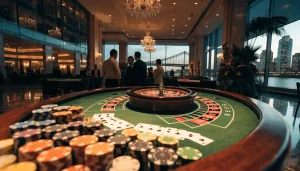
Pool access needs the same distinction between location and entitlement. A pool may be part of an associated accommodation property rather than a casino facility, and proximity alone does not establish that casino visitors can use it. Any access conditions, operating times, fees or guest restrictions should be confirmed with the facility responsible for the pool before travel. A photograph or third-party listing is not a substitute for those terms.
For either amenity, the useful comparison is therefore not a broad promise of convenience but a confirmed location, access condition and operating status for the planned visit. If those details cannot be established, neither a meal stop nor pool use should be built into the itinerary as a guaranteed part of the casino visit.
Are online casino-style games restricted in Australia?
Yes. The Interactive Gambling Act restricts Australian-based operators from offering online casino games such as pokies, blackjack and roulette to people in Australia. Offshore platforms are not regulated under Australian law, and some casinos or game providers block Australian players.
What does the legal status of offshore online casinos and NSW gambling law say?
It is technically not illegal for Australian players to use offshore casinos, but those platforms are not regulated under Australian law. In NSW, players must be at least 18 to use poker machines, and mandatory pre-commitment systems require them to set a loss limit before playing.
Are pokie machine outcomes random?
Yes. Online pokies use a Random Number Generator, and each spin is independent, so previous results do not affect the next outcome.