A practical guide to checking venue hours, understanding claims about payouts and availability, and recognising the limits of online pokies in Australia.
Opening Hours: What Can and Cannot Be Confirmed
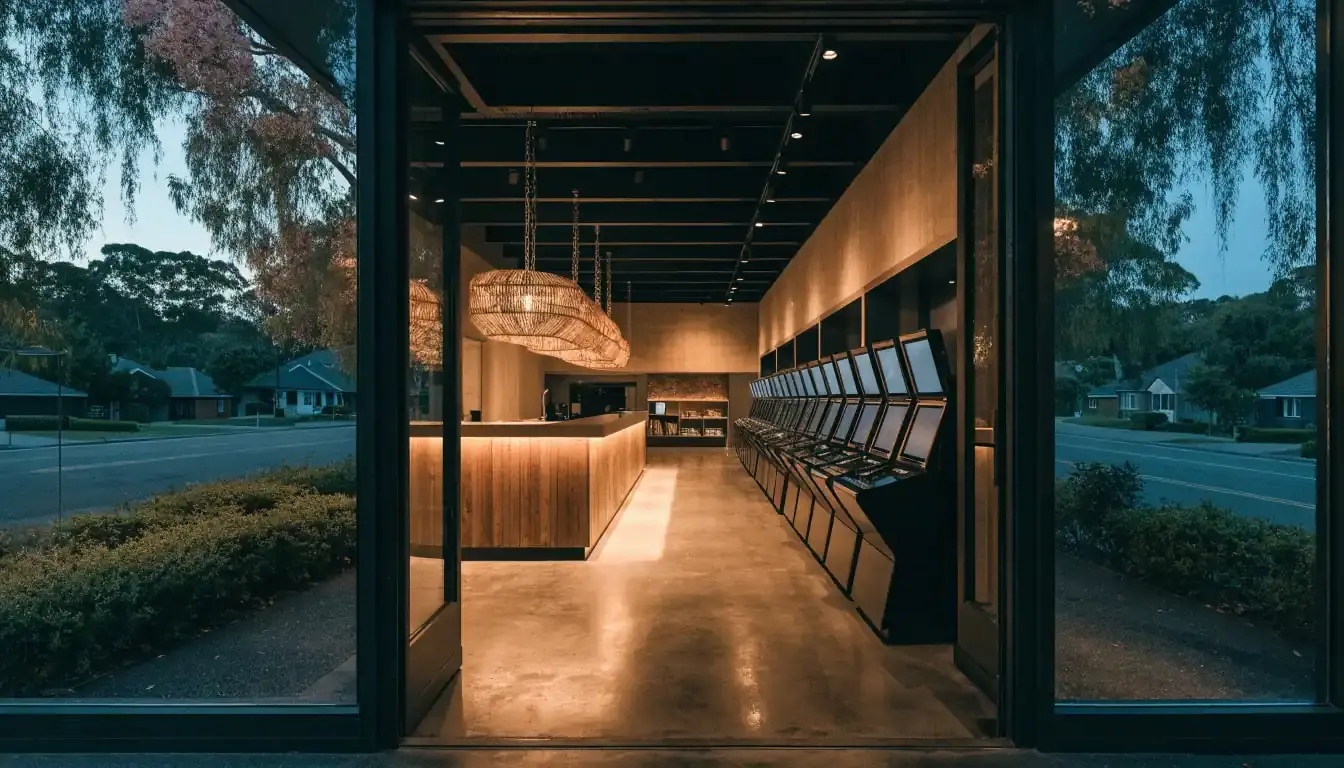
A request for Canberra pokies that are open now is about a particular venue at a particular time. A general listing, even if it shows standard hours, cannot by itself establish that the venue is open at the moment or that its pokies are operating. Those are separate details: venue opening hours describe access to the premises, while machine operation is subject to its own conditions.
Claims that a Canberra venue opens at a particular hour, stays open late, or is operating now require confirmation from that venue. The same applies to changes in ordinary hours: a schedule found elsewhere may not reflect a temporary alteration. Without a current venue confirmation, “open now” is not a dependable answer.
The operating condition that can be described is narrower. A report by regionriverina.com.au says that, from 1 July, venues with more than 20 gaming machines are required to have a dedicated responsible gambling officer (RGO) present while those machines are running. The report also describes a one-month grace period for venues to take down signage and put the officer arrangements in place. These details concern staffing and transition arrangements; they do not provide Canberra venue opening times.
That distinction matters when interpreting a listing. A venue appearing open does not establish that its machines are operating, and the reported RGO requirement does not establish that any named venue is open at a given time. It sets a condition on machine operation for venues above the stated threshold. The grace period concerns implementation of the changes; it is not an opening-hours extension or a general authorisation to operate machines without regard to the stated condition.

For anyone checking whether pokies are available at a specific time, the useful confirmation is venue-specific and current. A published schedule can indicate the hours the venue intends to keep, but it cannot confirm a live status unless the information has been updated and applies to that date. Direct confirmation from the venue is the clearest way to resolve a discrepancy between a listing and what is actually operating. Where the only information available is a broad directory entry, the precise opening status remains unsettled.
Early-hour wording can be especially misleading. A result suggesting that pokies are open at a particular morning hour may refer to a venue’s general opening time, not a verified machine schedule. It may also be out of date. The relevant facts are the venue’s current hours and whether its machines are operating under the applicable conditions. Neither should be inferred simply from a search result’s wording.

The reverse is true for late hours. A venue listed as open late does not establish that its pokies run for the whole period, and a general description of machine availability does not confirm a specific night’s schedule. “Open” and “pokies operating” should therefore not be treated as interchangeable. A clear answer needs both the place and the time, supported by information that is current for that venue.
The reported rule also has a defined scope: it concerns venues with more than 20 gaming machines. It should not be expanded into an unsupported claim about every Canberra venue or used to infer the operating arrangements of a particular club. The report’s transition period is likewise limited: it concerns removal of signage and the introduction of responsible gambling officers, not a blanket delay to venue hours or machine operation.
For searches such as “Canberra pokies open now,” the practical limit is simple. A general answer can explain the operating condition reported for larger machine venues, but it cannot substitute for a current schedule from the venue being considered. Until that venue confirms its hours and machine status, a precise claim about whether its pokies are available at a given time would go beyond what can be established.
What “Best Paying” Can—and Cannot—Mean
Choosing an online pokies site from Canberra means checking the available details before deciding where to play. This list highlights the specific licensing, deposit and payout information provided for each option.
-
JeetCity Casino
- License
- Curacao eGaming (Dama N.V.)
JeetCity Casino is listed with a Curacao eGaming licence held by Dama N.V.
-
House of Pokies
- License
- international iGaming licence – jurisdiction not named in the source
- Payout speed
- PayID 1-24 hours
- Min. deposit
- A$30 (PayID from A$10)
House of Pokies lists an international iGaming licence, though the source does not name its jurisdiction. Its stated PayID payouts take 1–24 hours, and the minimum deposit is A$30, or A$10 via PayID.
-
LuckyVibe
- License
- Curacao Gaming Control Board OGL/2023/176/0095 (Hollycorn N.V.)
LuckyVibe is listed with Curacao Gaming Control Board licence OGL/2023/176/0095, held by Hollycorn N.V.
-
Rollero Casino
- License
- Curacao Gaming Control Board OGL/2023/176/0095 (Hollycorn N.V.)
Rollero Casino is listed with Curacao Gaming Control Board licence OGL/2023/176/0095, held by Hollycorn N.V.
-
Bizzo Casino
- License
- Curacao Gaming Control Board (TechSolutions Group N.V.)
Bizzo Casino is listed with a Curacao Gaming Control Board licence held by TechSolutions Group N.V.
-
Kingmaker
- Payout speed
- crypto ~90 minutes, fiat 1-5 days
- Min. deposit
- A$30
Kingmaker lists a minimum deposit of A$30. Its stated payout times are around 90 minutes for crypto and 1–5 days for fiat.
-
Lucky Dreams
- License
- Curacao
- Min. deposit
- A$20 (POLi)
Lucky Dreams is listed as Curacao-licensed, with a minimum deposit of A$20 via POLi.
-
SkyCrown
- License
- Tobique Gaming Commission
- Payout speed
- crypto ~10-15 minutes, fiat 1-5 days
- Min. deposit
- A$30
SkyCrown is listed with a Tobique Gaming Commission licence and a minimum deposit of A$30. Its stated payouts take around 10–15 minutes for crypto and 1–5 days for fiat.
-
DragonSlots Casino
- License
- Curacao Gaming Authority (Jumpman Gaming Ltd)
DragonSlots Casino is listed with a Curacao Gaming Authority licence held by Jumpman Gaming Ltd.
-
MrPacho
- Payout speed
- crypto 30-120 minutes, fiat 24-72 hours
- Min. deposit
- A$30
MrPacho lists a minimum deposit of A$30. Its stated payout times are 30–120 minutes for crypto and 24–72 hours for fiat.
“Best paying” sounds like a comparison with a clear winner. For physical pokies, that conclusion depends on more than a game’s name or its advertised theme. A return-to-player percentage, or RTP, describes a game’s expected return over a large number of plays; it does not state what a particular machine will return during a short visit.
A specialist review reports that some game providers allow casinos to choose between different RTP settings for the same pokie. If that arrangement applies, two machines running the same title could have different theoretical return percentages in different casinos. The title alone would not establish which setting is in use. A claim that a game is among Canberra’s best-paying pokies therefore needs to identify the relevant setting and the basis for the comparison, rather than relying on the game’s popularity or name.
That distinction matters when claims move from a game to a venue. A venue-level ranking would need comparable information about the machines being assessed, including their applicable RTP settings. Without that, a list of “best” venues may simply combine unlike figures or repeat promotional language. A precise-looking ranking is not necessarily a measured one.
RTP is not a promise for a session
RTP is a statistical measure, not a forecast of the next result. It describes how a game is configured to return money across extensive play, not the amount a person should expect to receive after a particular sequence of spins. It cannot tell whether a machine will pay during a visit, how much it will pay, or when a win will occur.
Each spin is generated separately by a Random Number Generator. Previous outcomes do not make the next result due, and a recent win does not establish that the machine will continue paying. Equally, a run without a win does not, by itself, mean that a larger result is approaching. Treating a streak as evidence about the next spin turns randomness into a story; it does not improve the estimate.
This is why “best paying” should not be read as “most likely to pay out now”. Even where a published RTP figure is available and applies to the machine in question, it concerns long-run theoretical performance. The actual sequence of results can vary, and an individual session is only a small part of the play represented by that measure.
How to assess a payout claim
A useful payout claim should make clear what is being compared. It should identify the game and the relevant RTP setting, and distinguish a theoretical return from a promise about individual results. If the claim concerns a Canberra venue, it should also specify whether the information applies to that venue’s machines rather than to the game in general.
The wording is worth examining. “High paying” may refer to a game’s theoretical RTP, a possible jackpot, a past result, or simply a promotional description. Those are different things. A jackpot feature does not establish a higher RTP, and a large past win does not show that another machine or another session will produce the same result. Without a defined measure, “best” is an adjective, not a comparison.
Do
- Compare like with like
- Treat RTP as a long-run setting
- Verify venue-specific machine settings
Don't
- Read "best paying" as "most likely to pay out now"
- Rely on game names to establish RTP
- Use recent payouts to predict the next spin
For searches about the best pokies in Canberra, the soundest interpretation is therefore narrow: compare like with like, and treat any RTP as a long-run setting rather than a session outcome. A game name cannot establish the setting, a venue label cannot establish the machine’s return, and a recent payout cannot predict the next spin. There is no defensible ranking based on those signals alone.
Online Pokies: The Australian Legal Boundary
A Canberra address does not change the rules for real-money online pokies. Under the Interactive Gambling Act 2001, companies cannot lawfully provide these games to people in Australia without a domestic licence. No Australian licences have been issued for online casinos, so there is no locally licensed online casino offering pokies.
The distinction is between the operator’s conduct and an individual’s position. The Act targets companies that provide prohibited services; it does not make an individual player liable simply for playing on an offshore site that accepts them. That does not make an offshore casino an Australian-regulated service, or give its customers the protections available through a domestic licensing system.
The practical financial risk is significant. If an offshore operator withholds winnings, an Australian player has no legal recourse in Australia to compel payment. A displayed balance is therefore not equivalent to money that can be recovered through Australian legal channels. Terms on a website, a payment confirmation or a customer-service exchange do not remove that jurisdictional gap.
This matters when an online offer is framed around real-money play, a no-deposit bonus or high betting limits. Those features do not establish that the operator holds an Australian licence, and no such licence is available for an online casino. Nor does a Canberra connection create a local casino service: an online site remains an offshore service, regardless of the location used in an account profile or search.
BetStop has a limited scope. It applies to Australian-licensed operators; it does not bind offshore casinos. Because there are no Australian-licensed online casinos, BetStop should not be treated as a control that blocks access to offshore pokie sites or prevents those sites from accepting play. Self-exclusion from an offshore operator, if offered, is not the same thing as protection through BetStop.
ACMA administers the Interactive Gambling Act and blocks access to illegal offshore gambling sites. Internet service providers are required to comply with its blocklist. Blocking is an enforcement measure, not a guarantee that every offshore service will be inaccessible at every moment, and it does not turn an accessible site into an authorised Australian casino.
The commercial presentation can obscure these distinctions. Claims about a bonus, a maximum stake or a fast withdrawal describe an offer’s terms, not the operator’s legal status or the availability of Australian remedies. In particular, a promise of winnings has limited value if the operator refuses to release them and there is no Australian legal route to enforce payment. The headline is not the balance sheet.
For searches combining Canberra with online pokies, the material boundary is therefore straightforward: no Australian-licensed online casino exists; the law prohibits operators from supplying real-money casino games to people in Australia without a domestic licence; and an Australian player cannot rely on local legal recourse if an offshore casino withholds winnings. That is a legal and financial distinction, not a recommendation to use an offshore site.
Searching by Airport, CBD or Distance
A location-based search for Canberra pokies can point towards several different areas: the airport, the central business district, North Canberra or a broad “near me” location. Those phrases do not establish that a venue is present in any of those places. Without a confirmed venue address, proximity to the airport, the CBD or a particular suburb cannot be reliably assessed.
Airport wording can also mean different things. A search may be for a venue inside the airport, somewhere close to it, or simply within the wider Canberra area. Those are not interchangeable claims. A result mentioning Canberra does not show that its venue is on airport grounds, and a map pin alone does not establish how far away a venue is or whether the address is current.
The same distinction applies to CBD searches. “Near the CBD” depends on the starting point and the route used; it is not a fixed description of a venue. A listing marked as Canberra may refer to the city broadly rather than the centre. Without an address that can be checked, a claim that a venue is central—or a short trip from the centre—would be guesswork dressed as geography.
“Near me” is even more dependent on context. Search results can vary with the location setting on a device and the area used by the search service. The order of results is not a measurement of distance, and a prominent result is not necessarily the closest one. The phrase can help identify what a person is looking for, but it cannot confirm a venue’s position by itself.
North Canberra searches have the same limitation. A suburb or district in a result may describe the search area, not the venue’s verified address. Likewise, wording that pairs Canberra with Victoria should not be treated as proof of a Victorian location or a Canberra venue; the place name needs to be resolved against a specific address before distance can be judged.
A sound location check starts with the venue’s own published address, then compares that address with the intended destination on a current map. The relevant origin matters: distance from the airport is not the same as distance from the CBD, and a route estimate can differ from a straight-line measurement. If the address cannot be confirmed, neither a travel distance nor a claim of convenience can be confirmed.
The practical distinction is simple: a Canberra-related result is not the same as a verified Canberra address, and a verified address is not, by itself, evidence that a venue is close to the airport or centre. Location wording can narrow the area being considered; it cannot supply the missing measurement.
Venue Records and Responsible Gambling Oversight
A venue’s reputation for having the “best pokies” is not a substitute for evidence of how it responds when gambling causes concern. The relevant accountability measure described in reporting by regionriverina.com.au is a gambling incident register: venues will be required to record details of specified occurrences, including behaviour indicating that a patron may be at risk of gambling harm or already affected by it.
That requirement shifts the focus from general claims about a venue to whether concerning incidents are recognised and documented. A register is a record of occurrences, not a rating of the machines, a measure of payout performance or proof that a venue is better than another. It does not establish that one Canberra venue is the best choice for pokies.
For anyone comparing venues in Canberra, the distinction matters. A polished room or a large selection of machines says nothing by itself about how an incident is handled. Conversely, the existence of a record-keeping requirement does not establish how often incidents occur at a particular venue or what action was taken in any individual case. Those are venue-level details, not facts that can be inferred from the general requirement.
The register’s stated purpose is to capture incidents, including conduct that signals possible gambling harm. That makes it a form of operational accountability: a concern is not merely an impression if it is among the occurrences that must be recorded. But documentation and outcome are separate questions. A record can show that an occurrence was noted; it does not, on its own, demonstrate the quality of the response or whether harm was prevented.

This is also why a general description of Canberra pokies venues cannot support a reliable ranking. Without comparable, venue-specific information about records and responses, claims that one venue handles risk better than another would go beyond what is established. The register requirement applies as a standard of record keeping; it is not a public scorecard for choosing where to play.
The practical reading is narrow but useful: responsible oversight includes recognising behaviour that may indicate harm and preserving details of relevant occurrences. It should not be confused with a guarantee that gambling will remain harmless, nor with evidence that a particular venue has no incidents. A venue comparison based only on machine choice or atmosphere leaves this part of accountability unanswered.
For Canberra, the requirement provides a basis for asking what venue-level oversight entails, without naming or endorsing a club. The existence of a register is relevant to how incidents are documented; it cannot establish which venue is safest, best paying or best overall. Those conclusions need evidence specific to each venue, not a broad label.
Why 24-Hour Availability Cannot Be Assumed
A venue’s ability to operate pokies is not proof that they are available throughout the day and night. “Open now” and “open around the clock” describe different things: the first depends on the venue’s hours at a particular time, while the second requires continuous operation. Neither follows from a general description of a venue as having pokies.
Staffing Requirements for Large Venues
From 1 July, venues with more than 20 gaming machines must have a dedicated responsible gambling officer (RGO) present whenever those machines are running.
There is also a specific staffing condition for larger venues. A report by regionriverina.com.au describes a requirement taking effect from 1 July: when a venue has more than 20 gaming machines, a dedicated responsible gambling officer (RGO) must be present for as long as those machines are running. The condition links machine operation to RGO coverage. It does not establish a venue’s opening hours, or mean that the machines run continuously.
That distinction matters when interpreting claims about Canberra pokies operating 24 hours. Even where the staffing condition applies, it answers who must be on duty during machine operation—not when operation begins or ends. A venue could meet the condition during the hours its machines are in use without operating them overnight. Conversely, a late opening time alone would not establish that pokies are available at every hour.
Opening hours and machine availability should therefore be treated as separate details. A venue’s general trading schedule may not, by itself, specify when its pokies are operating. A claim of round-the-clock availability needs to be supported by venue-specific information that explicitly covers both the premises and the machines; a broad label is not enough to establish either.
For a search made at a particular time, the relevant detail is the venue’s current schedule, not an assumption that Canberra has a continuous-play option. Schedules can also be expressed in different ways: a listed closing time may refer to the venue, while machine operation is subject to its own conditions. Unless the hours are stated clearly, “open” should not be treated as synonymous with “pokies available.”

The practical reading is narrow. The reported RGO rule sets a staffing condition for venues above the stated machine threshold while their pokies are operating. It does not certify 24-hour service, provide a timetable, or identify which Canberra venues meet that threshold. Round-the-clock availability cannot be inferred from the rule. Nor can the phrase “open now” establish what will be available later in the day. A specific venue schedule is needed for that determination.
Crown-Related Searches: No Canberra Venue Details Verified
Crown-related wording can create an impression that a Crown casino is part of Canberra’s local pokies scene. The name alone does not establish that a Crown venue is located in the city, or that a particular machine or gaming area is available there. Those are separate claims, and neither follows from combining “Crown” with “Canberra”.
That distinction matters when comparing venue options. A brand reference is not a street address, a venue listing or evidence of what machines are on a floor. Without a confirmed Canberra venue to attach the name to, descriptions of its pokies room, machine selection or facilities would be speculation dressed as local detail.
The same limit applies to claims about a “best” room. That label needs a defined basis: it could refer to facilities, machine choice or another measurable feature. A Crown name does not supply that comparison, and no Canberra-specific room attributes are established by the wording itself. There is no sound basis for presenting a Crown-branded room as the city’s leading option.
A maximum cash payout is also a venue- and machine-specific matter, not something that can be calculated from a venue name. The headline amount, the conditions attached to a particular game and the amount payable in a specific situation are distinct details. Without confirmed machine terms, quoting a ceiling would have no reliable foundation. A large figure would be especially poor evidence: size is not verification.
For practical comparisons, claims should be tied to an identifiable Canberra venue and to details that can be checked directly, rather than inferred from brand language. The distinction is simple: a search phrase can suggest an association, but it cannot establish a local address, a room’s features or a payout limit. Until those particulars are independently confirmed, Crown-related claims should not be treated as Canberra venue information.
CBD Clubs and Safer-Gambling Controls
A Canberra club’s pokies are a venue-based activity; the relevant comparison is not simply how many machines are present or how prominent the gaming area is. Responsible-gambling controls change the terms of play by setting boundaries around money and time. Deposit limits, loss limits, session time limits and self-exclusion are standard tools, but that does not establish which controls a particular club offers or how they are applied.

The distinctions matter. A deposit limit caps the amount put into an account or gambling facility; a loss limit sets a boundary on losses; a session time limit puts a ceiling on time spent playing. These controls address different parts of the same exposure. A time boundary does not cap losses, and a deposit boundary does not necessarily determine how long a session lasts. Treating them as interchangeable makes the safeguard look broader than it is.
Self-exclusion is a different control: it is an option to restrict access to gambling. Its practical effect depends on the terms of the arrangement and the venue or system through which it is managed. It should not be treated as a casual pause or as proof that all access routes are covered. The existence of self-exclusion as a standard tool does not, on its own, confirm a particular club’s process.
For CBD clubs, a sensible assessment therefore separates the venue from the controls attached to play. A club name or central location does not establish that deposit, loss or time limits are available, nor that self-exclusion operates in a particular way. Venue-specific details need to be checked directly before they are treated as a feature. Without those details, a comparison of clubs on safeguards would be guesswork dressed as due diligence.
The financial value of a limit is that it defines a boundary in advance. Once set, it can make the planned exposure legible: money deposited, losses allowed or time spent. None of these tools changes the random outcome of a spin, and none turns a pokie into a source of predictable income. They are controls on participation, not on results.
For anyone considering pokies at a Canberra club, the useful question is not whether a venue sounds safer by reputation. It is whether the relevant control exists, what it covers, and whether it can be used before play begins. A safeguard with unclear scope is not a measurable limit.
Parkes Searches and the Limits of Venue-Level Claims
Parkes can refer to a suburb within Canberra or to the regional town of Parkes in New South Wales. The name alone does not identify a particular club, hotel or gaming room, and it cannot establish that a venue there has pokies. A claim about a specific location needs to be tied to that venue, rather than inferred from a place name.
The same distinction applies to descriptions of the best pokies in Canberra. A city-level label does not show which machines are installed at a particular venue, what conditions apply to them, or whether a machine is in Parkes. General statements about Canberra should not be treated as a venue directory.
A separate point concerns venue accountability. A report by regionriverina.com.au describes a requirement for venues to maintain a gambling incident register. The register is intended to capture details of relevant occurrences, including behaviour suggesting that a patron may be at risk of gambling harm or already affected by it. This is a record-keeping obligation; it is not evidence that a particular Parkes venue has pokies, nor a measure of how many machines it operates.
The distinction matters because a regulatory record and a venue listing answer different questions. An incident register concerns events observed at a venue and the response framework around them. It does not establish a venue’s address, its machine inventory, or the performance of any individual pokie. Those claims need venue-specific information.

Accordingly, Parkes should not be treated as a confirmed Canberra gaming location on the strength of the name alone. The register requirement can be described at the general venue level, while claims about a named establishment or its machines require evidence specific to that establishment. A place label is not a machine record.
Cashless Searches and What PayID Actually Does
Cashless pokies and PayID describe different things. Cashless gaming concerns how a venue’s machines accept or handle payment. PayID is a way to address a bank transfer: it links an email address, mobile number or ABN to an account through Australia’s New Payments Platform (NPP).
The NPP is available through all major banks, and its transfers use end-to-end encryption. Those features describe the payment network; they do not establish whether a Canberra venue’s pokies support cashless play. Nor does a PayID payment method, by itself, show that a gambling service is licensed, that a game is fair, or that its return to player (RTP) settings are disclosed.

That distinction matters when a venue search combines Canberra with Newcastle or uses terms such as “cashless pokies”. A payment alias cannot confirm the location or features of a particular machine. Venue-specific cashless arrangements need to be checked with the venue itself.
PayID also does not make a payment anonymous: the alias routes a transfer to a bank account. Its role is narrower than a wallet or a machine interface. It provides an address for a bank transfer, not a measure of gambling risk or game performance.
For an in-person visit, the relevant question is whether the venue’s own payment arrangements allow cashless play. For a transfer, PayID’s role is simply to direct funds through the NPP using an approved alias. Neither function supplies evidence about the other. That is the useful distinction behind searches for cashless play in Canberra: payment infrastructure and gaming-machine capability are separate features, not interchangeable labels.
Are online pokies legal for Australian players?
Yes, Australians can play on offshore sites that accept them, but operators cannot legally offer real-money online pokies to Australian residents without a domestic licence, and none have been issued. If an offshore casino refuses to pay, players have no legal recourse in Australia.
What is the legal age for online gambling in Australia?
You must be 18 or older to gamble online in Australia.
Do PayID deposits qualify for bonuses?
PayID is treated like other qualifying deposit methods at recommended sites, so a PayID deposit can qualify when it meets the offer’s terms.
Can casinos change the RTP of their games?
Yes. Some game providers let casinos choose between RTP settings for the same game, so the same pokie can have different theoretical return percentages at different casinos.