A practical overview of accommodation, gaming facilities, dining and visitor logistics, with booking terms kept separate from assumptions.

Staying at the Adelaide Casino Hotel
A stay marketed as an Adelaide casino hotel needs to be assessed as a hotel booking, not as an assumed extension of a casino visit. The name alone does not establish that rooms are available, what they include, or whether a particular rate is being offered. Those details need confirmation for the intended dates before any price can be treated as a real option.
The useful comparison is the final amount payable for the stay and the conditions attached to it. A headline rate, where one appears, is only one part of that calculation. The booking terms should make clear which dates it covers, what is included in the quoted price, when payment is due, and what happens if the booking is changed or cancelled. If a deal depends on a particular booking channel, length of stay or other condition, that condition belongs in the comparison. Without it, “deal” is a label rather than a saving.
Room searches should be treated in the same way. A room description is meaningful only when the available dates, occupancy, inclusions and cancellation rules are clear. Room categories and amenities should not be inferred from the hotel’s name or from a general description of the casino venue. If a requested room detail is not confirmed in the booking information, it should not be assigned a value in the decision.
Choosing an online casino from Adelaide calls for checking the available licensing and practical payment details before deciding where to play. This list gives a concise reference for the operators featured on this page.
-
JeetCity Casino
- License
- Curacao eGaming (Dama N.V.)
JeetCity Casino is listed with a Curacao eGaming licence held by Dama N.V.
-
House of Pokies
- License
- international iGaming licence – jurisdiction not named in the source
- Payout speed
- PayID 1-24 hours
- Min. deposit
- A$30 (PayID from A$10)
House of Pokies lists PayID payouts in 1–24 hours and a A$30 minimum deposit, or A$10 when using PayID. Its source describes its licence as international, without naming the jurisdiction.
-
LuckyVibe
- License
- Curacao Gaming Control Board OGL/2023/176/0095 (Hollycorn N.V.)
LuckyVibe is listed with Curacao Gaming Control Board licence OGL/2023/176/0095, held by Hollycorn N.V.
-
Rollero Casino
- License
- Curacao Gaming Control Board OGL/2023/176/0095 (Hollycorn N.V.)
Rollero Casino is listed with Curacao Gaming Control Board licence OGL/2023/176/0095, held by Hollycorn N.V.
-
Bizzo Casino
- License
- Curacao Gaming Control Board (TechSolutions Group N.V.)
Bizzo Casino is listed with a Curacao Gaming Control Board licence held by TechSolutions Group N.V.
-
Kingmaker
- Payout speed
- crypto ~90 minutes, fiat 1-5 days
- Min. deposit
- A$30
Kingmaker lists crypto payouts at around 90 minutes and fiat payouts in 1–5 days. Its minimum deposit is A$30.
-
Lucky Dreams
- License
- Curacao
- Min. deposit
- A$20 (POLi)
Lucky Dreams lists a Curacao licence and a A$20 minimum deposit when using POLi.
-
SkyCrown
- License
- Tobique Gaming Commission
- Payout speed
- crypto ~10-15 minutes, fiat 1-5 days
- Min. deposit
- A$30
SkyCrown is listed with a Tobique Gaming Commission licence. It lists crypto payouts at around 10–15 minutes, fiat payouts in 1–5 days, and a A$30 minimum deposit.
-
DragonSlots Casino
- License
- Curacao Gaming Authority (Jumpman Gaming Ltd)
DragonSlots Casino is listed with a Curacao Gaming Authority licence held by Jumpman Gaming Ltd.
-
MrPacho
- Payout speed
- crypto 30-120 minutes, fiat 24-72 hours
- Min. deposit
- A$30
MrPacho lists crypto payouts in 30–120 minutes and fiat payouts in 24–72 hours. Its minimum deposit is A$30.
A practical comparison can be kept to a few fields:
- dates and number of guests;
- total price, including any mandatory charges shown before booking;
- inclusions stated for that specific rate;
- payment timing and cancellation conditions;
- the room description and any relevant occupancy limits.
This keeps unlike offers from being compared as though they were equivalent. A lower displayed price may carry conditions that change its value; a higher one may include something that matters to the stay. The calculation is the confirmed total against the confirmed terms, not the promotional wording.
The distinction between a hotel booking and a casino visit also matters when checking opening times. Hotel check-in and check-out arrangements, if a booking is available, are separate from casino opening hours. Neither can be inferred from the other. Opening hours can vary, so current hours should be confirmed through a reliable venue source before travel rather than assumed from a search result or an old listing. A room reservation would not, by itself, establish that casino facilities are open at a particular time.
The same care applies to claims that a hotel is attached to, operated by or formally associated with the casino. Those are separate points to confirm in the booking terms. A shared location name or a result describing a “casino hotel” does not settle who provides the room, which property the reservation covers, or who is responsible for changes and refunds. The booking confirmation should identify the accommodation provider and the property plainly.
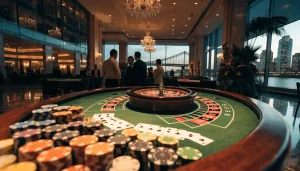
For a stay built around visiting the venue, the decision is therefore conditional: first establish that the room is actually bookable for the required dates; then compare the full price and terms; finally check the relevant opening hours independently. Until those elements are confirmed, a hotel deal cannot be counted as available, and a room description cannot be treated as a promise. The arithmetic is simple; the important part is making sure every term belongs to the same booking.
Poker Rooms, Tournaments and Casino Facilities
Poker tables, tournament listings and general casino-floor information answer different questions. A poker room is a dedicated playing area; a tournament is a scheduled competition with its own entry conditions and format; and “casino rooms” may refer more broadly to areas inside the gaming venue. Treating these terms as interchangeable can leave practical details unresolved, particularly when a visit depends on a specific game or event.
For poker at Adelaide Casino, the useful checks are whether poker is operating on the intended date, what format is available, and whether play is cash-based, tournament-based or both. These are not interchangeable arrangements. A tournament has a defined structure and entry terms, while cash-game access depends on tables being available. A listing for one does not establish the availability of the other.
Tournament information needs the same care. A date alone does not tell a player the registration window, start time, entry requirements, structure or whether places remain. Those terms determine whether an event is workable; the word “tournament” by itself is not a schedule. Current venue information is the appropriate reference for the day’s programme, with any published conditions checked before making plans. Older listings may describe a past event rather than a recurring fixture.
The phrase “casino rooms” can also be read in more than one way. In a facilities context it may mean gaming areas or a poker room, while “rooms” can suggest accommodation. For a search about playing, the relevant information is the location and operating status of the gaming area, not a room category or hotel offer. This keeps the practical question focused on facilities rather than lodging.
A sports bar is a separate facility from a poker room and from the gaming floor. Its presence, trading hours, screens, food service and access conditions should not be inferred from the casino’s name or from the existence of sports betting elsewhere. A person planning around a particular match needs current venue information about whether the bar is open and showing it. “Open today” and “open now” are time-sensitive checks: venue hours and individual facility hours may differ, and a general opening status does not establish that every area is operating.
For a visit centred on gaming, the efficient order is to confirm the venue’s current opening status, then check the exact facility and activity, followed by any applicable entry or event conditions. For poker, that means distinguishing a live table from a scheduled tournament. For a sports bar, it means checking the bar’s own status rather than assuming it follows the casino floor. A general casino listing can establish neither detail on its own.
Poker facilities at a physical venue should not be confused with online poker. Under the Interactive Gambling Act 2001, operators cannot provide real-money online poker to people in Australia. That restriction concerns online services, not the interpretation of a venue’s physical facilities. A search for an Adelaide poker room or tournament therefore concerns an in-person offering; online play is not a substitute route.

The practical distinction is simple: facility, activity and timing each require their own confirmation. A poker-room reference does not prove a tournament is scheduled, a tournament announcement does not establish cash-game availability, and a sports-bar listing does not confirm that it is open at a particular time. Current operating information, rather than a broad venue label, determines whether the planned visit matches the available service.
Casino Development, Events and Entertainment in Adelaide
Development, employment and entertainment are related questions, but they need different evidence. A proposal is not a completed project; a recruitment notice is not proof that a new development has opened; and an event listing does not establish a continuing entertainment programme. Keeping those distinctions clear prevents an announcement from being mistaken for a change in the venue’s operating status.
For a development claim, the useful details are its scope, status and date. A dated announcement can describe an intention, while a planning decision or construction update may establish a later stage. Neither, by itself, confirms completion. The word “development” can also refer to changes in operations rather than construction, so the subject of an announcement matters as much as its headline. Without a clearly stated project and current status, claims about expansion, investment or a timetable remain unsubstantiated.
Employment information has a separate test. A current vacancy notice can identify a role and the terms attached to it; general statements about job creation do not establish that positions are available now. Project-related employment may be temporary, conditional on approvals, or tied to a particular stage of work. Those distinctions matter to anyone treating employment as a practical lead rather than as a broad claim about economic impact. The venue’s hiring activity should not be inferred from an event announcement or a development proposal.
Entertainment and event information is similarly time-sensitive. An event needs a date, venue and organiser to be treated as a scheduled programme rather than a past listing or an unconfirmed promotion. One event would establish that event, not a regular calendar. A broad description of entertainment does not identify what is on, whether admission is available, or whether an event is continuing. For planning purposes, the current listing and its conditions are more useful than a general description of what a casino might host.

“Open” and “reopening” also describe different things. An opening notice can refer to a venue, a particular area, or a new project. Reopening implies a preceding closure, but the search phrase alone does not establish that a closure occurred or that a return date has been set. A reliable status update needs to specify what is opening, when, and whether the change is temporary or ongoing. A past announcement cannot confirm the position today.
The same care applies to searches that combine the Adelaide casino with development, events or entertainment. They do not, on their own, establish a project, job vacancy, event programme or operational change. Valet parking is a separate practical matter; it should not be treated as evidence of development or as part of an entertainment schedule.
For a decision with financial or travel consequences, the useful sequence is straightforward: establish who issued the information, check its date, identify whether it is a proposal or a confirmed arrangement, then verify any conditions attached to it. If those details are absent, the claim cannot support a reliable plan. A headline may create an impression of activity; the status and terms determine what is actually actionable.

Parking and the Boundary Around Online Casino Play
Parking and online play are separate questions for anyone comparing a visit to the Adelaide casino with casino-style games on a phone or computer. A parking search concerns the practical arrangements for reaching the venue; it does not establish that a particular space, rate or access condition applies. Those details should be confirmed through current venue information before travel, rather than built into a trip budget on assumption.
The phrase “Adelaide casino online” can also blur two different services. A physical casino venue and an online operator are not interchangeable. Australian law restricts the supply of online casino games to people in Australia, even where the games resemble those available in a land-based setting. The Interactive Gambling Act makes it unlawful for an Australian-run online casino to offer casino services to people located in Australia. Pokies, blackjack and roulette fall within the restricted online casino category.
The distinction between the operator and the player matters. Offshore platforms may be accessible, and it is technically not illegal for an Australian player to use one, but those platforms are not regulated under Australian law. That does not make their services lawful for an operator to provide to people in Australia, nor does it create the protections associated with Australian regulation. An offshore licence is not an Australian casino licence.
Access can also differ by location. Online casinos and game providers may use an internet connection’s IP address to identify the country from which a game is being accessed. If a game is blocked for Australian IP addresses, it may not appear in the lobby. A missing title is therefore not necessarily evidence that the game has been removed everywhere; access restrictions can be regional.
A VPN can make an internet connection appear to come from another country, but using one to reach region-blocked pokies is not a sound workaround. It breaches the relevant site’s terms of service and may result in account suspension. A changed digital location does not change the player’s physical location or turn a restricted service into a locally regulated one.
For searches combining casino dining, lunch or bingo with online play, the useful dividing line remains straightforward: venue facilities belong to a physical visit, while online casino games are subject to a separate legal framework. No online casino should be treated as a substitute for visiting the Adelaide venue. Nor should a game lobby’s contents be read as a complete catalogue for Australian users; region blocking can affect what is displayed.
A practical comparison should keep the costs and risks in their proper columns. Travel and parking require current venue-specific information. Online casino access involves a different legal and regulatory position, with offshore services outside Australian regulation. Gambling is not a way to cover rent or grocery costs, and losses should not be chased by increasing stakes. If gambling is taking control of spending, Gambling Help Online provides support in Australia.

Accommodation Near the Casino
Accommodation near Adelaide Casino is a separate decision from staying at the casino hotel. Nearby options may suit a trip planned around the venue, but a low headline rate does not establish that a stay is close, practical or good value. The useful comparison is the full cost of the booking and the route between the property and the casino.
A map pin can show where a property is; the route calculation shows how that location works in practice. Straight-line distance can understate the walk or journey required, while a route may depend on the chosen transport and time of travel. Comparing properties against the same casino location and using the intended mode of transport makes proximity more meaningful than labels such as “nearby” or “city centre”. Those labels are descriptive, not a measure of door-to-door travel.
How to assess an accommodation deal
An Adelaide casino accommodation deal should be assessed by its conditions, not its promotional wording. The final payable amount depends on the dates selected and the terms attached to the booking. A discounted nightly rate may not answer whether the booking can be changed, whether cancellation carries a charge, or which services are included. Those details affect the value of the offer and belong in the comparison before a reservation is treated as a saving.
The booking total and the conditions should be read together. A flexible rate and a restricted rate are not equivalent products, even when the same property and dates appear on screen. Any stated inclusion should be checked in the booking terms rather than inferred from a photograph, headline or general description. If the offer depends on a particular date range or booking condition, that condition determines whether the advertised price applies.
Do
- Check the final payable amount for selected dates
- Verify cancellation charges and included services
- Compare the actual route between the property and the casino
Don't
- Rely on promotional wording or headline rates
- Infer inclusions from photographs or general descriptions
- Use straight-line distance to judge proximity
For a short stay, the location’s practical value may matter more than a small difference in the displayed rate. A property that reduces travel time can change the overall plan; a cheaper room farther away may bring additional transport costs or inconvenience. That is a calculation, not a universal rule: the balance depends on the itinerary, transport choice and booking terms.
Keep the venue details separate
Accommodation listings do not establish Adelaide Casino’s opening times, trading hours, gaming-machine availability or other venue conditions. These are separate details and should be confirmed through current venue information before they are built into a stay plan. A room booking does not itself confirm entry conditions or access to any casino facility.
Likewise, a casino promotion and a hotel offer are not automatically the same arrangement. A promotion should not be treated as a reduction in accommodation cost unless its terms explicitly apply to the booking. The amount that matters is the final accommodation charge after the relevant conditions are applied.
For a casino-focused visit, the most defensible comparison records the property, dates, total price, cancellation terms, inclusions and route to the venue. That makes unlike offers easier to distinguish and prevents a prominent discount label from substituting for the actual cost. No particular nearby property can be judged on price or distance without those booking-specific details.
Contact Details, Bars and Visitor Information
Contact details, a street address and a map pin are useful only when they refer to the same venue and are current. Search results, directory listings and older pages can retain information after it has changed. For a visit to Adelaide’s casino, treat a phone number or map result as a starting point, not as confirmation of today’s arrangements. The venue’s own current information is the appropriate place to check before setting out; if details conflict, avoid relying on the older or less direct listing.
A contact number should be checked against the venue’s official website or another publication it controls. The number should be labelled for the purpose it serves: general enquiries, bookings and other matters may have separate routes. A number copied from an unmaintained directory can be incomplete or out of date, and a search result alone cannot establish who answers it or what enquiries it handles. No contact number should be inferred from a similarly named business or from a listing that does not clearly identify the Adelaide venue.

The same care applies to an address. A venue name and a nearby map marker are not interchangeable: a pin may indicate an entrance, a surrounding complex or a point chosen by a third party. Before travelling, compare the address shown by the venue with the destination in the map service. If the two do not align, the map pin should not override the venue’s own directions. This check matters particularly when a journey depends on reaching a specific entrance rather than simply the general precinct.
A map can answer practical questions about streets and routes, but it cannot establish access rules, entry points or current operating arrangements. Nor does a map label confirm that a particular service is available at the venue. For questions that affect the visit itself, use current venue information rather than drawing conclusions from icons, photographs or user-added labels. A map is a navigation tool, not a schedule or a statement of venue policy.
Parking requires separate confirmation. A map may display car parks nearby without showing whether they are associated with the casino, available to visitors, open at the required time or subject to particular terms. A label such as “car park” is not evidence of capacity, access, fees or entry conditions. Those details should be checked through current venue information or the relevant car-park operator before they are built into a travel plan. A nearby pin establishes location only; it does not establish a parking arrangement.
Bar information needs the same distinction between a venue name and a current service. A listing, photograph or review may show a bar area at some point, but does not establish that it is presently open, what it serves, its hours or any entry conditions. Where a bar visit is part of the plan, current information should answer those specific points rather than relying on a general description of the venue. Bar details are also separate from restaurant information: a drinks listing does not establish dining options, and a dining listing does not establish bar access.

Dress-code searches are best treated as requests for a specific entry condition, not as an invitation to guess. Formality can vary between areas or occasions, and an old review may describe a past policy rather than the one in force at the time of a visit. Unless a current venue statement sets out a rule, clothing expectations should not be presented as definite. The practical test is whether the information comes from the venue and applies to the intended area and visit, rather than from a general description or an individual account.
Searches mentioning baccarat or craps raise a different question from contact or visitor logistics: whether a particular table game is available at the venue. A game name appearing in a listing or in a visitor’s account does not establish current availability, session times, table conditions or access requirements. Those details belong to current venue information. They should not be assumed from the casino label alone, and an online game catalogue would not confirm what is offered on the premises.
Concert information is also time-sensitive, but it concerns scheduled entertainment rather than basic visitor details. A venue address or phone listing does not confirm that a performance is scheduled, while an old event page does not establish that tickets or entry remain available. Current event details should be checked separately from contact, map and bar information. This keeps practical directions from being mistaken for a programme announcement.
A reliable visit plan therefore has several separate checks: confirm the venue identity and address; use a current map for the route; verify parking arrangements independently; and check current contact, bar, dress and game information with a source controlled by the venue. Each item answers a different question. Combining them into one assumption—because a map shows a pin, a listing names a bar, or a review mentions a game—turns incomplete information into a false certainty. No contact detail, bar offering or entry condition should be treated as established without a current, venue-specific statement.
Breakfast, Buffet Searches, Careers and Rewards
Breakfast and buffet searches can refer to different things: a morning meal, a buffet service, or a broader dining option associated with a casino visit. The wording alone does not establish that any of these services is currently available at Adelaide Casino, nor does it confirm menus, serving times, prices or booking conditions. Those details matter more than the label. A buffet with restricted hours, for instance, is not interchangeable with a breakfast service simply because both appear in the same search.

The same distinction applies to “casino resort”. It can describe a searcher’s expectation of a destination with several services, but the phrase is not proof that a particular resort package or bundled offer exists. Any advertised arrangement would need to state exactly what is included, when it can be used, whether a reservation is required and what the final price covers. Without those terms, “resort” is description, not a usable offer.
For a breakfast or buffet visit, the practical calculation is straightforward: confirm the service, its operating period, the price and any conditions before setting the day’s budget. A headline price may not establish what is included or whether it applies to the intended visit. If the details cannot be confirmed, the cost should not be treated as settled. That is less exciting than a buffet photograph, but more useful when planning an actual expense.
Employment searches are a separate matter from visitor information. Roles at a casino could involve different departments and working conditions, so a job title by itself is not enough to compare positions. A complete vacancy should identify the employer, duties, location, employment basis, required qualifications and application process. Pay and roster arrangements are material terms; where they are not stated, they cannot be calculated from the title alone.
A listing also needs a current status. Search results can remain visible after a vacancy closes, so the date and application route matter. Applications should be made through a channel that can be tied to the employer, and any request for payment as a condition of applying warrants particular scrutiny. A job search result is not an employment offer.
“Rewards” requires the same accounting discipline. The word may suggest points, discounts or other benefits, but it does not establish that a programme exists or that a particular benefit can be earned. If a programme is presented, its value depends on the written rules: eligibility, how benefits accrue, what they can be used for, expiry or other restrictions, and whether participation is tied to gambling activity. A benefit with conditions is not equivalent to cash, and a displayed balance is not necessarily withdrawable money.

Breakfast, buffet, employment and rewards information should therefore be assessed as four separate decisions. A meal has a price and service conditions; a vacancy has employment terms; a rewards offer has eligibility and redemption rules. None should be inferred from the others or from the broader label “casino resort”. Until the relevant terms are clear, no specific service, job opening or rewards benefit can be included in a reliable budget.
Restaurants at Adelaide Casino
Restaurant information should be assessed as a separate part of a visit to Adelaide Casino, not treated as a general guide to every food option in the surrounding area. A venue restaurant listing is useful only when it identifies the dining offer clearly enough to support a practical decision: what is served, when service operates, where the restaurant is located, and what the meal is likely to cost.
The name alone does not settle whether a venue suits a particular occasion. Menu range, service style and booking conditions can matter as much as the setting. A menu suited to a full meal may not be relevant to a short stop; a venue with a narrow offering may be a poor fit for a group with varied preferences. These are details to establish from the restaurant’s current information rather than infer from its association with a casino.

Price comparisons also need consistent terms. A headline menu price may not describe the full cost if choices, add-ons or booking conditions affect the final bill. Where a restaurant publishes menus and prices, the useful comparison is between items that serve the same purpose, not simply the lowest figure on each list. Opening times matter for the same reason: a restaurant’s stated service periods determine whether it is a workable option for a planned visit.
Location within the venue is another practical distinction. A restaurant listing should make clear whether the dining room is inside the casino complex and how it relates to the intended visit. That helps separate venue dining from nearby restaurants, which may involve a different route and separate arrangements. Search results can blur those categories; the venue’s own current listing is the more relevant reference for confirming what belongs to the casino itself.
For an Adelaide casino restaurant comparison, the decision can therefore be reduced to a few verifiable terms: menu, service hours, price basis, booking requirements and location. If any of those affect the plan, they should be checked against current restaurant information before setting a budget or schedule. General descriptions such as “fine dining” or “casual” are not substitutes for the details that determine the actual cost and suitability of a meal.

Restaurant information can change, so older listings and third-party summaries may not reflect current service. A specific restaurant should be considered an option only when its present menu and operating details are confirmed. That is a less dramatic basis for choosing dinner, but a more useful one.
Food Options and Pool Queries
Food-related searches can refer to different things: a meal at the venue, a casual counter, or a dedicated food-court area. Those are not interchangeable. A venue may have dining without having a food court, and a listing that uses broad terms such as “food” does not establish the format, current operation or access arrangements of any outlet.
The practical distinction is between what is offered and what can be relied on during a particular visit. Before making plans around a meal, check current venue information for the outlet’s name, service times, menu and any entry conditions. A third-party directory, an old photograph or a past visitor’s account may describe an earlier arrangement. None settles whether a particular option is operating now. Prices and opening times are especially liable to change, so they should be confirmed close to the visit rather than inferred from a general venue description.
A pool-related result requires a separate check. The word “pool” might refer to a swimming facility, a hotel amenity, or something unrelated to visitor access. It does not establish that a pool exists at the casino, that it is open to the public, or that access is included with any booking. If swimming access matters to the trip, the relevant details are the facility’s location, eligibility rules, operating hours and any separate charge. These should be confirmed directly before plans depend on them.
Food service and pool access are therefore best treated as two independent items on a visit checklist, not as assumed parts of a casino visit. The available description of a venue cannot substitute for confirmation of a specific amenity. Where current details cannot be established, the sensible budget is no assumed meal option and no assumed pool access; plans can then be adjusted once the terms are clear.
Are online casino-style games restricted in Australia?
Yes. The Interactive Gambling Act restricts Australia-based operators from offering online casino games such as pokies, blackjack and roulette to people in Australia. Offshore platforms are not regulated under Australian law, although it is technically not illegal for Australian players to use them.
What does the legal status of offshore online casinos and NSW gambling law say?
Australian players are not technically prohibited from using offshore online casinos, but those platforms are not regulated under Australian law. The Interactive Gambling Act makes it illegal for an Australian-run online casino to offer its services to players in Australia.
How do NSW pokies regulators monitor player protection?
NSW uses mandatory pre-commitment systems in which players set a loss limit before playing poker machines.
What is pokies region blocking?
Region blocking restricts access to games based on a player’s geographic location, commonly determined from their IP address. A blocked game may not appear in the lobby or may fail to load.
Which club has the most pokies in NSW?
Club Liverpool has the highest number of operational poker machines among clubs in NSW.