Understand how wallet transfers, blockchain confirmations and casino terms affect Bitcoin deposits, bonuses and game sessions.
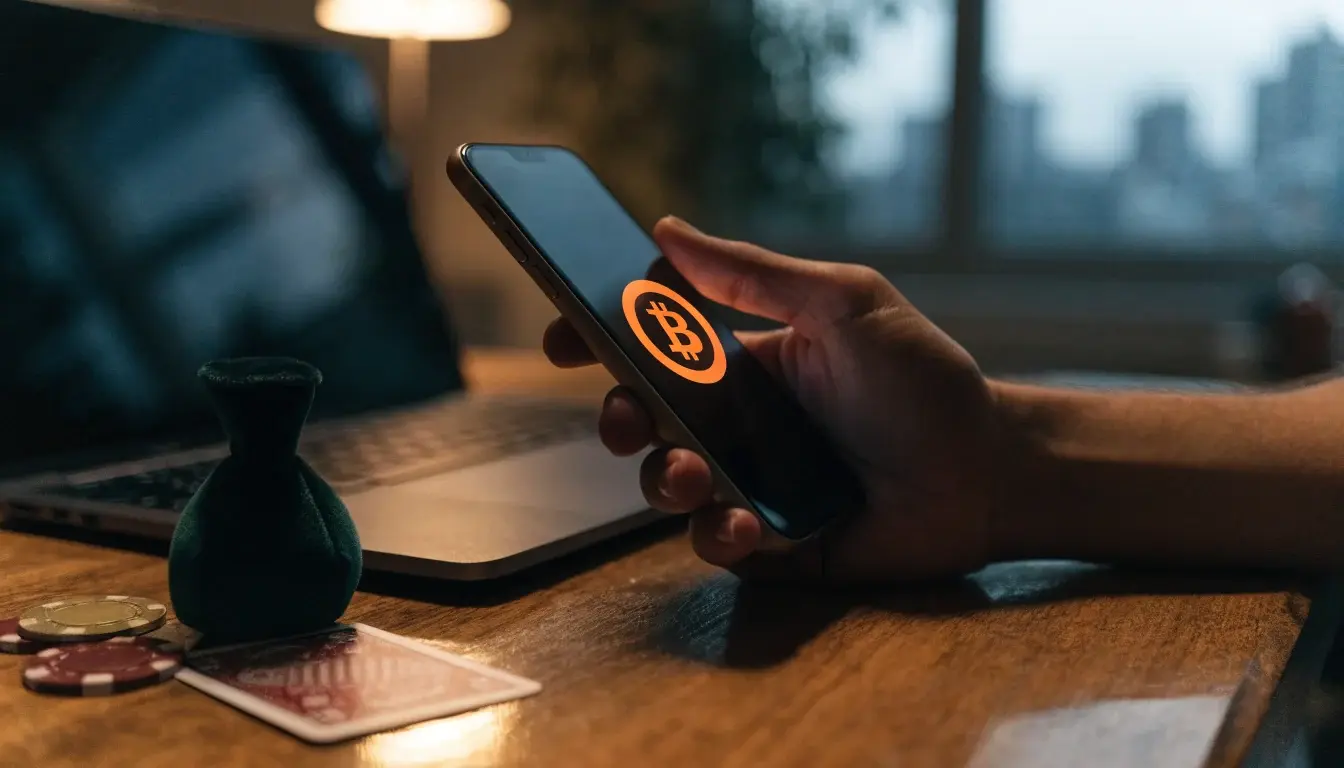
How Bitcoin Deposits and Casino Play Work Online
A Bitcoin deposit begins outside the casino account. The player’s wallet creates a transaction to the deposit address displayed by the offshore site. The amount is sent in BTC, and the wallet broadcasts the transaction to the Bitcoin network. The casino does not receive coins in the same way a bank account receives a conventional transfer: it monitors the blockchain for the incoming payment and uses the transaction record to identify it.
The address is the link between the payment and the account. A transfer to the wrong address may not be recoverable, and a transaction sent through an unsupported network can also result in permanent loss. Bitcoin transactions cannot simply be reversed by a casino or the sending wallet. That makes the payment details part of the transaction itself, not a clerical detail to tidy up later.
Once broadcast, a transaction may be visible on the network before it is confirmed. Confirmation means that the transaction has been included in a block added to the blockchain. A specialist review describes a first confirmation as taking 10–60 minutes, depending on network congestion and the fee attached to the transaction. That is a reported range, not a fixed service time: the network can be busier or quieter, and a wallet’s fee setting can affect how quickly a transaction is processed.
Choosing a Bitcoin casino in Australia means checking both its licensing information and the payment details that are actually available. Use these verdicts as a concise reference when deciding which options to investigate further.
-
JeetCity Casino
- License
- Curacao eGaming (Dama N.V.)
JeetCity Casino is listed with a Curacao eGaming licence held by Dama N.V.
-
House of Pokies
- License
- international iGaming licence – jurisdiction not named in the source
- Payout speed
- PayID 1-24 hours
- Min. deposit
- A$30 (PayID from A$10)
House of Pokies lists an international iGaming licence, though the jurisdiction is not named. Its stated PayID payouts take 1–24 hours, and the minimum deposit is A$30, or A$10 with PayID.
-
LuckyVibe
- License
- Curacao Gaming Control Board OGL/2023/176/0095 (Hollycorn N.V.)
LuckyVibe is listed under Curacao Gaming Control Board licence OGL/2023/176/0095, held by Hollycorn N.V.
-
Rollero Casino
- License
- Curacao Gaming Control Board OGL/2023/176/0095 (Hollycorn N.V.)
Rollero Casino is listed under Curacao Gaming Control Board licence OGL/2023/176/0095, held by Hollycorn N.V.
-
Bizzo Casino
- License
- Curacao Gaming Control Board (TechSolutions Group N.V.)
Bizzo Casino is listed with a Curacao Gaming Control Board licence held by TechSolutions Group N.V.
-
Kingmaker
- Payout speed
- crypto ~90 minutes, fiat 1-5 days
- Min. deposit
- A$30
Kingmaker lists crypto payouts at about 90 minutes and fiat payouts at 1–5 days. Its minimum deposit is A$30.
-
Lucky Dreams
- License
- Curacao
- Min. deposit
- A$20 (POLi)
Lucky Dreams lists a Curacao licence and a minimum deposit of A$20 with POLi.
-
SkyCrown
- License
- Tobique Gaming Commission
- Payout speed
- crypto ~10-15 minutes, fiat 1-5 days
- Min. deposit
- A$30
SkyCrown is listed with a Tobique Gaming Commission licence. Its stated crypto payouts take about 10–15 minutes, while fiat payouts take 1–5 days; the minimum deposit is A$30.
-
DragonSlots Casino
- License
- Curacao Gaming Authority (Jumpman Gaming Ltd)
DragonSlots Casino is listed with a Curacao Gaming Authority licence held by Jumpman Gaming Ltd.
-
MrPacho
- Payout speed
- crypto 30-120 minutes, fiat 24-72 hours
- Min. deposit
- A$30
MrPacho lists crypto payouts at 30–120 minutes and fiat payouts at 24–72 hours. Its minimum deposit is A$30.
Detection and confirmation are separate stages. A casino may detect an unconfirmed transaction and display it as pending, while its accounting system waits for the required confirmations before adding the funds to the playable balance. A specialist review reports that casino crediting may be set after 1–3 confirmations. The number is not universal; the relevant deposit page or payment terms determine what a particular service counts as sufficient.
There is also a reported exception to waiting for full confirmation. A specialist review describes instant-play arrangements in which a casino may make a deposit available after detecting it on the blockchain, before the transaction has completed confirmation. This is an operator-specific feature, not a property of Bitcoin itself. The account balance may therefore become playable while the blockchain status still shows that the transfer is unconfirmed. If the transaction is delayed or does not settle as expected, access to that provisional balance can be affected.
After the casino credits the deposit, the account balance becomes the amount used for play. The balance may be displayed in BTC or converted into another denomination by the site’s interface. The displayed figure is not a separate blockchain payment: it is an account entry maintained by the casino. A Bitcoin-funded session can then continue within that account, whether it involves a table game or a Bitcoin pokie. The game balance and the wallet balance remain distinct; spending from the casino balance does not create a new Bitcoin transaction for every bet.

This distinction matters when reviewing the balance. The blockchain records the transfer from the wallet to the deposit address, while the casino records the credit and subsequent play in its own account history. The public transaction record can help verify that a payment was broadcast and confirmed, but it does not by itself show how the casino applied the funds internally. The account’s cashier or transaction history is the record of that credit.
The reverse path begins with a withdrawal request in the casino account. The player enters a personal wallet address, and the casino processes the request before broadcasting a Bitcoin payout. A specialist review reports that casino-side processing can add 12–48 hours before a payout is sent; this is a source-specific report, not a dependable timetable for every service. The same type of review says Bitcoin withdrawals can reach a personal wallet within an hour after casino processing, but that observation is also time-sensitive and should not be treated as a promise. Blockchain confirmation and casino processing are separate clocks.
Identity verification can be required before a withdrawal is processed. That requirement sits alongside the payment sequence: a balance shown in the account is not necessarily ready to leave it until the requested checks are complete. For players registered with BetStop or a state-based self-exclusion program, self-exclusion must also be arranged directly with each offshore platform; registration with an Australian scheme does not automatically close an offshore account.
A BTC balance also changes in Australian-dollar value as Bitcoin’s market price moves. The amount of BTC credited can remain the same while its AUD equivalent changes before or during play. A displayed conversion is therefore a snapshot, not a guaranteed cash value. The transaction record can be transparent without making the underlying value stable.
For a mobile casino bitcoin session, the underlying steps do not change: wallet transfer, blockchain detection, confirmation, account credit, play, and—if requested—withdrawal processing. A mobile interface may compress those stages into a status label such as pending or credited, but the label does not alter what has happened on the network. The practical distinction is between a transaction that has merely been noticed and funds that the casino has accepted into the playable account.
Comparing Bitcoin Casino Offers by Their Actual Costs
A Bitcoin offer is not measured by its advertised value alone. The practical comparison is the amount that can be withdrawn, the time funds remain unavailable, and any costs or conditions attached to reaching a personal wallet. Deposit speed says little about the withdrawal experience: a balance can be ready to play while a later payout is still awaiting casino-side processing.
The withdrawal clock has distinct stages. First comes the casino’s review and approval of the request. The payout is then sent to the Bitcoin address provided, after which the network processes the transaction. A stated payout time may refer only to the casino’s handling, or only to the period after dispatch. Those are different measures, and combining them into a single “fast withdrawal” claim can conceal the delay that matters.

One specialist review reports casino-side processing adding 12–48 hours before a Bitcoin payout is sent, and says that, after processing, withdrawals typically reach a personal wallet within an hour. These are the review’s reported timings, not a dependable service standard for every casino or future request. They are useful as a reminder to separate the stages, not as a promise of when funds will arrive.
A like-for-like comparison therefore needs the wording of the withdrawal terms, not a headline speed claim. The key point is when the operator regards its part as complete: when the request is submitted, when it is approved, or when the transaction is broadcast to the network. If those milestones are not clearly distinguished, the quoted timing cannot establish when the money will be accessible in the wallet.
The amount of time funds are unavailable also depends on what happens before a payout request can be made. Identity verification documents must be provided before withdrawals can be processed. Any review of those documents can affect the overall wait, so the time from request to wallet arrival is not necessarily the same as the time from beginning the cashout process to receiving spendable funds. The comparison should include the verification requirement and the point at which the withdrawal clock begins.
The final amount matters alongside the timing. A Bitcoin balance can change in value before it reaches the wallet, and cryptocurrency prices can move while a withdrawal is pending. A payout stated in BTC does not guarantee a fixed value in Australian dollars at the time of receipt. The relevant calculation is the value when funds are available, not simply the casino balance displayed when the request was made.
Casino terms should also be checked for any withdrawal conditions that can delay or prevent release of funds. Bonus conditions belong in a separate calculation: wagering requirements, game restrictions, cashout limits and excluded payment methods can affect what is withdrawable, but they should not be mistaken for payment-processing time. A large advertised bonus does not offset an unclear cashout route.
A compact comparison can record four points for each offer: the stated casino review stage, the event that starts any quoted payout timing, the identity checks required before release, and whether the estimate describes dispatch or arrival in the wallet. If the terms give no clear distinction, the payout schedule remains uncertain; a precise-looking claim without a defined starting point is not a useful measure.
Real-money online casino games are prohibited for operators offering them to people in Australia, and no Australian online-casino licence is issued. An offshore licence does not make such an offer lawful under Australian rules. Players registered with BetStop or a state-based self-exclusion program must also self-exclude directly with each offshore platform; a payment comparison does not replace that step.

Live Casino Bitcoin Payments: Check the Transaction Terms
A live dealer table adds no special payment route to Bitcoin, but it does make the distinction between a displayed balance and withdrawable funds important. Before a session, the payment terms need to establish which currency can be deposited, which currency can be withdrawn, and whether a change of currency is allowed between those steps. A Bitcoin balance is not useful as a payment method if the platform accepts it for funding but will not return a payout in BTC.
A specialist review describes the basic route as a transfer from a personal crypto wallet to the casino’s designated deposit address, followed by a withdrawal request to a wallet address. That description should be treated as a route to verify against the platform’s current cashier terms, not as a promise about every service. In particular, deposit and withdrawal options may not be identical. A cashier can show Bitcoin in its deposit menu while applying different conditions to withdrawals.
Check the route before funding
The terms should answer practical questions in plain language:
- Is Bitcoin accepted for deposits to the live casino balance?
- Can withdrawals be sent in Bitcoin, or does the platform require another currency?
- Must the withdrawal go back to the wallet or payment route used for the deposit?
- Does the platform require identity documents before a withdrawal can be processed?
- Are there account, currency or verification conditions that could leave a balance unavailable?
The answers matter more than a Bitcoin symbol on a cashier page. If the chosen currency is not supported for withdrawals, the likely result is a conversion or a different payout route, each with its own terms. Any conversion changes the amount ultimately received and may expose the balance to price movement. Bitcoin’s value can change while funds are held, so the AUD value of a deposit or payout is not fixed merely because the number of BTC is unchanged.
The deposit address and selected network also need to match the platform’s instructions. Crypto transfers are irreversible. A transfer sent to an incorrect address or an incompatible network can result in permanent loss, rather than a payment that can be cancelled through a bank. That risk belongs in the cost calculation before a live session begins, not after a balance fails to appear.
Keep the balance and payout terms separate
A live table may show a funded account balance, but that does not establish that the same amount is immediately eligible for withdrawal. The payment terms should be read alongside any account verification rules and any conditions attached to the funds. Identity verification documents may be required before a withdrawal is processed. A request submitted before verification is complete can remain unresolved even when the blockchain transfer itself is visible.
Do
- Verify the deposit address character by character
- Confirm the selected network matches instructions
- Check Bitcoin withdrawal support before depositing
Don't
- Rely on a displayed balance as immediately withdrawable
- Use a VPN to bypass geographic restrictions
- Assume a foreign licence is an Australian licence
Deposits and withdrawals also have different points of control. The deposit begins in the player’s wallet and is sent to the address provided by the platform. A withdrawal begins with a request inside the account and depends on the platform processing it before a transaction is sent to the wallet. The wallet address entered for a payout therefore deserves the same careful check as the deposit address; a typo can redirect an irreversible transfer.
A live-session budget should account for the amount that may be tied up between these stages and for the possibility that the BTC-to-AUD value changes during that time. The table balance, the amount requested for withdrawal and the AUD value when the BTC reaches a wallet are separate figures. Treating them as one figure hides the exposure.
Australian players should also distinguish access from legality. The Interactive Gambling Act 2001 targets operators providing online casino-style games to people in Australia; it does not make the player’s act of playing at an offshore casino a criminal offence. That does not mean a crypto casino is licensed in Australia or that payment terms provide consumer protection equivalent to a regulated local service. People registered with BetStop or a state-based self-exclusion program must self-exclude directly at each offshore platform; a registration elsewhere does not automatically close an offshore account.
A sound payment decision for live dealer play is therefore conditional: Bitcoin must be accepted for the intended deposit, the same currency must be supported for the intended withdrawal, identity checks must be understood, and the address and network must match. If any of those terms is unclear, the amount at risk is not just the planned stake; it includes funds that may be delayed, converted at a different value or permanently misdirected.
Bitcoin Slot Bonuses: Calculate the Value After Fees
A Bitcoin casino deposit bonus is not worth its headline amount by itself. Its usable value depends on the conditions attached to it and the costs of moving Bitcoin into and out of the account. A large credit can leave little practical value if the bonus is difficult to clear, eligible games are limited, or network fees consume a material part of the funds.
Calculating Bonus Value
-
1
Review Wagering Requirements
Determine if requirements apply to the bonus, deposit, or both to establish the necessary qualifying play.
-
2
Check Game Contributions
Verify which Bitcoin slots are eligible and their contribution rates to see if the requirement is reachable.
-
3
Identify Cashout Limits
Check for any maximum caps on withdrawable winnings that may make further wagering irrelevant.
-
4
Subtract Network Fees
Account for Bitcoin transaction fees during both deposit and withdrawal to find the actual net result.
The first calculation is the bonus balance that can actually become withdrawable. Wagering requirements determine how much qualifying play is needed before the bonus or related winnings can be cashed out. The wording matters: terms may apply the requirement to the bonus, the deposit, or a combined amount. Those bases produce different obligations, so the calculation should use the definition in the terms rather than the promotional headline.
Game restrictions affect whether that requirement can be completed as expected. A bonus may exclude some Bitcoin video slots or assign different contribution rules to different games. If only a narrow group of online pokies qualifies, the nominal balance does not represent unrestricted funds. The relevant figure is the amount left after the required play has been completed under the games and contribution rules actually permitted.
Cashout limits require a separate check. A bonus may cap the amount that can be withdrawn from bonus-related play, regardless of the balance displayed during play. That cap can make additional wagering economically irrelevant once the maximum eligible cashout has been reached. The terms should also state what happens to unused bonus funds when a withdrawal is requested; a displayed balance is not necessarily a payable balance.
Payment exclusions can decide whether an offer applies at all. Some terms may exclude cryptocurrency deposits, or may require the deposit method to be used again for withdrawal. A Bitcoin deposit should not be assumed to qualify merely because the casino displays a bonus alongside its payment options. The payment clause and bonus clause need to be read together before any funds are transferred.
Network fees belong in the same calculation. A specialist review has reported Bitcoin transaction fees reaching AUD 10–20 per transaction during peak periods; that is a source-specific observation, not a fixed tariff or a reliable estimate for every transfer. The actual fee changes with network conditions and the transaction settings. A deposit fee reduces the funds that reach the casino, while a later transfer fee reduces the amount arriving in the personal wallet. Counting only the deposit cost overstates the net result.

A practical comparison therefore starts with the eligible deposit, subtracts the applicable network costs, and then assesses the bonus under its wagering, game, cashout and payment conditions. The final amount of interest is what can be withdrawn after those rules have been satisfied—not the balance shown before play or the bonus figure in an advertisement. A no-deposit Bitcoin bonus follows the same logic: no qualifying deposit does not remove wagering rules, game restrictions, cashout caps or payment exclusions.
Price volatility adds another variable. Bitcoin’s value in Australian dollars can change between deposit, play and withdrawal, so a nominal BTC balance does not guarantee the same purchasing power throughout the process. The bonus calculation is meaningful only when both the applicable terms and the value of the Bitcoin are considered at the relevant stages.
What Australian Rules Mean for Offshore Bitcoin Casinos
The legal distinction is between the business providing online casino games and the person accessing them. Under the Interactive Gambling Act 2001, the restriction is directed primarily at operators: offering prohibited online casino services to Australian residents is unlawful. The Act covers casino-style games such as pokies and table games, rather than creating a general offence for an Australian player who visits an offshore site.
That distinction does not make an offshore Bitcoin casino an Australian-licensed service. Australia does not issue a domestic licence for online casino games, and using Bitcoin does not create an exception to the operator restrictions. A foreign gambling licence is not an Australian licence and does not, by itself, authorise an operator to provide prohibited games to people in Australia.
The position for individuals is different. Playing at an offshore-licensed casino is not itself illegal for an Australian under the stated legal framework; the prohibition rests on the entity offering the service. There are no specific Australian laws prohibiting individuals from using offshore crypto-gambling sites. This is not the same as saying the service is locally approved, regulated or protected. Crypto casinos operate outside Australia’s regulatory framework, so the absence of a player offence should not be mistaken for an Australian endorsement.

The Australian Communications and Media Authority (ACMA) focuses on unlicensed offshore gambling sites and has blocked sites and banned operators from Australia. A Bitcoin casino may therefore be inaccessible even if its website describes the business as licensed elsewhere. The payment method does not prevent blocking or alter the operator’s obligations under Australian law. Nor does a blocked site’s continued appearance in search results establish that it is authorised to serve Australian residents.
For a casino that accepts Bitcoin, three separate questions should not be collapsed into one: whether the operator holds a foreign licence, whether it may lawfully offer the service in Australia, and whether an Australian player is personally prohibited from playing. The first does not answer the second, and the third is not a declaration that the first two are satisfied. A casino with BTC can accept the currency while remaining outside Australia’s domestic licensing system.
This is a narrow description of the legal position, not a recommendation to use an offshore site. The operator-facing restriction and ACMA’s blocking activity matter even where an individual player is not the target of the prohibition. Bitcoin changes the payment rail; it does not change who the law regulates or confer Australian licensing status.
Starting a Bitcoin Casino Session Without Skipping the Checks
A Bitcoin-funded session begins outside the casino account. A wallet sends BTC to the deposit address displayed by the platform; the transaction is then recorded on the blockchain, where its details can be checked. A specialist review describes this wallet-to-wallet route and its public transaction record, but that record confirms a transfer, not that a game is fair or that a casino will honour a balance.
Before sending anything, the payment details need to agree at both ends. Check the destination address character by character and confirm that the selected network matches the casino’s instructions. A copied address can be altered, and a transfer sent to the wrong address or network may be irrecoverable. Blockchain transactions cannot simply be cancelled because an address was entered incorrectly. In that case, the loss can be permanent.
- Verify the destination address character by character
- Confirm the network matches the casino's instructions
- Ensure the platform supports Bitcoin withdrawals
- Complete all identity verification requirements
- Account for BTC to AUD price volatility
The deposit screen is not the only payment term that matters. Confirm that the platform supports Bitcoin withdrawals before depositing. A casino may accept a currency for deposits without supporting it for payouts, leaving the balance dependent on another route or conversion. That is a material difference, not a minor interface detail.
Price movement adds a separate calculation. The BTC amount sent may be credited while Bitcoin’s market price changes; the value of a later payout can also differ from the value of the original deposit. A displayed balance in BTC therefore does not fix its value in Australian dollars. The wallet history and the casino balance answer different questions: one records the transfer, the other records what the platform credits.
Account preparation is part of the payment path. Identity verification documents must be provided before withdrawals can be processed, so a balance should not be treated as immediately withdrawable merely because it appears on screen. Keep the transaction record, wallet details and casino account records together; they help distinguish a confirmed transfer from a platform-side credit or a withdrawal request.
Self-exclusion needs the same operational attention. Anyone registered with BetStop or a state-based self-exclusion program must also self-exclude directly at each offshore platform; the local registration does not complete that step on an offshore account. A VPN should not be used to bypass geographic restrictions: doing so can breach the platform’s terms and may lead to account closure or winnings being voided.
A sound pre-session check is therefore mechanical: verify the address, match the network, confirm Bitcoin withdrawal support, account for price volatility, and ensure identity checks are complete before relying on a payout. None of these checks makes an irreversible payment reversible.

Bitcoin Casino Games and the Cost of Switching Coins
The relevant comparison is not which coin makes a casino game better. It is what each network can cost in fees and waiting time, and whether the payment route supports the currency being considered. A Bitcoin casino game may look identical to one funded with another cryptocurrency; the payment settlement is where the differences sit.
Bitcoin confirmation time can be longer than Litecoin’s or Ethereum’s, according to a specialist payment review. That can leave a Bitcoin-funded balance waiting while a transaction is confirmed. The delay is not a feature of the game itself, and a faster confirmation does not change its rules or returns. It changes when the casino recognises the transfer under its payment process.
Ethereum has a different cost risk. A specialist payment review notes that its transaction fees can exceed Bitcoin’s when the network is busy. The fee is separate from the amount sent to the casino, so the useful comparison is the total debit from the wallet, not just the deposit amount displayed on screen. A low-fee moment is not a standing price; network demand can change the calculation.
Litecoin is described in specialist reviews as broadly accepted across crypto casinos, with lower network fees than Bitcoin or Ethereum. That can make the transfer cost smaller, but acceptance should not be inferred from a general pattern: support depends on the particular payment terms. A coin that can be deposited but not withdrawn in the same currency creates a different cost and conversion problem from one supported in both directions.
Bitcoin (BTC)
Standard payment route with confirmation times that can be longer than other cryptos and fluctuating network fees.
Ethereum (ETH)
Higher transaction fee risks, particularly when the network is busy.
Litecoin (LTC)
Broadly accepted across crypto casinos with typically lower network fees than BTC or ETH.
The arithmetic can be kept simple. Compare the network fee, the amount that reaches the casino, and the value of any later payout after the coin’s price has moved. Cryptocurrency prices fluctuate, so a balance measured in coins may not retain the same Australian-dollar value between deposit and withdrawal. Lower transfer fees do not remove that exposure.
For casino games funded with Bitcoin, the trade-off is therefore between a familiar payment route and its confirmation and fee conditions. Ethereum may face higher fees in busy periods; Litecoin may have lower fees and broad acceptance, as specialist reviews report. None of those descriptions establishes the live cost or availability at a particular casino. The payment terms and current wallet fee determine the transaction’s actual cost; the game title does not.
Bitcoin Casinos Operate Outside Australia’s Licensing Framework
The Interactive Gambling Act 2001 does not name Bitcoin or cryptocurrency. That omission does not create a separate licensing category for a Bitcoin casino, or an exemption based on how deposits are made. The relevant distinction is between the payment asset and the gambling service: using BTC does not change the nature of online casino games.
Australia does not issue a domestic licence for online casino games. Crypto casinos therefore do not hold an Australian online-casino licence and operate outside the country’s licensing framework. A platform may describe itself as licensed in another jurisdiction, but that is not an Australian licence and does not amount to domestic authorisation.
The Act addresses the provision of online casino-style games to Australian residents, including games such as pokies and table games. Its application is not determined simply by whether the account is funded with Bitcoin, another cryptocurrency or a conventional payment method. A crypto casino’s payment design and its licensing position are separate matters.
That distinction also prevents a common misunderstanding: “licensed offshore” and “licensed in Australia” are not interchangeable descriptions. An overseas licence, where one is held, does not become an Australian licence because a platform accepts Australian customers or displays BTC prices. Equally, the absence of the word “Bitcoin” from the Act does not make the casino service exempt from the law governing online gambling operators.

For anyone assessing an Australian Bitcoin casino, the licence claim needs to be read precisely. The central question is not whether the site accepts Bitcoin, but which authority issued the stated licence and what that licence covers. A cryptocurrency payment option is not evidence of regulatory approval, and a foreign licence should not be presented as permission to operate under Australia’s framework.
The practical conclusion is narrow: Bitcoin is not expressly named in the Act, but that does not give crypto casinos a domestic licensing route. Australia has no domestic online-casino licence to issue, and accepting BTC does not alter that position. A casino’s use of digital currency changes its payment method; it does not, by itself, change its regulatory status.
Bitcoin Deposits: Confirmations, Fees and Address Checks
A Bitcoin deposit begins in the sending wallet. The casino displays a deposit address, and the transfer is submitted from the wallet to that address. Before sending, the address must be checked carefully; a transaction sent to an incorrect address cannot be reversed by the casino. The selected network must also match the instructions shown for the deposit.

After submission, the transaction appears on the Bitcoin blockchain. A wallet may show it as pending while the network waits to include it in a block. Casino credit is generally tied to confirmations: a specialist casino review describes one confirmation as taking 10–60 minutes, depending on congestion and the fee attached to the transaction. That is a reported range, not a fixed settlement promise.
The same type of review reports that casinos may set a requirement of one to three confirmations before crediting a deposit. The casino’s displayed requirement therefore matters as much as the blockchain status. A transaction can be visible on-chain without yet being available as a playable balance. Where an instant-play option is offered, it may allow play after the deposit is detected but before the full confirmation requirement is met; that does not mean the transaction has completed.
Network fees are separate from the amount sent to the casino and fluctuate with demand. A specialist review notes that Bitcoin fees can reach AUD 10–20 per transaction during peak periods. The wallet’s fee estimate should be considered before submission: a lower fee can affect how quickly a transaction is confirmed, while a high fee reduces the value that remains after the transfer.

The practical sequence is simple, but the details are not interchangeable: copy the deposit address, verify it before sending, check the required network, review the fee, then track the transaction until the casino credits it. A casino accepting Bitcoin deposits may show its own confirmation status, but that status should be read alongside the transaction record in the wallet.
Bitcoin Slots: Keep the Settlement Timeline in View
A Bitcoin-funded slot balance is not necessarily available as soon as a transfer leaves a wallet. The casino first needs to identify the transaction and apply its own crediting rule. A specialist review reports that the casinos it examined required between one and three blockchain confirmations before adding funds to an account. That is a reported policy, not a fixed settlement standard: the requirement can differ between sites and may change.
Confirmation time also depends on the Bitcoin network. A transaction can remain pending while it waits to be included in a block, so a slot balance may not appear immediately. Some sites may display a detected deposit before the required confirmations are complete, but that does not mean the funds have been finally credited or are available for every purpose. The account’s transaction status is the relevant checkpoint, not the fact that a wallet shows a sent payment.
Address and network errors have a more serious consequence than delay. Bitcoin transfers are irreversible; funds sent to the wrong address or through an unsupported network may be permanently lost rather than credited. A balance that does not appear should therefore be checked against the transaction record and the deposit details, rather than treated as a routine confirmation wait.
The value of the balance can also move while settlement is pending. Bitcoin’s price volatility can change the value of a deposit or any later winnings when measured in Australian dollars. That is separate from the number of confirmations and should not be confused with a change to the displayed BTC amount.
A credited balance does not guarantee that a withdrawal can be processed immediately. Identity verification documents must be provided before withdrawals can be processed, so settlement records and account checks are distinct stages. For Bitcoin slots, the practical timeline runs from transaction detection to confirmation, account credit and, if funds are later withdrawn, completion of the required verification.
What cryptocurrencies do Australian Bitcoin casinos accept?
Bitcoin, Litecoin and Ethereum are accepted at crypto casinos. Litecoin is widely supported and generally has lower network fees, while Bitcoin fees can rise during busy periods.
What happens if I send crypto to the wrong address?
The funds may be permanently lost because a Bitcoin transaction cannot simply be reversed by the casino or your wallet. Check the deposit address and network before sending.
Can I win real money at crypto casinos?
Yes. Winnings can be held in your casino balance and requested as a crypto withdrawal to your personal wallet, subject to the casino’s processing and any required identity checks.
What payment methods are available for Australian players at online casinos?
Crypto payment options include Bitcoin, Litecoin and Ethereum. Deposits are sent from a crypto wallet to the casino’s designated address.
Is it legal for Australian players to use Bitcoin at online casinos?
Australian players are not specifically prohibited from using Bitcoin at offshore crypto casinos. The Interactive Gambling Act primarily prohibits operators from offering certain online casino games to Australian residents, and crypto casinos operate outside Australia’s licensing framework.
How do I check if my Bitcoin deposit was confirmed on the blockchain?
Check the transaction record on the Bitcoin network: a transaction can appear before confirmation, while confirmation means it has been included in a block. The casino may show a detected payment as pending until it receives the confirmations required for credit.