A guide to Australian gaming venues, online access, and why labels or bonus claims alone do not establish casino status.
What “Pokies Parlour” Means in the Australian Casino Market
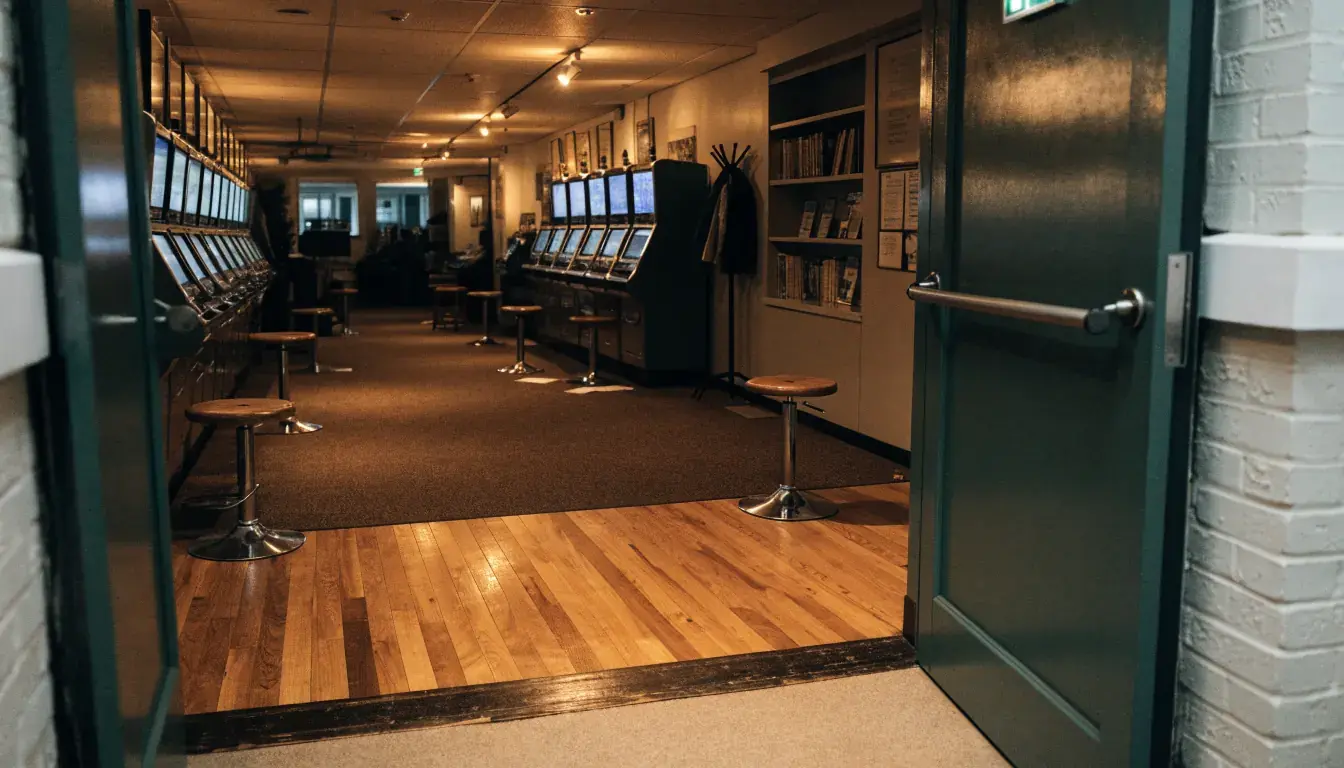
“Pokies parlour” is an informal description, not a precise measure of a venue’s size or legal status. In Australian usage, “pokies” commonly refers to gaming machines, while “parlour” can suggest a dedicated room or gaming area. Put together, the words may describe a place associated with those machines, but they do not by themselves establish that the venue is a full-scale casino.
That distinction matters because gaming venues and casinos are not interchangeable categories. A pub, club or other licensed venue may offer gambling facilities without being a casino. A casino is a larger, separately licensed property operating under the rules of its state or territory. The word “parlour” does not change the underlying licence or turn a smaller venue into a casino. It is a label of convenience, not a regulatory classification.
A useful way to read the phrase, then, is as a description of the kind of gaming space someone has in mind, rather than as proof of a particular establishment’s status. A search for a “parlour casino” may refer to a casino’s gaming floor, a dedicated area within a venue, or a broader idea of a gambling venue. The wording alone cannot settle which one is meant.
Choosing an online pokies casino in Australia involves more than finding a familiar game style: licensing and practical payment details can help you assess what is known about each option. Use these short verdicts as a starting point for checking which details matter to you.
-
JeetCity Casino
- License
- Curacao eGaming (Dama N.V.)
JeetCity Casino is listed with a Curacao eGaming licence held by Dama N.V.
-
House of Pokies
- License
- international iGaming licence – jurisdiction not named in the source
- Payout speed
- PayID 1-24 hours
- Min. deposit
- A$30 (PayID from A$10)
House of Pokies lists PayID payouts at 1–24 hours and a minimum deposit of A$30, or A$10 when using PayID. Its source describes the licence as international iGaming but does not name the jurisdiction.
-
LuckyVibe
- License
- Curacao Gaming Control Board OGL/2023/176/0095 (Hollycorn N.V.)
LuckyVibe is listed under Curacao Gaming Control Board licence OGL/2023/176/0095, held by Hollycorn N.V.
-
Rollero Casino
- License
- Curacao Gaming Control Board OGL/2023/176/0095 (Hollycorn N.V.)
Rollero Casino is listed under Curacao Gaming Control Board licence OGL/2023/176/0095, held by Hollycorn N.V.
-
Bizzo Casino
- License
- Curacao Gaming Control Board (TechSolutions Group N.V.)
Bizzo Casino is listed with a Curacao Gaming Control Board licence held by TechSolutions Group N.V.
-
Kingmaker
- Payout speed
- crypto ~90 minutes, fiat 1-5 days
- Min. deposit
- A$30
Kingmaker lists crypto payouts at about 90 minutes and fiat payouts at 1–5 days. Its minimum deposit is A$30.
-
Lucky Dreams
- License
- Curacao
- Min. deposit
- A$20 (POLi)
Lucky Dreams is listed with a Curacao licence and a minimum POLi deposit of A$20.
-
SkyCrown
- License
- Tobique Gaming Commission
- Payout speed
- crypto ~10-15 minutes, fiat 1-5 days
- Min. deposit
- A$30
SkyCrown is listed with a Tobique Gaming Commission licence. Its stated payout times are about 10–15 minutes for crypto and 1–5 days for fiat, with a minimum deposit of A$30.
-
DragonSlots Casino
- License
- Curacao Gaming Authority (Jumpman Gaming Ltd)
DragonSlots Casino is listed with a Curacao Gaming Authority licence held by Jumpman Gaming Ltd.
-
MrPacho
- Payout speed
- crypto 30-120 minutes, fiat 24-72 hours
- Min. deposit
- A$30
MrPacho lists crypto payouts at 30–120 minutes and fiat payouts at 24–72 hours. Its minimum deposit is A$30.
Casino status follows the licence
Australia does not have a single national casino licence that covers every property. Casino regulation sits with the states and territories, and each casino operates under a licence granted by its own jurisdiction. That local licence is the relevant basis for distinguishing a casino from other gaming venues.
This structure also means that the details of casino operation are not uniform simply because the properties share a broad label. The regulatory authority and applicable requirements depend on where the property is located. “Australian casino” is a useful national category, but its legal footing is local: each property is accountable under the arrangements of its state or territory.
The distinction is practical, not merely semantic. A name, sign or description containing “casino” or “parlour” is not, by itself, evidence of a casino licence. The licence determines the property’s status; promotional or informal wording does not. That is why counting all places where gambling is available as casinos would produce a misleading picture of the market.
Scale, with a source qualification
A specialist review describes Australia as having more than 20 full-scale casinos across all eight states. That is a reported market estimate, not a timeless official count. The qualification matters: venue numbers and classifications can change, while a review’s total reflects its own scope and the point at which it was compiled.
 Real-Money Pokies on Android in AustraliaLearn how Australian rules affect offshore Android casino access, why ACMA blocks illegal gambling sites, and what to check before depositing.
 Pokies Casino Rules and Access in AustraliaLearn how the Interactive Gambling Act 2001 applies to online casino games in Australia, including the restriction on real-money services and the…
The figure should therefore be read as an indication of the market’s broad shape, rather than a definitive census. It refers to full-scale casinos, not every club, pub or other gaming venue where gambling may be available. The distinction keeps the number useful without making it carry more weight than its source supports.
At the level of operating hours, all major Australian casinos run around the clock. That shared feature does not make every casino identical, nor does it mean that every other type of gaming venue follows the same schedule. The description applies to major casinos, not to gambling venues as a whole.
Entry is also subject to a national minimum age: casino admission is restricted to adults aged 18 and over. That threshold is a baseline for casino entry across Australia. It does not make the term “parlour” a separate entry category or indicate that a venue falls outside casino rules.
Taken together, these points give “pokies parlour casino” a clearer meaning. It may describe a gaming area associated with a casino, but it is not a formal class that can be identified from the phrase alone. The more reliable distinction is between a licensed casino property and the wider group of gaming venues. Casino scale, operating arrangements and regulatory status follow the property and its local licence—not the informal word “parlour”.
Sign-Up Bonuses and the Australian Online-Gambling Boundary
A welcome credit or a bonus that requires no deposit may sound like a small promotional benefit. In Australia, the first issue is not its face value or the conditions attached to it. It is whether the underlying service may lawfully be provided to someone in Australia.
The Interactive Gambling Act 2001 prohibits operators from supplying real-money online casino services to people physically located in the country. That prohibition covers casino-style games such as slots, poker, blackjack and roulette. A sign-up offer does not change the character of the service: if it is attached to prohibited online casino gambling, describing the credit as free or deposit-free does not make the service permissible.
This distinction matters because promotional language can make an offer appear separate from the activity it is designed to support. A bonus may be presented as an account-opening benefit, a welcome reward or a way to begin without paying in. Those labels describe the promotion, not the legal status of the online casino service behind it. The relevant boundary is the provision of the gambling service to people in Australia, not whether an individual has first transferred money.
The law also restricts advertising prohibited interactive gambling services in Australia. A bonus message is therefore not a safe exception simply because it refers to a reward rather than setting out game rules. Where an inducement is used to attract people to a prohibited online casino service, its promotional format does not remove the underlying issue. Nor does a claim that the offer is available to new customers establish that the operator may lawfully provide the service to Australian residents.
ACMA’s role
The Australian Communications and Media Authority, or ACMA, oversees compliance with federal interactive-gambling rules and enforces the Interactive Gambling Act. Its role is regulatory rather than promotional: it does not validate a casino welcome offer by virtue of the offer appearing online.
 Pokies Open Near Me in Australia: Hours ExplainedMajor Australian casinos operate 24 hours a day, but that does not confirm access to every area or service; learn how venue…
 Australian Online Casino Rules and Offshore OffersLearn how the Interactive Gambling Act applies to offshore online casinos in Australia, alongside the bonus, verification and payment terms covered here.
ACMA can ask Australian internet service providers to block websites that provide prohibited interactive gambling services or advertise those services in Australia. That power is one part of enforcement. It does not make the bonus itself the central legal test; the service being supplied, and the advertising connected with it, remain the relevant matters.
A promotion can therefore be visible without proving that it is lawful for the intended audience. The wording of an offer, the presence of a registration page, or the fact that a message is aimed at new accounts cannot override the statutory boundary. Those features describe how a service seeks customers, not whether Australian law permits the service to be offered.
The practical distinction is straightforward. A sign-up bonus is not a separate product with its own exemption from gambling law. It is attached to an operator’s service, and the legality of providing that service to people in Australia comes first. A no-deposit condition changes what a customer is asked to pay at the outset; it does not alter the legal category of online casino gambling.
This is why a headline promising a casino bonus for Australian users cannot, by itself, establish a lawful offer. The presence of a reward and the permissibility of the underlying service are separate questions, and only the latter determines whether the operator may provide online casino gambling to people physically in Australia. The regulatory boundary is set by the Act, not by the promotion’s name.
Online Play, Alternate Domains and What Access Does Not Prove
A casino-style website loading in Australia is a technical result, not evidence of Australian authorisation. The same applies if a site accepts account traffic or appears under a different web address. None of those events establishes that the service is licensed to provide online casino gambling in Australia.
The legal distinction is direct. Under the Interactive Gambling Act 2001, operators are prohibited from providing real-money online casino games to people physically located in Australia. That category includes casino-style games such as slots, poker and table games. A foreign licence, a functioning account page or a newly appearing domain does not change the Australian rule.
ACMA is the federal regulator responsible for enforcing the Act. It can ask Australian internet service providers to block websites that provide prohibited interactive gambling services or advertise them in Australia. A block can affect whether a particular domain resolves through an internet provider. If an address stops working, that does not establish what has happened to the underlying service; if another address appears, that does not establish that the service has gained Australian approval. Domain availability is a weak signal of regulatory status.
 Online Pokies and E-Wallets in Australia: Key FactsUnderstand how e-wallet payments fit into Australian online pokies, what listings can verify, and the account, withdrawal, mobile and bonus checks to…
 Android casino apps in Australia: access and safetyLearn how Australian Android casino access works through browsers or PWAs, how free-slot credits differ from cash, and what to check before…
The regulator’s enforcement record gives this distinction practical weight. Since November 2019, ACMA has blocked more than 1,455 illegal gambling and affiliate websites after enforcement action. That figure describes blocking activity, not a count of domains that remain inaccessible today: addresses can change, and blocking one address does not certify the status of another. A specialist review has also described blocking action involving Fair Go-related alternate domains. That reference concerns the appearance of alternate addresses, not a finding that the service is Australian-licensed.
There is also a reported difference in totals for services that have left the Australian market. One account puts withdrawals since enforcement began in 2017 at more than 210; another gives a figure of over 190. The figures should not be collapsed into a single precise total. Both describe reported withdrawals, while neither turns a replacement address or a surviving webpage into proof of local authorisation.
For someone searching for online play connected with a pokies parlour, the useful distinction is between venue access and an internet service. A land-based casino operates under a licence issued by its state or territory. An online casino-style service aimed at people in Australia falls under the federal prohibition described above. Those are different regulatory arrangements, not two formats of the same Australian casino licence.
A site may still be visible in search results, open from a particular connection, or display a sign-in page. Such observations show only that a page or domain can be reached in that instance. They do not verify who operates it, whether its service is lawful for Australian customers, or whether the address is an authorised channel. An alternate domain is an address change, not a regulatory credential.
ACMA has reported that more than 210 illegal services withdrew from the Australian market after it began enforcing the rules in 2017, while another reported total is over 190. The disagreement matters because these are changing enforcement outcomes, not a stable measure of how many sites can be reached at a given moment. Neither total should be treated as a live directory or an access guide.
The practical conclusion is narrow: accessibility cannot be used as a licensing test. Australian enforcement includes website blocking, and addresses may change over time; neither a failed connection nor a successful one settles the service’s legal status.
Free Chips and Spins: What Can Be Verified
“Free chips” and “free spins” describe promotional language, not a complete offer. The words alone do not establish what is provided, who qualifies, what must happen first or whether any resulting balance can be withdrawn. A claim that a casino is free to join is not proof that play carries no conditions or cost.
A substantiated promotion would need to identify its operator and state its terms clearly. Relevant details include whether an account or deposit is required, how the promotional credit is applied, when it expires, which games qualify and what conditions govern withdrawal. If those details are absent or unclear, the headline cannot support a reliable calculation of the offer’s value. “Free” is a label; the conditions determine the cost.

The distinction matters especially when an offer is presented as an online casino promotion for people in Australia. Under the Interactive Gambling Act 2001, operators cannot provide real-money online casino games to people physically located in Australia. A free-chip or free-spin message does not alter that legal position or establish that the promotion can lawfully be used in Australia. Nor does promotional wording prove that an operator holds an Australian casino licence for online play.
There is also a difference between a land-based casino’s general marketing and a claim about an online account. A phrase describing complimentary play may omit where it applies, who may receive it and how it is delivered. Without those particulars, it cannot be treated as a confirmed entitlement at a venue or online. The same caution applies when a page uses casino imagery, a familiar brand name or language suggesting that a bonus is ready to claim: presentation is not a substitute for terms.
A useful check is to separate each statement into what it actually establishes:
- The advertised benefit: the type of credit or play being described.
- Eligibility: whether the offer is limited to particular customers or circumstances.
- Conditions: any required action, expiry, qualifying games or withdrawal rules.
- Jurisdiction: whether the promotion is lawful and available where the person is located.
If a claim leaves those points unresolved, its practical value cannot be calculated. A stated promotional amount, for instance, would not by itself show the amount ultimately payable; that depends on the complete conditions. No conclusion about a real-money online offer in Australia follows from a banner, a landing page or the word “free”.
For land-based casinos, promotional wording likewise needs to be tied to a named venue and its actual terms before it can be treated as an available benefit. General references to free chips or spins do not identify a venue, confirm eligibility or establish a payable amount. The distinction is simple: a promotional phrase can be repeated without evidence, while an offer that can be assessed requires specific, applicable conditions.
How to Read a Pokies Parlour Casino Review
A useful casino review separates a checkable venue detail from an opinion about the experience. “Convenient”, “high quality” and “worth visiting” are assessments, not facts on their own. A location, by contrast, can be compared with a named address or listing. That distinction matters: a polished description may still leave the central practical detail unsubstantiated.
Review Audit
-
1
Identify Specific Detail
Check if a concrete fact, such as a named place or address, is provided.
-
2
Determine Scope
Verify if the detail supports the exact claim being made or only a narrower one.
-
3
Check Attribution
Determine if the statement is presented as a listing, a reported observation, or an opinion.
-
4
Verify Freshness
Look for a date or indication of when the changeable claim was checked.
Country Club Casino provides a straightforward example of what a location claim can establish. It is listed at Country Club Ave, Prospect, in Meander Valley. That identifies a stated place and gives a reader a concrete detail against which the review can be assessed. It does not, by itself, establish every other claim the review might make about the venue.
The same test applies to descriptions of facilities, service or atmosphere. A review should make clear which statements come from a specific listing, which are the reviewer’s impressions, and which are general descriptions. If those categories are blended, opinion can acquire the appearance of documentation without gaining any additional evidential weight.
Separate the claim from its support
A review’s value depends less on the strength of its adjectives than on whether its claims have a visible basis. A named location supports a location statement. It does not demonstrate that a reviewer visited the site, assessed its facilities or confirmed how it operates. Those are separate claims and need separate support.
The distinction can be expressed as a simple audit:
- Specific detail: Is a named place or other concrete fact provided?
- Scope: Does that detail support the exact claim being made, or only a narrower one?
- Attribution: Is the statement presented as a listing, a reported observation or an opinion?
- Freshness: Is there a date or other indication showing when a changeable claim was checked?
The last point is particularly relevant to descriptions that can change. A review without a clear time reference may document what was stated when it was prepared, but it cannot automatically establish the present condition. Where a review makes no distinction between historical and current information, its apparent certainty exceeds what the text can show.
What a review cannot establish by tone alone
A confident verdict is not a substitute for evidence. A favourable or critical rating may summarise an assessment, but it does not independently verify the details behind that assessment. Nor does repeating a claim in several places make it better supported if each version traces back to the same unexamined statement.
A careful reading therefore treats each sentence separately. The Country Club Casino listing supports the stated location in Prospect, within Meander Valley. It should not be stretched into proof of service quality, current facilities, visitor conditions or any other feature not contained in that location detail. That is not excessive caution; it is basic accounting of what each piece of information can actually purchase.
For a pokies parlour review, the practical standard is modest but useful: concrete venue details should be identifiable, opinions should remain recognisable as opinions, and broad conclusions should not be presented as if one address had verified them. A review can still help organise information, but its limits belong on the same page as its verdict.
Australian Casino Coverage: Cities and Regional Distribution
Australian casino coverage is spread across metropolitan and regional locations, but the available figures describe different things. A count of cities with gambling is not a count of casinos, and a tally of facilities within one city cannot be compared directly with the number of casinos across a territory. Keeping those units separate makes the geographic picture more useful and less misleading.
A specialist gambling review reports 147 Australian cities with gambling. That figure indicates broad geographic reach, rather than a verified count of casino locations: “gambling” can encompass more than full-scale casinos. The same review identifies Sydney, New South Wales, as the country’s largest gambling city and assigns it 11 gambling facilities. The city-level total is therefore a facility count, not evidence that Sydney has 11 casinos.
The distinction matters for any map of Australian gambling venues. A city may be included in a broad gambling count without having a casino, while a facility total may include venue types beyond casinos. The figures provide a high-level view of distribution, but they should not be combined into a single national casino tally or used to infer the number of pokies parlours in each city.

Northern Territory distribution
A specialist gambling review places three casinos across three Northern Territory cities. Within that breakdown, Alice Springs is listed as the city with the most casinos, at one. In this case, the stated city maximum is one casino; the territory-wide figure and the city-level figure use different geographic scopes.
These numbers describe a distribution snapshot from a specialist review, not a permanent register. Venue counts can change, and the figures should be read as attributed reporting rather than as an official, continuously updated national census. That qualification is especially relevant when comparing a broad Australian city count with a smaller regional breakdown: the underlying categories and coverage may differ.
The Northern Territory figures also show why “regional” does not mean “one central location.” The reported casinos are distributed among three cities, while Alice Springs accounts for one of them. The information supports that limited geographic comparison; it does not establish which city has the largest venue, the widest range of facilities, or the greatest visitor numbers.
For national coverage, the clearest reading is therefore layered: the specialist review records gambling activity in 147 cities, identifies Sydney with 11 gambling facilities, and reports three casinos across three Northern Territory cities, with one in Alice Springs. Each figure answers a separate location question. None should be treated as a substitute for the others, or as a complete, current directory of casino addresses.
This is geographic context, not a ranking of individual venues. It shows how broad the reported spread is and where the cited regional concentration sits, while preserving the difference between cities, facilities and casinos. For a location decision, a city-level count is only a starting point; it does not confirm that a particular casino is operating at a specific address.
National Reach
Gambling activity is reported in 147 Australian cities.
Sydney, NSW
Identified as the largest gambling city with 11 gambling facilities.
Northern Territory
Three casinos are reported across three cities, with Alice Springs having one.
Bonus Claims and the Difference Between an Offer and Its Terms
A casino bonus is not a payable amount on its own. Its value depends on the conditions attached to it: who can claim it, what activity qualifies, how any winnings may be used, and what restrictions apply before a balance can be withdrawn. Without those terms, a headline figure has no reliable cash value.
The distinction matters for claims about a bonus at a pokies parlour. A promotional label may describe an offer, but it does not establish eligibility, the amount ultimately payable or whether the offer is available at a particular venue. Those details need to be stated together before the promotion can be assessed as a financial proposition.
For a land-based venue, the relevant terms would need to identify the participating property and the conditions for receiving or using the offer. For an online casino-style promotion, the framing is different: Australian law prohibits operators from providing real-money online casino games to people in Australia. A bonus label does not change that status, and promotional language cannot make a prohibited service lawful.
A useful way to assess any bonus claim is to separate four elements:
- Offer: what is being promised, without treating promotional wording as cash.
- Eligibility: which customers or transactions qualify.
- Conditions: the requirements attached to claiming or using the benefit.
- Payable value: what, if anything, can actually be withdrawn or redeemed after those conditions are met.
If one element is absent, the amount cannot be calculated from the headline alone. If all four are stated, the offer can be compared on its actual terms rather than its label. That is a calculation, not a matter of presentation.
Claims should also be distinguished from venue facts. A property’s name or address does not substantiate a bonus, just as a bonus banner does not establish that a venue offers the advertised benefit. The offer needs its own clear terms, tied to the relevant property and activity. Otherwise, the claim remains promotional copy, not a confirmed financial benefit.
This approach avoids treating the word “bonus” as evidence of value. A stated amount without conditions is incomplete; conditions without a clear payable outcome are equally difficult to assess. The practical figure is the amount available after the stated requirements are satisfied—not the largest number printed in a headline.
VIP Parlour Claims: No Verified Status to Compare
A “VIP parlour” label does not, by itself, establish a standard level of access at an Australian casino. The term may suggest a distinct tier, but the wording alone says nothing measurable about who qualifies, how entry is granted or what a member receives. Those details determine whether two offers are comparable; the label does not.
A substantive VIP claim would need to define its conditions. Eligibility might be tied to stated criteria, while access could depend on approval or a separate membership arrangement. Any benefits would also need to be specified rather than implied by terms such as “exclusive” or “priority”. Without those components, there is no basis for comparing the practical value of one claimed tier with another.
Do
- Define specific eligibility criteria
- Specify concrete member benefits
- State clear conditions for access
Don't
- Rely on labels like "exclusive"
- Use branding to imply status
- Assume prestige equals verified entitlement
The same distinction applies to the word “parlour”. It can evoke a separate room or service, but a name is not evidence of a particular facility, admission rule or benefit. A claimed tier should be assessed through its actual conditions, not through the atmosphere suggested by its branding.
This is a matter of precision, not prestige. A VIP claim is useful only when it identifies the status being offered and the terms attached to it. If those terms are not stated, the claim cannot support a comparison of eligibility, access or value. The prudent reading is therefore narrow: VIP wording signals a claim, not a verified entitlement.
Parlour Pokies and the Casino Machine Count
“Parlour pokies” can suggest a dedicated room or a particular type of machine, but the national figure gives a narrower measure: the number of gaming machines installed in Australian casinos and endorsed on venue licences. That total is 3,308.

The count is useful as a scale indicator, not as a directory. It does not show how machines are distributed between properties, whether a venue has a separate parlour, or what equipment is available at a particular location. Nor does it identify games, machine features or operating conditions. Those details require venue-specific information; the national total cannot supply them.
The licence wording matters. A machine being included in the total means it is covered by the relevant venue licensing record and is installed in a casino. It does not mean that every casino has the same number, or that the count describes every gaming venue in Australia. The measure is confined to casino installations.
For someone assessing a parlour-pokies claim, this distinction prevents a common category error. A national inventory can establish that casino gaming machines are part of the land-based market at a measurable scale. It cannot verify a named room, particular machine, or an individual venue’s current layout. A detailed claim needs evidence tied to that venue, rather than an inference drawn from the aggregate.

The figure is therefore best read as a boundary on what can be stated: 3,308 machines are recorded across Australian casinos under the stated licensing measure. More specific conclusions about parlours or individual sites do not follow from that total alone.
Real-Money Search Intent and Verified Venue Locations
A request for a real-money casino experience can refer to two different things: attending a physical casino or using an online service. The distinction matters. An address identifies a land-based venue; it does not establish that an online casino service is lawful or available for play in Australia. The Interactive Gambling Act 2001 prohibits operators from providing real-money online casino games to people physically located in Australia.
Two venue locations can be stated precisely. Lasseters Casino is at 93 Barrett Drive, Alice Springs, NT 0870, Australia. Jupiters Gold Coast Casino & Hotel is on Broadbeach Island, Gold Coast. These details are useful for identifying physical destinations, but they do not describe online account access, deposits, promotions or remote play.

The same separation applies when “pokies parlour” is used to mean a place to play rather than a web-based product. A venue name and street address are location information; they are not terms of an online offer. Conversely, an online service presenting casino-style games does not become a land-based casino because it uses familiar venue language. The legal treatment depends on the service being provided, not the wording of its branding.
For a location-based decision, the relevant details are the named property and its stated address. For online real-money casino play, those details provide no basis for treating the service as an Australian-licensed option. Keeping the two categories separate avoids turning a confirmed physical location into an unsupported claim about online gambling.