Casino-wide operating hours do not necessarily confirm access to gaming areas, other facilities or services at a particular time.

What “Open Now” Means at an Australian Casino
“Open now” can refer to more than one thing. A casino may operate around the clock while access to a particular part of the property, or to a particular service, is a separate matter. The distinction is practical: a general operating-hours description is not a live confirmation that every facility is available at the time of arrival.
Major Australian casinos operate 24 hours a day. That establishes a broad operating pattern for the casino itself, not a promise that every area inside it has identical access arrangements. A late-night search for a nearby casino can therefore have a different answer from a search for a specific venue or facility within that casino. The wording may be similar; the information needed to answer it is not.
A useful first check is the identity of the place being described. “Casino” may mean the property as a whole, while a person looking for gaming may have a particular area in mind. A restaurant, entertainment venue, hotel facility or other service is not interchangeable with the casino’s general operating status. Where opening information is attached to one part of a property, it should not automatically be applied to every other part.
If you’re looking for pokies to play online in Australia, this list can help you review operators and the information available about them. Check the details that matter to you before choosing where to play.
-
JeetCity Casino
- License
- Curacao eGaming (Dama N.V.)
JeetCity Casino is listed with a Curacao eGaming licence held by Dama N.V.
-
House of Pokies
- License
- international iGaming licence – jurisdiction not named in the source
- Payout speed
- PayID 1-24 hours
- Min. deposit
- A$30 (PayID from A$10)
House of Pokies lists PayID payouts of 1–24 hours and a minimum deposit of A$30, or A$10 via PayID. Its source describes its licence as an international iGaming licence but does not name the jurisdiction.
-
LuckyVibe
- License
- Curacao Gaming Control Board OGL/2023/176/0095 (Hollycorn N.V.)
LuckyVibe is listed under Curacao Gaming Control Board licence OGL/2023/176/0095, held by Hollycorn N.V.
-
Rollero Casino
- License
- Curacao Gaming Control Board OGL/2023/176/0095 (Hollycorn N.V.)
Rollero Casino is listed under Curacao Gaming Control Board licence OGL/2023/176/0095, held by Hollycorn N.V.
-
Bizzo Casino
- License
- Curacao Gaming Control Board (TechSolutions Group N.V.)
Bizzo Casino is listed with a Curacao Gaming Control Board licence held by TechSolutions Group N.V.
-
Kingmaker
- Payout speed
- crypto ~90 minutes, fiat 1-5 days
- Min. deposit
- A$30
Kingmaker lists crypto payouts at around 90 minutes and fiat payouts in 1–5 days. Its minimum deposit is A$30.
-
Lucky Dreams
- License
- Curacao
- Min. deposit
- A$20 (POLi)
Lucky Dreams is listed with a Curacao licence and a minimum POLi deposit of A$20.
-
SkyCrown
- License
- Tobique Gaming Commission
- Payout speed
- crypto ~10-15 minutes, fiat 1-5 days
- Min. deposit
- A$30
SkyCrown is listed with a Tobique Gaming Commission licence. It lists crypto payouts at around 10–15 minutes, fiat payouts in 1–5 days, and a minimum deposit of A$30.
-
DragonSlots Casino
- License
- Curacao Gaming Authority (Jumpman Gaming Ltd)
DragonSlots Casino is listed with a Curacao Gaming Authority licence held by Jumpman Gaming Ltd.
-
MrPacho
- Payout speed
- crypto 30-120 minutes, fiat 24-72 hours
- Min. deposit
- A$30
MrPacho lists crypto payouts in 30–120 minutes and fiat payouts in 24–72 hours. Its minimum deposit is A$30.
The same distinction matters when a result refers to a pub or another local venue rather than a casino. The fact that a casino operates 24 hours does not establish the hours of a separate business. Nor does a general listing for a venue show that a particular activity is available at that moment. The category of place and the specific service both affect what “open” means.
Distance is another separate question. A result may appear relevant to a search for a nearby place that is open, but proximity and current access are independent details. Without a starting location, there is no basis for identifying the nearest casino. Even once a location is known, a general listing does not by itself establish that a particular facility within a property is accessible at the time being considered.
For a visit, the practical check is therefore narrower than “Is the casino open?” It is whether the relevant property is operating, whether the intended part of it is accessible, and whether any entry condition applies. Major Australian casinos require valid photo identification for entry. That condition remains separate from opening hours: an open venue does not mean entry requirements disappear.
This is why “pokies open now” can produce an answer that is technically accurate but incomplete. A casino’s round-the-clock operation answers the broad question about the property’s hours. It does not, on its own, identify which area is open, whether a separate venue has the same schedule, or whether a visitor can enter. Treating those as one fact turns a general hours statement into a claim it was not designed to make.

The distinction also limits what a listing can confirm. A status label such as “open” can be useful as a starting point, but its meaning depends on what the listing covers and when it was updated. If it describes the casino as a whole, it should not be read as a live schedule for every facility. If it describes a specific facility, it should not be expanded to cover the rest of the property. The label is only as precise as the place and activity it refers to.
For someone trying to find a place to go immediately, the sound approach is to match the question to the information: casino operating hours for the overall property, and separate access information for any particular facility. That avoids confusing continuous casino operations with continuous availability of every service. It also avoids treating a nearby result as confirmation of either the closest location or the precise activity sought.
The basic answer is straightforward: major Australian casinos operate 24 hours a day. The careful answer is narrower. Those hours describe the casino’s general operation; they do not automatically settle every question about access within the property. In practical terms, “open” is a starting condition, not a complete description of what will be available on arrival.
Early Starts and the 6am or 7am Search
A search for casino gaming at six or seven in the morning is a timing question, not evidence that a particular venue is open nearby. All major Australian casinos operate around the clock, so those early hours fall within the operating day of major properties. That national pattern is useful context, but it does not identify a venue in a particular suburb or confirm the arrangements at every property.
The distinction matters because “open” can refer to the casino as a whole, rather than to every area or service within it. A property’s continuous operation does not, by itself, establish that a particular gaming area is accessible at the requested time. Early-morning travel therefore depends on the specific venue and its current arrangements, not just on the general operating pattern.
What a 6am or 7am start means
For a major casino that operates continuously, 6am and 7am are not opening times in the ordinary sense. They are points within an ongoing operating period. That makes the question less about whether the property has just opened and more about whether it is the right venue, in the right location, with the relevant area available.
An early hour can still matter. A venue may be operating while access to a particular part of the property is subject to separate arrangements. The broad 24-hour pattern should not be treated as a minute-by-minute confirmation of access. It establishes the operating context; it is not a substitute for checking the specific property’s current information.
The same reasoning applies to an 8am arrival. It is later than a six or seven o’clock start, but the time alone does not change what a general operating-hours statement confirms. For major casinos, the stated pattern is continuous operation. Whether that answers a visitor’s practical question depends on the venue and the area they intend to enter.

Searches for access before dawn
Questions about access at 5am or 6am often use “open” to mean that a specific gaming area remains accessible through the night. The 24-hour pattern at major casinos gives a useful starting point: the property does not operate on a simple daytime opening schedule. But that pattern should not be stretched into a claim that every facility within each casino has identical hours.
A clear way to interpret early-morning timing is to separate three things: the property’s general operating period, access to the relevant area, and the location of the venue. Only the first is answered by the national pattern for major casinos. The other details are specific to the property and cannot be inferred from the hour alone.
This also explains why “open until 5am” and “open at 6am” are not interchangeable. The first asks whether access continues to a stated time; the second asks whether it is available at a particular hour. A casino operating continuously may fit the broad timing sought in either case, but that does not settle access to every part of the venue. Treating the two phrasings as a guarantee would assign more precision to a general operating pattern than it contains.
Applying the national pattern locally
A nearby result is not necessarily the nearest physical casino, and an early-hour result does not necessarily describe the exact area being sought. The national statement concerns major casinos as a category. It cannot establish which property is closest to an unspecified location or provide a live local access check.
Do
- Check the specific venue's current information for area access
- Use the 24-hour pattern as a general timing baseline
Don't
- Assume every gaming area is accessible just because the property is open
- Use national patterns as a substitute for local access checks
For an early visit, the useful distinction is between an operating property and a confirmed arrangement for a particular area. A venue’s own current information is the relevant place to confirm the latter. The broad operating pattern can narrow the timing question, but it cannot do the work of a location-specific check.
That is the practical limit of the 6am and 7am answer: major Australian casinos operate 24 hours, so those times fall within their general operating period. The result is a reliable starting point for understanding early hours, not a promise about the nearest venue or every part of its facilities.
Good Friday and Other Public-Holiday Hours
A Good Friday opening time cannot be treated as a single Australian rule. Casino operations are licensed by the state or territory where each property is located, so the relevant conditions sit at the local-jurisdiction level. A national answer would flatten those separate arrangements into a timetable that may not apply to the venue in question.
That distinction matters when a search concerns pokies at a nearby casino on Good Friday. The date alone does not establish whether a particular gaming area will be accessible, or what its hours will be. A venue’s ordinary schedule is not enough to settle a holiday schedule; the property and the applicable local arrangements both matter.
The same limitation applies to other public holidays. There is no basis for treating every Australian casino as having identical holiday hours simply because the holiday is observed nationally. The licensing structure is local, and a broad statement about “Australian casinos” cannot substitute for a property-specific schedule.

Why the venue’s location matters
The first useful detail is the casino’s jurisdiction. A venue in one state or territory does not operate under the licence issued to a property elsewhere. As a result, information about one casino’s Good Friday arrangements cannot automatically be carried across to another city or jurisdiction.
This is particularly relevant where a result describes a casino as open without specifying what “open” covers. The general status of a property and access to its gaming floor are not necessarily interchangeable descriptions. For a holiday visit, the detail that matters is the schedule applying to the particular area being considered, not merely a general statement about the venue.
The words “near me” do not resolve that point. Proximity identifies a possible venue, but it does not reveal the conditions under which that venue operates on a public holiday. A nearby casino may be in a different local licensing area from another property being discussed, and one venue’s arrangements are not evidence of the other’s.
Reading holiday information carefully
A useful holiday-hours notice should identify the property and the date it covers. If it gives only ordinary daily hours, it does not answer whether Good Friday is treated differently. If it describes a venue as open but says nothing about the gaming area, it does not establish that pokies are available throughout the stated period.
The distinction is practical rather than semantic. “Open” can refer to a property’s general operations, while a question about pokies concerns access to a particular part of it. Those statements answer different questions. Treating them as equivalent can produce a confident answer with no confirmed time attached to the activity being asked about.
For “today” or “tonight” on Good Friday, the calendar date must be paired with the relevant venue’s own holiday information. A standard listing may not make that distinction, and a schedule for another property does not fill the gap. The name of the casino and its location are therefore necessary before an opening claim can be assessed.
This is not a claim that all casinos close on Good Friday, nor that all remain open under unchanged hours. Either would turn local licensing into a national rule it is not. The defensible answer is narrower: holiday access has to be established for the particular casino and jurisdiction.
For other public holidays, the same method applies. A national label for the day does not supply a common casino timetable. The property’s location determines which local licensing framework applies, while the venue-specific schedule determines what is stated for that date. A general opening claim is not a substitute for both details.
Finding a Nearby Casino by Location
“Nearest” is a geographic comparison, not a national ranking. A venue that is close in straight-line distance may take longer to reach by road, while a casino in another city is not a practical local option simply because it appears in a broad national directory. The starting suburb, route and destination address determine the comparison. Without a defined starting point, no single property can be identified as the closest.

Australia has casino venues across all eight states. A specialist casino-location review counts more than 20 full-scale casinos nationwide; that figure is a snapshot from a secondary directory, not a permanent count. For local planning, the national total matters less than the specific city and the venue’s address. A national listing can establish that a property exists, but it cannot settle which venue is nearest to a particular suburb.
The Northern Territory gives a useful example of why city-level information matters. A specialist location review lists three casinos across three cities in the territory. In its city breakdown, Alice Springs has the territory’s largest casino count: one. That is a narrow comparison within the Northern Territory, not a claim that Alice Springs has several competing properties or is the closest destination for residents elsewhere.
Lasseters Casino is at 93 Barrett Drive, Alice Springs, NT 0870, Australia. The street address is more useful for a distance check than a city name alone: Alice Springs identifies the general area, while Barrett Drive gives a destination that can be compared with a starting address. The same method applies to any named venue—compare the full destination address with the actual point of departure, rather than treating a state or city label as a measure of proximity.
A search for a venue near Redcliffe, for instance, needs to be treated as a local geography question. Redcliffe is not itself enough information to establish which casino would be closest; the result depends on the precise starting point and the destination being compared. Likewise, a venue described as nearby in a broad regional listing may still be distant from a particular address. A map-based route comparison can resolve that practical question without turning a national venue count into a local answer.
Finding Nearest Casino
-
1
Identify the Locality
Determine the specific starting suburb or address to establish a point of departure.
-
2
Locate a Venue
Find a named casino with a usable street address rather than just a city name.
-
3
Compare the Journey
Use a map-based route comparison to determine the actual travel distance from the starting point to the destination address.
The same distinction applies when location is combined with an early start, today’s opening, or late-night access. A close property and an accessible property are separate conditions. First comes the location comparison: city, suburb and address. The relevant operating information is a separate check and should not be inferred from proximity. This keeps “near me” from being mistaken for confirmation that a venue is accessible at a particular time.
For a usable comparison, the destination should be a named casino rather than a broad area, and the starting point should be specific enough to distinguish suburbs or sides of a city. Addresses also prevent a common error: measuring to a city centre when the venue is elsewhere in the metropolitan area. In regional areas, city names may be far apart, so a territory-wide or state-wide listing is a poor substitute for checking the actual route.
The practical order is therefore straightforward: identify the locality, identify a venue with a usable address, and compare the journey from the relevant starting point. National and territory counts provide context; they do not calculate distance. In Alice Springs, Lasseters has a precise address to use for that comparison. Elsewhere, proximity remains a matter of local geography rather than a conclusion that can be drawn from Australia-wide totals.
What 24-Hour Casino Hours Do—and Don’t—Confirm
Major Australian casinos operate around the clock. That establishes a continuous operating pattern for the casino as a venue; it does not mean that every facility, service or part of the property is available at every moment.

The distinction matters when “24 hours” is treated as a complete description of a visit. A casino’s operating hours do not, by themselves, confirm access to a particular restaurant, bar, entertainment space or other amenity. Nor do they establish that every area has the same entry arrangements. These are separate details from the venue’s general hours.
The same applies to gaming machines. Australian casinos have 3,308 gaming machines installed under venue licences, but a national total does not indicate what is accessible at a particular property or time. It describes the market in aggregate, not an individual venue’s current facilities.
What continuous hours establish
For the major casinos covered by the national operating pattern, there is no scheduled daily closure implied by the stated 24-hour operation. A venue described as open around the clock remains within that broad category whether the time is daytime, late at night or early morning. The phrase is about the casino’s operating schedule, not a promise that every service runs without interruption.
Entry conditions still apply. Casino entry in Australia is restricted to adults aged 18 or over, and valid photo identification is required at major casinos. Continuous opening hours do not remove those requirements. A venue can be operating while a person who does not meet its entry conditions cannot enter.
This is the practical meaning behind searches for a casino open around the clock: the national pattern supports continuous operation at major properties, but it cannot answer every question about an individual visit. It is a clear statement about hours and a limited statement about access.
What the hours do not establish
A 24-hour schedule should not be read as confirmation of identical arrangements across all parts of a property. Venue opening, access to a particular area and the operation of a particular service are distinct matters. Treating them as interchangeable would turn a general schedule into a much broader claim than it supports.
The wording also does not identify which casino is nearest to a particular location, or whether a specific property is accessible from that location at the time in question. Those details depend on the venue and the circumstances of the visit, not simply on the national pattern.
So, “open now” and “open 24 hours” are not necessarily competing descriptions. The first concerns a particular moment; the second describes an operating schedule. For major Australian casinos, continuous hours provide the baseline. They do not substitute for property-specific information about facilities, services or entry arrangements.
Australian Casino Coverage and Local Licensing
A specialist casino-market review counts more than 20 full-scale casinos across all eight Australian states. That figure is a snapshot from a particular type of publication, not a permanent measure of the market: venues and classifications can change. It gives national context, but does not identify which property is closest to a particular suburb or establish its current access arrangements.
The licensing structure is local. Each casino operates under a licence issued by the state or territory where the property is located, and that jurisdiction oversees the casino’s land-based operation. A licence for a physical venue is not permission to provide online casino games to people in Australia. The Interactive Gambling Act 2001 prohibits operators from providing real-money online casino games, including slots, poker and table games, to customers physically located in the country.

Federal oversight has a separate purpose. The Australian Communications and Media Authority (ACMA) administers enforcement of the Interactive Gambling Act and monitors compliance with federal interactive-gambling rules. It can ask Australian internet service providers to block websites that supply prohibited interactive gambling services or advertise them in Australia. That power concerns online services and access to their websites; it does not replace the state or territory licence governing a physical casino.
ACMA’s enforcement record includes more than 1,455 blocked illegal gambling and affiliate websites since November 2019. Reported withdrawal totals are not consistent: one count says more than 210 illegal services left the Australian market after enforcement began in 2017, while another gives a figure above 190 for the same period. The difference matters; these are separate reported totals, not a single precise count.
For someone comparing land-based venues, the practical distinction is between a local casino licence and federal rules on online gambling. A venue’s physical presence and jurisdictional licence do not establish that an online service using a similar name or related domain is legally authorised in Australia. Nor does a website loading in a browser prove its regulatory status. Website blocking can also affect whether a domain resolves through an Australian internet service provider, while alternate addresses may appear over time.
National market size therefore answers a limited question: casinos operate across the country under jurisdiction-specific licences. It does not turn online casino services into a licensed extension of those venues, and it does not supply a location-specific list of nearby gaming venues.
Federal Oversight and the Interactive Gambling Act 2001
The Interactive Gambling Act 2001 prohibits operators from providing real-money online casino games to customers in Australia. The ACMA enforces this by monitoring compliance and requesting ISPs to block illegal gambling and affiliate websites.
Late-Night Access and Venue Hours
Late-night opening is less complicated than the wording of a venue listing can make it seem: all major Australian casinos operate around the clock. That establishes a broad operating-hours baseline, but it does not mean every part of every property is accessible at every hour.
A casino’s general opening status and access to a particular facility are separate matters. A listing that describes a property as open overnight does not, by itself, confirm the hours of its restaurants, entertainment areas or other services. Nor does the national operating pattern establish that every property offers the same late-night arrangements. Those details depend on the venue.
The distinction matters when checking whether a casino is open late. The 24-hour pattern applies to major casinos as a whole; it should not be expanded into a promise about a specific amenity, service or entrance. A venue may be operating while an individual facility follows its own schedule. Treating those as equivalent would turn a general statement about opening hours into a much broader claim.
Entry requirements remain relevant at night. The minimum age for casino entry in Australia is 18, and major casinos require valid photo identification for entry. Late opening does not remove either condition. A visit also should not be inferred from the status of a website or a search listing: those do not establish that a physical venue, or a particular facility within it, is available at that moment.

For a late-night visit, the useful distinction is therefore between the casino’s general operating hours and the specific service being sought. The first has a clear baseline for major Australian casinos: they operate 24 hours a day. The second needs confirmation from the venue itself, because the general schedule does not specify individual facilities or services.
This is a narrow conclusion, but a practical one. “Open overnight” describes the casino’s operating pattern; it is not a complete schedule for everything on the property. A late-night plan based on a particular facility requires that facility’s own current hours, rather than an assumption drawn from the casino’s general status.
Christmas Day: What Can Be Confirmed
Christmas Day opening cannot be stated as a single rule for every Australian casino. Casino licensing is handled by each state or territory, and each property operates under a licence issued by its local jurisdiction. That makes the relevant venue and its location central to any answer about holiday access.
The fact that a casino operates on ordinary days does not, by itself, confirm its Christmas Day schedule. Nor does a general description of a property’s hours establish that every part of the venue will be accessible on the holiday. A casino, its restaurants and other facilities may have separate arrangements; no nationwide Christmas timetable can be inferred from the licensing structure alone.
For someone looking for a nearby venue on 25 December, the useful distinction is between the casino’s regular operating pattern and a schedule expressly applying to that date. A listing that gives ordinary hours is not a holiday confirmation. A location result identifies a property, not whether it will admit guests on Christmas Day.
A reliable answer therefore has to be specific to the venue and the relevant jurisdiction. The property’s own dated notice or a direct confirmation is more useful than an undated directory entry. If the available information does not name Christmas Day, it should not be treated as proof that the venue is open or closed.
This is a narrow but important limit: national licensing arrangements explain why schedules may be set locally, but they do not supply the holiday hours for an individual casino. No Australia-wide Christmas opening rule follows from the fact that casinos are licensed in each state and territory. The practical result is that a nearby venue’s ordinary hours cannot settle whether it will be accessible on Christmas Day; only information that specifically covers that date can do so.
Anzac Day and the Limits of a National Answer
Anzac Day does not produce one reliable opening-hours answer for every Australian casino. Casino operations are licensed by the relevant state or territory, so a national rule cannot be inferred from the fact that a venue is a casino. The licence is local; the answer about a particular property must be local too.
That distinction matters when checking whether a casino is open on Anzac Day. A general statement about Australian casinos cannot confirm that a named venue will admit guests at a particular time on the holiday. Nor does a schedule for one property establish the schedule for another, even where both operate in the same state.
The phrase “pokies open near me” can also conceal two separate checks: whether a casino is operating on the date, and whether it is accessible at the time being considered. For Anzac Day, neither should be assumed from a nationwide summary. A venue’s ordinary pattern is not itself confirmation of its holiday arrangements.
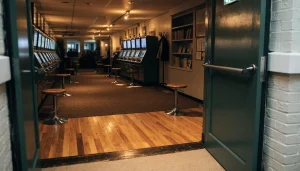
A useful answer therefore needs to identify the specific casino and the relevant date. Without those details, “open” is too broad to settle the practical question. The state or territory licensing structure explains why a single national answer is inadequate; it does not, by itself, supply each venue’s Anzac Day timetable.
The same limit applies to searches for casinos open nearby on the holiday. Proximity does not establish holiday access, and a result naming a nearby property is not proof of its Anzac Day hours. The dependable distinction is between the national licensing framework and a venue’s own confirmed schedule. A general answer can describe the former, but only property-specific information can settle the latter.
Cash, Cheques and What Venue Data Does Not Show
Cash access, cheque acceptance and venue ratings are separate questions from whether a gaming venue is open. A count of gaming machines cannot settle any of them. Across Australian casinos, the recorded total is 3,308 machines installed under venue licences. That figure describes licensed equipment across the sector; it does not identify a particular venue’s payment arrangements or establish which venue has the highest rating.

The distinction matters when several details are combined into one decision. An “open now” status concerns access at a particular time. Cash and cheque information concerns transactions, while a rating reflects a separate assessment whose basis may vary. Treating one as evidence for another would produce a conclusion the figures do not support.
A machine total also cannot be used as a proxy for quality, service or suitability. A larger count does not establish a better-rated venue, and a rating does not confirm that cash or cheques are accepted. Those details need to be confirmed for the specific property rather than inferred from national licensing data.
For a nearby venue, the useful comparison is therefore limited to what each piece of information actually measures: operating status for access, venue-specific terms for payment, and a clearly defined rating for evaluation. Without those separate details, no defensible “top-rated” ranking or cash-and-cheque comparison follows from the national machine count. The number is precise; its scope is narrow.