BetStop obligations, offshore payment and verification issues, and bonus terms all shape the risks and limits of casino access.
How BetStop Works—and What Its Exclusion Periods Mean
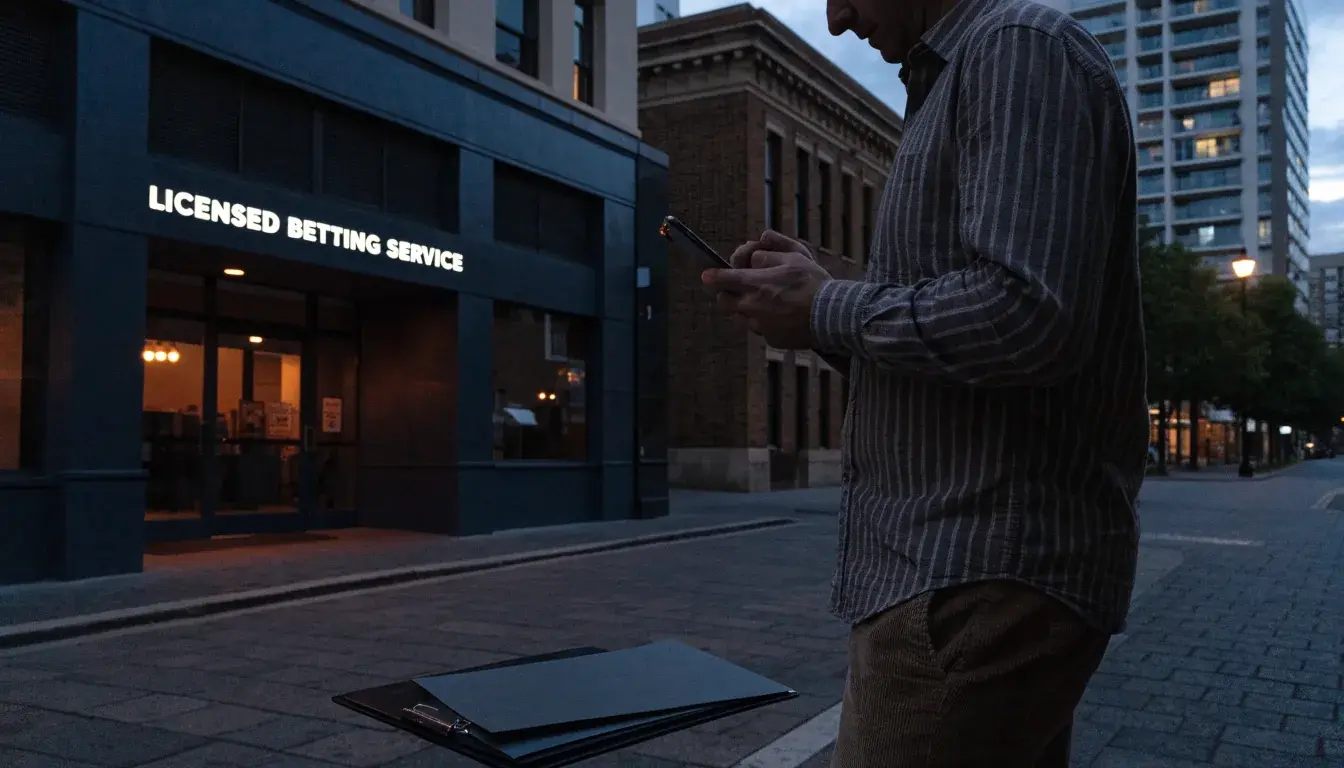
BetStop is Australia’s national register for people who choose to exclude themselves from online and telephone wagering services. It began operating in August 2023. Its purpose is practical: once a person is registered, operators licensed by the Australian Communications and Media Authority (ACMA) must refuse to provide that person with gambling services.
The restriction is not a preference that an operator can weigh against a promotion or an existing account. For an ACMA-licensed operator, BetStop registration means service must be denied. That makes the register relevant to casino access wherever the service falls within an operator’s obligations. A casino’s own account controls are a separate matter; they do not replace BetStop’s role.
Published descriptions of the available exclusion periods do not fully agree. One set gives four choices: three months, six months, one year or lifetime. Another describes the period as ranging from three months to five years, with lifetime exclusion also available. The difference matters when comparing explanations of the register, so neither description should be silently treated as the only one. The core point is that exclusion is not limited to a short cooling-off period: lifetime registration is included in both accounts.

An exclusion period is a boundary on access, not a spending limit or a warning that can be dismissed when circumstances change. The register is designed to prevent covered operators from providing gambling services during the selected period. Its effect therefore depends on the operator being subject to the Australian licensing system and required to act on a BetStop registration.
That distinction is especially important for anyone searching for a “BetStop casino.” BetStop does not approve casinos or certify that a gambling service is safe. It is a self-exclusion mechanism with a defined scope and an enforceable consequence for ACMA-licensed operators. The name of a casino, the way it describes its account settings, or the presence of a separate exclusion tool does not by itself establish that BetStop applies to it.
For a person who registered because gambling had become harmful, looking for access beyond the system works against the purpose of the exclusion. BetStop’s protection is strongest when the boundary is kept in place; additional support is available through Gambling Help Online, including confidential assistance on 1800 858 858.
What “Not on BetStop” Means for Australian Players
Choosing a casino outside BetStop means checking the details that matter to you before signing up. This reference highlights the licensing or payment information available for each listed operator.
-
JeetCity Casino
- License
- Curacao eGaming (Dama N.V.)
JeetCity Casino is listed with a Curacao eGaming licence held by Dama N.V.
-
House of Pokies
- License
- international iGaming licence – jurisdiction not named in the source
- Payout speed
- PayID 1-24 hours
- Min. deposit
- A$30 (PayID from A$10)
House of Pokies lists an international iGaming licence, though the jurisdiction is not named in the source. PayID payouts are stated as taking 1–24 hours, and the minimum deposit is A$30, or A$10 with PayID.
-
LuckyVibe
- License
- Curacao Gaming Control Board OGL/2023/176/0095 (Hollycorn N.V.)
LuckyVibe is listed under Curacao Gaming Control Board licence OGL/2023/176/0095, held by Hollycorn N.V.
-
Rollero Casino
- License
- Curacao Gaming Control Board OGL/2023/176/0095 (Hollycorn N.V.)
Rollero Casino is listed under Curacao Gaming Control Board licence OGL/2023/176/0095, held by Hollycorn N.V.
-
Bizzo Casino
- License
- Curacao Gaming Control Board (TechSolutions Group N.V.)
Bizzo Casino is listed with a Curacao Gaming Control Board licence held by TechSolutions Group N.V.
-
Kingmaker
- Payout speed
- crypto ~90 minutes, fiat 1-5 days
- Min. deposit
- A$30
Kingmaker lists crypto payouts at approximately 90 minutes and fiat payouts at 1–5 days. Its minimum deposit is A$30.
-
Lucky Dreams
- License
- Curacao
- Min. deposit
- A$20 (POLi)
Lucky Dreams lists a Curacao licence and a minimum deposit of A$20 via POLi.
-
SkyCrown
- License
- Tobique Gaming Commission
- Payout speed
- crypto ~10-15 minutes, fiat 1-5 days
- Min. deposit
- A$30
SkyCrown lists a Tobique Gaming Commission licence. Its stated payout times are approximately 10–15 minutes for crypto and 1–5 days for fiat; the minimum deposit is A$30.
-
DragonSlots Casino
- License
- Curacao Gaming Authority (Jumpman Gaming Ltd)
DragonSlots Casino is listed with a Curacao Gaming Authority licence held by Jumpman Gaming Ltd.
-
MrPacho
- Payout speed
- crypto 30-120 minutes, fiat 24-72 hours
- Min. deposit
- A$30
MrPacho lists crypto payouts at 30–120 minutes and fiat payouts at 24–72 hours. Its minimum deposit is A$30.
A casino described as “not on BetStop” is generally an offshore platform, not an Australian casino operating outside the register’s reach. Its systems are not connected to BetStop, so a registration there does not automatically prevent the platform from accepting an account or allowing access. That is a technical distinction, not evidence that the site is safe, lawful to operate in Australia or suitable for someone who has chosen to exclude themselves.
The distinction matters because the Australian framework applies to operators and to the services they provide. Under the Interactive Gambling Act 2001, it is illegal for an operator to provide real-money online casino games to people physically in Australia unless the service has the required Australian state or territory licence. Casino-style services, including pokies and table games, fall within the prohibited category when offered to customers in Australia without that authorisation. An international licence does not replace an Australian one.
The Act does not make an individual player’s access to an offshore gambling platform a criminal offence. The legal exposure described in the legislation is directed at the operator, rather than punishing the punter for playing. That difference should not be stretched into an endorsement: the absence of criminal liability for the player does not turn an offshore casino into an Australian-regulated service or give it local approval.
What BetStop connection does—and does not—show
Australian operators required to comply with BetStop must deny service to registered people. Offshore platforms operating under international licences are outside that database connection and may accept Australian players regardless of registration status. As a result, a non-BetStop casino may not apply the exclusion that would bind an operator covered by the Australian system.
“Not connected” is the whole point of the label. It does not mean the platform has been assessed by BetStop, approved by ACMA or found to offer equivalent protections. Nor does a site’s willingness to accept an account establish that its service is lawful in Australia. The site may present itself as international, but the relevant legal question is where the customer is physically located and what service is being provided there.
The same caution applies to searches for a new casino, live casino, casino games or a PayID or PayPal casino outside BetStop. Payment branding, a live-dealer lobby or a fresh launch does not change the regulatory position. A non-BetStop casino remains outside the Australian oversight system; a payment method does not confer jurisdiction, and a product label does not create local authorisation.
The practical cost is local recourse
Offshore gambling platforms are not regulated by ACMA or another Australian authority. If a dispute arises, the process is governed by the operator’s international arrangements rather than Australian regulatory procedures. There is no Australian gambling regulator to complain to about an offshore casino, and the lack of local jurisdiction makes disputes harder to resolve.
That is the trade-off often obscured by the phrase “casino not on BetStop.” Access may not be blocked by the register’s operator requirements, but the corresponding local protections are also absent. A complaint may have to be handled through the operator or a process associated with its overseas jurisdiction. That is not the same as having an Australian authority able to intervene under local gambling rules.

The distinction is relevant to every format, whether the site advertises pokies, table games or live casino play. None of those labels changes the legal position or creates an Australian dispute route. An offshore platform may accept a punter who has registered with BetStop, but that acceptance should not be read as confirmation that the platform will honour Australian expectations or provide an equivalent remedy if something goes wrong.
If BetStop registration followed gambling-related harm, looking for a way around that restriction carries a separate risk: offshore platforms will not stop someone in the way an operator bound by BetStop must. The safer course is to remain with the exclusion and use additional support rather than treating a site’s disconnection as a workaround. Gambling Help Online provides free, confidential support on 1800 858 858.
The calculation is therefore not “available versus unavailable” alone. It is access without the BetStop connection, paired with no Australian regulatory oversight and no local regulator to resolve a complaint. A site can be outside BetStop without being a safer alternative; those are different claims, and only the first follows from the label.
Payments, Verification and the Cost of an Offshore Withdrawal
A payment button is not evidence that a withdrawal will be straightforward. For Australian punters considering a casino not on BetStop, the relevant calculation has two parts: whether the operator accepts a payment method at deposit, and what checks it may require before releasing funds. Those are separate stages, governed by the operator’s terms and account procedures.
Offshore platforms typically require know-your-customer checks covering government-issued identification, proof of address and verification of the payment method. The checks connect an account to a person, an address and a transaction route. A deposit going through does not establish that these checks are complete, nor that a later withdrawal will be processed without further review. The balance shown on screen is therefore not the same thing as money received.
What verification can involve
Identity checks may require an official document that matches the account details. Address checks may involve separate evidence of where the account holder lives. Payment-method checks are intended to establish that the method used is associated with the account holder. The documents and steps accepted can vary between operators, so a general statement that a casino “verifies accounts” does not explain what a particular account must provide.
A claimed frictionless cash-out should be treated as a sales description, not as a substitute for written payment terms. Before depositing, the useful details are whether the operator explains its verification process, how it handles requests for documents, and whether the withdrawal rules identify circumstances in which additional checks can apply. If those points are unclear, the uncertainty is part of the cost.
The same distinction applies to a request to pay by phone, have a charge added to a mobile bill, or use another mobile-linked payment route. A payment option shown in promotional material is not confirmation that it is available to Australian account holders, can be used for both deposits and withdrawals, or avoids account verification. Availability and function need to be established in the operator’s own current cashier and terms. A phone-linked deposit, where offered, should not be read as a phone-linked withdrawal route.

This is not a technicality. The method used to put money into an account and the route by which money can be returned may not be identical. The operator’s written conditions matter more than the icon displayed beside a payment option. If a method is described only as a deposit option, its presence does not answer how a withdrawal is handled.
Where the cost appears
The practical cost of verification is uncertainty over access to the balance while documents or payment details are being checked. No general processing time can be applied to every offshore operator. A promise of a quick withdrawal does not settle how long an individual review will take, what evidence may be requested, or what happens if the documents are rejected. Those points should be stated in the operator’s rules; where they are not, the advertised speed has little accounting value.
Records matter. Payment confirmations, account statements, the terms in force when a deposit was made, and correspondence about verification can help establish what was paid and what the operator said it required. Keeping those records does not guarantee a result, but it makes a disputed transaction easier to describe precisely than relying on an account screen that may later change.
The larger exposure is the route available if the payment dispute remains unresolved. Offshore operators do not fall under Australian regulatory jurisdiction, and disputes are harder to resolve without a local regulator. A punter may therefore face international processes rather than an Australian complaint channel. That affects the expected value of an apparent payment convenience: the deposit route may be simple, while challenging a withheld withdrawal may be materially less so.
A site offering no meaningful explanation of identity, address and payment checks leaves a basic liability unanswered. A site promising that no verification will ever be required is not thereby proving that its payment process is safer or more reliable. The sensible comparison is between the written procedure and the payment claim, not between a polished checkout page and an idealised cash-out.
For a casino not on BetStop, the final amount worth counting is the amount that can actually be withdrawn under stated conditions, not the balance displayed before verification. Where the operator’s terms do not make the steps clear, the uncertainty cannot be priced with confidence.
Using Offshore Casino Sites on a Phone
A phone changes how an offshore casino is accessed, not the rules governing its operation. The Interactive Gambling Act 2001 prohibits operators from providing real-money online casino games to people physically in Australia. Casino-style games, including pokies, fall within that prohibition. A mobile-friendly page, or a site that opens on a handset, does not establish that the service is lawful or authorised for Australian punters.
Access can also change. ACMA can ask internet service providers to block unlicensed offshore gambling websites. A site that loads on a phone at one point may therefore become inaccessible after a blocking action. This is a practical risk of relying on an offshore platform: a saved link or familiar mobile page does not ensure continued access. A specialist review reported that ACMA had blocked more than 1,000 gambling websites as of April 2026; that is a time-specific figure from a secondary source, not a permanent measure of how many sites remain accessible.

Mobile access is not a safeguard
Small screens compress information. Terms, account controls and warnings may sit behind menus or links, and a page can be harder to assess when only part of it is visible. These are ordinary interface limitations, not proof that a particular casino hides information. The distinction matters: an attractive mobile layout says nothing about the operator’s legal status, oversight or willingness to resolve a complaint.
The same caution applies to an app. An app icon or downloadable file does not establish that an operator is permitted to offer real-money casino games in Australia. Nor does it guarantee continued access if ACMA seeks a block against the website or service. The relevant issue is not whether a page feels native to a phone; it is whether the service is legally available to people in Australia. For offshore casino games, the law places responsibility on operators not to provide the prohibited service.
A blocked site can leave account access uncertain. A phone may retain a bookmark, a browser history entry or a shortcut, but those records do not remove an ISP block. Trying to get around geographic restrictions with a VPN creates a separate account risk: an operator may treat that use as a breach of its terms, void the account and forfeit balances. A workaround therefore does not turn unstable access into a dependable arrangement.
Pokies on a small screen
Pokies are still real-money gambling when played through a mobile browser or app. Changing the device does not change the nature of the service or the legal position. A quick session during a commute, at home or between other tasks can make gambling easier to fit into spare moments, but convenience is not a control on spending or time. The mobile format can reduce friction without reducing financial exposure.
A phone also makes it easy to move between a casino page and other apps, which can make activity less visible to people nearby. That privacy is not a substitute for the safeguards attached to Australian-regulated services. Offshore platforms are outside ACMA’s regulatory oversight, and a dispute does not have an Australian regulator to handle it. A site’s mobile presentation cannot create that missing local route.
For anyone who registered with BetStop because gambling had become harmful, seeking an offshore mobile casino is not a neutral change of device. Offshore operators are not connected to BetStop and will not be required to deny service on the basis of that registration. If the purpose is to get around an exclusion set for harm reasons, pausing and contacting Gambling Help Online on 1800 858 858 is the safer course. The service provides free, confidential support.
The practical test for mobile access is therefore not whether a page loads cleanly or whether a game appears playable. Access may be blocked, the law prohibits operators from supplying the service in Australia, and a phone does not add local protection when something goes wrong. A polished screen is packaging; it is not a licence, a guarantee of availability or a route to local redress.
No-Deposit Bonuses: The Terms Matter More Than the Headline
A no-deposit bonus can look like value at zero cost. The headline alone cannot establish that value. The relevant calculation is what the offer permits, what conditions attach to it and whether any resulting balance can be withdrawn.

For a casino not on BetStop, the bonus should be treated as an offshore promotional offer, not as evidence of Australian approval or consumer protection. The Interactive Gambling Act 2001 prohibits operators from providing real-money online casino services to people physically in Australia. An offshore licence does not change that position or put the offer under ACMA oversight.
Before assigning any value to a bonus, the written terms need to answer practical questions: which games count towards any wagering condition, whether the bonus itself can be withdrawn, whether winnings are subject to a cap, and whether the offer expires or is restricted to particular account activity. These are not minor footnotes. Each condition changes the amount, if any, that could ultimately be available to withdraw. If the wording is unclear, the offer cannot be reliably valued.
A headline may describe a bonus as free while the conditions require substantial play before withdrawal, exclude the games a punter intended to use, or limit the resulting balance. Without clear terms, there is no sound basis for treating the advertised amount as cash or even as a dependable benefit. A large figure with conditions attached is still a conditional figure.
The dispute route also matters. Offshore sites are outside ACMA’s oversight, so a complaint about bonus terms or a withheld bonus balance would follow the operator’s international processes rather than an Australian regulatory process. That leaves no Australian regulator to resolve the disagreement locally.
Do
- Check which games count towards wagering conditions
- Verify withdrawal caps on bonus winnings
- Review the bonus expiry date
Don't
- Treat the headline bonus amount as cash
- Assume an offshore bonus has ACMA oversight
- Rely on unclear terms for valuation
This is a poor place to rely on assumptions. If the terms do not clearly explain eligibility, play-through requirements, withdrawal restrictions and expiry, the promotional value is uncertain before any account is opened. The sensible calculation is to value an unclear offer at zero, rather than count the headline as money already earned.
Non-BetStop Pokies and the Limits of Local Protection
Pokies offered by offshore casino platforms sit outside Australia’s local regulatory system. A site being outside BetStop does not mean it is approved for Australian players or subject to Australian consumer safeguards. The Interactive Gambling Act 2001 prohibits operators from providing real-money online casino games, including pokies, to people physically in Australia. That prohibition is directed at the service provider, not the individual player.
The practical distinction matters when a dispute arises. ACMA does not regulate offshore gambling platforms, and there is no Australian regulator to receive a complaint about an offshore casino. A punter disputing a withheld balance, a closed account or an unresolved payment issue therefore cannot rely on the local regulator’s complaint process. Any available route depends on the operator’s own procedures and the rules of the jurisdiction under which it claims to operate. That is a weaker position than having an Australian authority with jurisdiction over the service.
A displayed licence does not change that boundary. It may identify a foreign regulator or a process abroad, but it does not provide ACMA oversight or create an Australian dispute-resolution route. The distinction is not cosmetic: a complaint may need to be pursued through international procedures, where local authority cannot compel the operator to respond. Offshore platforms also carry a risk of losing money with little recourse if deposits are not returned or winnings are not paid.

The phrase “non-BetStop pokies” describes a connection the site does not have; it is not a mark of safety, legality or stronger protection. The absence of BetStop controls can be especially serious where registration followed gambling-related harm. Offshore casinos will not stop a person in the way an ACMA-licensed operator must. In that situation, looking for a way around the exclusion is a reason to pause and seek support, not a reliable substitute for protection. Gambling Help Online provides free, confidential support on 1800 858 858.
The financial calculation is plain: offshore access may leave fewer local avenues when something goes wrong. A foreign licence or an account-level complaint process cannot supply Australian regulatory oversight that is not there.
New Offshore Casinos: Check the Licence Before the Offer
A new casino not on BetStop may look established because its site displays a licence badge. The badge is a claim, not confirmation. Before treating it as evidence of oversight, identify the legal entity named on the licence and check that information against the issuing regulator’s official register. The register should show that the licence is active and belongs to that same entity; a logo or a link back to the casino’s own site proves neither point.
That check answers a narrow question: whether the named operator holds the stated licence. It does not make real-money online casino services lawful to provide to people in Australia. Under the Interactive Gambling Act 2001, supplying those services to customers physically present in Australia is prohibited. An offshore licence is not an Australian authorisation, and it does not create Australian regulatory protection or a local route for resolving a complaint.
Licence Verification
-
1
Identify the Entity
Find the legal entity name listed on the casino's licence badge.
-
2
Consult the Register
Check that name against the official register of the issuing regulator.
-
3
Confirm Status
Verify that the licence is currently active and belongs to that specific entity.
ACMA can ask internet service providers to block access to unlicensed offshore gambling websites. Blocking is an enforcement measure, not a certification system: a site being reachable does not establish that it is lawful, properly supervised or likely to remain accessible. A specialist review reported that more than 700 illegal gambling websites had received ACMA blocking orders by early 2026. That is a dated, attributed count, not a permanent measure of the market; ACMA’s enforcement activity continues to change.
A missing licence number or regulatory information is a clear reason to stop assessing the offer. So are terms that permit confiscation of winnings without a clear basis. These checks cannot remove the central exposure: offshore operators are outside Australian jurisdiction, and a foreign licence does not give an Australian punter the protections available under local regulation.
The offer should therefore be assessed only after the operator’s identity and licence claim have been checked independently. A prominent bonus cannot compensate for a licence that cannot be verified, and a verified foreign licence does not resolve the Australian legal position. In this market, the licence check establishes what the foreign regulator may oversee; it does not establish permission to serve Australian customers.
Free Spins: A Bonus Is Not a Cash Equivalent
A free-spin offer has no fixed cash value simply because it names a number of spins or displays a potential prize. The relevant figure is the amount, if any, that can actually be withdrawn after the offer’s conditions are applied. Until those conditions are clear, the headline is a promotional label, not a balance.

For free spins at a casino not on BetStop, the terms need to show which pokies qualify, when the spins expire, and what happens to any winnings. They may be restricted to particular games or make winnings subject to additional conditions before withdrawal. If the terms do not explain how a spin’s result becomes withdrawable funds, the advertised prize cannot be treated as cash.
The calculation also depends on what happens when a condition is not met. A win may remain promotional credit rather than withdrawable money, or the offer may be lost under its rules. That distinction should be visible before the spins are used. A large potential prize does not repair an unclear conversion rule; it only makes the unclear part larger.
There is a separate regulatory cost. Offshore casino services are not overseen by ACMA, so a dispute over free-spin winnings would follow international rather than Australian processes. There is no Australian regulator to handle a complaint against the operator, and a punter has less local recourse if the site refuses to recognise a win. The offer’s terms therefore matter, but they do not provide Australian regulatory protection.
Free spins also do not change the legal status of the service. The Interactive Gambling Act 2001 prohibits operators from providing real-money online casino games to people in Australia. A promotional format does not make an offshore casino an Australian-regulated service.
If BetStop registration followed gambling harm, using an offshore offer to get around that safeguard is not a neutral bonus decision: offshore casinos will not stop play as ACMA-licensed operators must. Gambling Help Online provides free, confidential support on 1800 858 858.
No-Deposit Casinos and Account-Level Self-Exclusion
A no-deposit casino not on BetStop may still provide an account-level self-exclusion option. That control is separate from BetStop: setting it at one offshore casino does not register the account with the national system, and BetStop registration does not require an offshore operator to block access.
Offshore casinos may offer self-exclusion through account settings or by contacting customer support. These tools are optional, not subject to the same mandatory operator requirements that apply to ACMA-licensed services. Their scope is therefore limited to the particular casino. A punter who uses several offshore accounts would need to deal with each operator separately; one request does not automatically close or restrict accounts elsewhere.
The practical value depends on what the casino’s control actually does. An account restriction can be useful only if it prevents the intended access, and the operator applies it. A request to support also relies on the casino receiving and acting on that request. These settings do not provide a national block across offshore platforms or create Australian oversight of the operator.

There is a more important distinction for anyone who joined BetStop because gambling was causing harm. An offshore casino will not stop that person in the way an ACMA-licensed operator must. Looking for a casino outside BetStop to get around an exclusion set for harm reasons is a reason to pause, not to treat another casino’s settings as an equivalent safeguard.
Real-money online casino games, including pokies, cannot legally be provided to people in Australia unless the service has a licence allocated by an Australian state or territory. Offshore access does not change that legal position, and offshore platforms operate outside Australian regulatory protection. If an account-control request is ignored, there is no Australian regulator to resolve the complaint.
For support with gambling, Gambling Help Online offers free, confidential assistance on 1800 858 858. Account-level controls can restrict a single account; they cannot replace the wider protection BetStop is designed to provide.

Low-Deposit Offers and the Limits That Matter
A small opening deposit caps only the amount put into the account at that point. It does not set a ceiling on later deposits, losses or time spent playing pokies. The useful comparison is therefore not the entry amount alone, but the account controls available after registration and whether their settings match the intended spending boundary.
A deposit limit can restrict how much is added within its selected period; it does not by itself cap losses from money already in the account or end a session. The period matters as much as the setting: a monthly limit and a daily limit constrain different patterns of spending.
Where offered, this is a separate control from limiting deposits, because it concerns losses rather than money paid into the account. These address time spent playing, not the amount deposited or lost. Deposit, loss and session controls should not be treated as interchangeable.

For a casino not on BetStop with a low-deposit offer, the low starting amount is not evidence that later expenditure is contained. A punter assessing the account controls needs to identify which limits are offered, what period each covers, and whether the settings can be changed. If a deposit cap is the only available boundary, it does not perform the work of a loss or session limit.
These tools also do not change the regulatory position. Offshore platforms operate outside Australian regulatory protection, and there is no Australian regulator to handle a complaint against an offshore casino. A limit may help define account behaviour, but it is not a substitute for local oversight or a guarantee that a site will resolve a dispute.
The arithmetic is plain: an entry deposit measures the first transaction; a limit governs only the category it names. A low entry point and meaningful expenditure controls are separate terms, and should be assessed separately.
Are non-BetStop betting sites legal for Australian players in 2026?
Australian law does not criminalise individual players for accessing offshore gambling platforms. However, providing real-money online casino games to people in Australia without the required Australian licence is illegal, and an international licence does not replace it.
Can Australians play live blackjack for real money?
Offshore platforms may accept Australian players, but providing real-money table games to people physically in Australia without the required Australian licence is illegal. Players themselves are not criminalised under the Interactive Gambling Act 2001 for accessing offshore platforms.
Can I bet online if I’m on BetStop?
ACMA-licensed operators must refuse service to people registered with BetStop. Offshore platforms are not connected to the register and may still accept them, but they lack Australian regulatory oversight.
What happens if a non-BetStop platform refuses to pay my winnings?
You would have to pursue the dispute through the operator’s international arrangements; there is no Australian regulator to complain to about an offshore casino. Without local regulatory jurisdiction, resolving the dispute can be harder.