The available information distinguishes Aristocrat game claims from general descriptions of Bitcoin pokies and online gambling.

What the Available Evidence Says About Aristocrat Pokies
“Aristocrat” and “Bitcoin pokies” describe different things. The first is a name attached to the subject of this page; the second is a payment-and-game category. Bitcoin pokies are digital slot machines that accept Bitcoin as a form of payment. That definition does not, by itself, identify a game maker, confirm a title, or establish that a particular Aristocrat pokie accepts cryptocurrency.
This distinction matters because a broad description of online gambling cannot support specific claims about Aristocrat online pokies in Australia. It cannot establish which Aristocrat titles are available online, whether any can be played with Bitcoin, or what features they contain. Treating the general category as proof of those details would turn an association into a product claim.
The same limit applies to familiar casino language. Terms such as “pokie”, “slot”, “Bitcoin casino” and “online play” may describe parts of the wider subject, but they do not confirm that a named Aristocrat game is offered by an operator. Nor do they establish that a game has a free-play version, a real-money version, or both. Each is a separate claim about a specific product or service.
For a page about Aristocrat online pokies in Australia in 2026, it is worth checking what is actually known about each operator before deciding where to play. These verdicts stick to the supplied licensing and payment details.
-
JeetCity Casino
- License
- Curacao eGaming (Dama N.V.)
JeetCity Casino is listed with a Curacao eGaming licence held by Dama N.V.
-
House of Pokies
- License
- international iGaming licence – jurisdiction not named in the source
- Payout speed
- PayID 1-24 hours
- Min. deposit
- A$30 (PayID from A$10)
House of Pokies lists PayID payouts of 1–24 hours and a minimum deposit of A$30, or A$10 when using PayID. Its source describes the licence as international but does not name the jurisdiction.
-
LuckyVibe
- License
- Curacao Gaming Control Board OGL/2023/176/0095 (Hollycorn N.V.)
LuckyVibe is listed with Curacao Gaming Control Board licence OGL/2023/176/0095, held by Hollycorn N.V.
-
Rollero Casino
- License
- Curacao Gaming Control Board OGL/2023/176/0095 (Hollycorn N.V.)
Rollero Casino is listed with Curacao Gaming Control Board licence OGL/2023/176/0095, held by Hollycorn N.V.
-
Bizzo Casino
- License
- Curacao Gaming Control Board (TechSolutions Group N.V.)
Bizzo Casino is listed with a Curacao Gaming Control Board licence held by TechSolutions Group N.V.
-
Kingmaker
- Payout speed
- crypto ~90 minutes, fiat 1-5 days
- Min. deposit
- A$30
Kingmaker lists crypto payouts at around 90 minutes and fiat payouts at 1–5 days. Its minimum deposit is A$30.
-
Lucky Dreams
- License
- Curacao
- Min. deposit
- A$20 (POLi)
Lucky Dreams is listed as licensed in Curacao, with a minimum POLi deposit of A$20.
-
SkyCrown
- License
- Tobique Gaming Commission
- Payout speed
- crypto ~10-15 minutes, fiat 1-5 days
- Min. deposit
- A$30
SkyCrown is listed with a Tobique Gaming Commission licence. It gives crypto payouts of around 10–15 minutes, fiat payouts of 1–5 days, and a minimum deposit of A$30.
-
DragonSlots Casino
- License
- Curacao Gaming Authority (Jumpman Gaming Ltd)
DragonSlots Casino is listed with a Curacao Gaming Authority licence held by Jumpman Gaming Ltd.
-
MrPacho
- Payout speed
- crypto 30-120 minutes, fiat 24-72 hours
- Min. deposit
- A$30
MrPacho lists crypto payouts of 30–120 minutes and fiat payouts of 24–72 hours. Its minimum deposit is A$30.
The Australian context also changes how “available” should be understood. Under the Interactive Gambling Act 2001, operators cannot provide real-money online casino games, including pokies, to people physically located in Australia. A page title or an offshore listing does not alter that legal boundary. Describing a game as online or Bitcoin-enabled is not evidence that it is lawfully offered to Australian residents.
Accordingly, “Aristocrat pokies online” should not be read as a confirmed inventory. The defensible statement is narrower: Bitcoin pokies are a type of digital gambling game defined by accepting Bitcoin, while Aristocrat-specific titles, availability and features require separate confirmation. Without that distinction, general statements about cryptocurrency gambling can easily be mistaken for verified details about a particular game.
This page is affiliate material and may include sponsored links. That commercial context does not make a product claim more reliable; claims about a named game still need to be supported on their own. For Australian readers, it also does not change the prohibition on operators providing real-money online casino games to people in the country.
Aristocrat Slots: What Can and Cannot Be Identified
The words “Aristocrat slot” can point to several different things: a game attributed to a named company, a physical machine associated with a brand, or an online game described that way by a casino or reviewer. The phrase alone does not establish which meaning is intended. Nor does it confirm that a particular title exists in an online catalogue, that its provider is Aristocrat, or that an Australian player can access it.

That distinction matters because slot terminology is descriptive, not proof of identity. A reference to reels, symbols, paylines, bonus rounds or a jackpot explains a kind of game feature. It does not identify the company that made a game. Similarly, a label such as “classic” or “video” describes a broad format, not a verified Aristocrat product. General vocabulary can make a page sound specific while leaving the central attribution untested.
A reliable identification would need to connect a named game to the company and to the particular version being discussed. A title by itself would not settle every question: the same or similar name could be used in different contexts, and a physical machine is not automatically evidence of an online release. A description of familiar mechanics is weaker still. Without a verifiable link between the title, its provider and the online product, calling something an Aristocrat game remains an unsupported attribution.
The same limit applies to claims about “Aristocrat online slots” or “online Aristocrat casinos.” A casino’s general catalogue does not prove that it carries a game from a particular provider. A casino may use brand names in promotional copy, search labels or category headings, but those labels cannot substitute for product-level evidence. The distinction is between a platform that offers online gambling and a specific game whose origin has been established. One does not confirm the other.
Nor can broad statements about how online pokies work be used to fill that gap. It may be possible to describe slot terminology in general, but that does not verify the design, features, payout structure or availability of any Aristocrat-branded game. A claim about a particular game needs evidence about that game; a general explanation cannot supply it by implication. Otherwise, familiar industry language does the work of a source without actually being one.
This also limits comparisons. Calling a title one of the “best” Aristocrat games would require a defined basis for the comparison and confirmed titles to compare. A ranking cannot be made from a brand phrase alone. Ratings, volatility descriptions, return figures and feature lists would each need to belong to a verified product and version. Without that connection, a comparison may look measurable while its starting point remains uncertain.
Physical machines and online products should not be treated as interchangeable evidence. A machine seen in a land-based setting would not, by itself, establish that an online equivalent exists. Conversely, an online game with familiar imagery or mechanics would not prove that it was made by Aristocrat. Resemblance is not provenance. A provider attribution requires more than a visual impression or a category label.
The distinction is especially important when the wording shifts between “Aristocrat slots,” “Aristocrat slot games” and casinos said to offer them. Those phrases can describe different claims: a company association, a group of products, or a platform’s inventory. Each needs its own support. Evidence for a casino’s existence does not verify its catalogue; evidence for a game’s name does not establish its provider; evidence for a provider does not establish access from Australia.
Accordingly, terminology can be explained, but it cannot carry a product identification on its own. Broad slot concepts remain broad, and a brand reference remains a claim until tied to a specific, verifiable game. In this context, that boundary is more useful than a confident-sounding description: it separates what the words suggest from what they actually establish.

Free Play and Real-Money Play Are Different Modes
Online pokies can be offered in free-play or real-money modes. These are different ways of playing, not interchangeable labels for the same arrangement. The distinction concerns whether play involves money at stake; it does not establish which games, if any, are offered in either mode.
Free play describes a mode without real-money wagering. Real-money play involves money being placed at stake. That difference changes what the activity means financially, even when the screen or general style of play appears similar. A title associated with one mode cannot be assumed to be available in the other, and the existence of a free mode does not demonstrate that a real-money version is offered.
This distinction matters when a name such as Aristocrat is attached to a request for free play. The wording alone does not confirm that a particular Aristocrat title exists online, that it can be played for free, or that a real-money version is available. Nor does it establish that an online game is connected to a particular manufacturer. A mode is a description of how play is structured; it is not proof of a game’s identity, provider, or availability.
What “free” changes
Free play separates the activity from staking real money. It should not be treated as a way to test the financial terms of real-money play: the two modes do not carry the same financial conditions. A free session cannot establish what a real-money session would cost or return. It also does not make a real-money offering lawful or locally available.
The word “free” can be narrow. It describes the mode, not necessarily every condition attached to access or use. The label alone does not explain whether a named game is present, whether a particular platform offers it, or what other terms apply. Those are separate questions and cannot be settled merely by calling a mode free.
Conversely, real-money play is not just free play with a different balance displayed. Money is at stake, so the financial consequence is part of the activity itself. That distinction should remain clear wherever the two modes are discussed together. Treating them as equivalent obscures the most important difference: one mode does not involve real-money wagering; the other does.
A mode is not an availability claim
Search phrases such as “free Aristocrat pokies” or “Aristocrat pokies online free” combine a provider name, a game category and a mode. Those words express a requested combination; they do not verify it. The same applies to phrases about free online Aristocrat slots. A label or heading cannot confirm that a named title exists in an online version, or that it is accessible in free or real-money mode.
Accordingly, “free” should not be read as evidence of a particular product. It does not identify a title, certify its origin, or prove that a real-money counterpart exists. Likewise, a discussion of real-money mode does not imply that a specific Aristocrat game is available for wagering. Keeping those points separate avoids turning a general explanation of play modes into a claim about a product.

In Australia, real-money online casino games are prohibited from being provided to people in the country. The general distinction between free and real-money play does not override that legal boundary. Describing the modes is not an offer to access either one, and a free-play label does not change the status of real-money gambling.
The practical comparison is therefore limited but important: free play is separate from real-money play, and a person considering a game name cannot infer availability from the mode wording. Each claim about a title, provider, or access requires its own basis. Without that separation, a general mode description can be mistaken for evidence that a particular Aristocrat game is online.
This page is affiliate material and may include sponsored links. That disclosure does not change the distinction between the two modes or establish that any named game is available.
Playing Online: Access, Accounts and the Australian Legal Boundary
Searching for a way to play Aristocrat pokies online in Australia does not change the legal position. The Interactive Gambling Act 2001 bars operators from providing real-money online casino games, including pokies, to people physically located in Australia. A foreign website being reachable, or describing its games as available to Australians, does not make the service locally authorised. Access can also be blocked.
The distinction is between the player’s location and the operator’s location. The rule concerns services supplied to people in Australia; it is not limited to businesses based in Australia. A claim that a game can be played online, for fun or with real-money credits, therefore needs to be read in that setting. Neither a brand name nor a payment method changes the legal boundary.
Bitcoin Account Setup
-
1
Acquire Bitcoin
Obtain Bitcoin through a cryptocurrency exchange that accepts conventional currency, which may require sign-up and a password.
-
2
Casino Registration
Create an account on an online casino site by providing registration details and a password.
-
3
Fund the Account
Transfer Bitcoin from your wallet to the specific address provided by the casino.
The broad account sequence described for Bitcoin gambling sites starts outside the casino account: Bitcoin must first be acquired, for instance through a cryptocurrency exchange that accepts conventional currency. Exchange sign-up may involve supplying basic details and creating a password. That step provides access to a payment asset; it does not establish that a particular casino service is lawful or available to residents.
An online casino account, where a site offers one, generally begins with registration details and a password. That is an administrative step, not evidence of approval under Australian law. In particular, the ability to create an account should not be treated as permission to use real-money pokies. For someone physically in Australia, the relevant restriction applies to the operator’s provision of the service, not to the wording on a registration screen.
The same distinction matters when “free” appears in a description. A free-play option and real-money gambling are different modes, but a label alone does not identify which mode is being offered or establish the availability of a particular Aristocrat title. It also does not turn a real-money offer into a lawful service by calling it entertainment.
Age is a separate condition: real-money gambling is for adults aged 18 or older. Meeting that age condition does not override the Australian restriction on operators providing real-money online casino games to people in the country. Access, account creation and eligibility are separate questions; none supplies an exception to the legal rule.

An affiliate disclosure also belongs in the commercial context: this material may include sponsored links. That disclosure does not amount to a recommendation or change the status of an online casino offer. For Australian residents, the practical question is not simply whether a site has an account form or accepts Bitcoin. It is whether the service itself may lawfully be provided to someone located in Australia.
Real-Money Play: Offshore Terms and Consumer Protection
A licence issued offshore and protection under Australian consumer law are separate matters. The operators discussed hold licences primarily from Curacao eGaming or the Anjouan Gaming Authority. Those licensing jurisdictions are not Australia, and their licences do not bring an offshore operator within Australian consumer protection laws. The location of the licensing authority matters more than the currency used or the wording of a game page.
For anyone assessing a real-money offer associated with Aristocrat-style pokies, this distinction sets the limit of what an offshore licence establishes. It identifies a regulator in another jurisdiction; it does not establish that Australian consumer protections apply to the operator. Nor does a reference to a foreign licence convert an offshore service into an Australian-licensed one. A licence and a locally applicable consumer remedy are not interchangeable.
The practical consequence is that a dispute with an offshore operator does not carry the same Australian consumer-law framework as a dispute with a business subject to those laws. A licence may form part of the operator’s claimed regulatory standing, but it should not be read as a promise of an Australian remedy. The relevant question is not simply whether a licence is named. It is which jurisdiction issued it, and whether Australian consumer protection laws cover the business. For the offshore operators described here, those laws do not apply.
This has a direct bearing on how terms should be understood. A promotion, withdrawal condition or account rule is still an operator’s term; the presence of an offshore licence does not, by itself, make that term an Australian consumer-law obligation. Likewise, an operator’s description of its own regulatory status is not equivalent to protection under Australian law. The distinction is structural, not a matter of presentation.
The same separation applies to the game label. Searching for Aristocrat pokies played for real money does not resolve the jurisdictional issue. A named game or provider, where one is claimed, would not determine which consumer law governs the operator. Payment currency does not do that either. Bitcoin changes the payment method; it does not change the location of the licence or extend Australian consumer protection to an offshore business.
This is why offshore licensing should be treated as jurisdictional information, not as a substitute for local consumer safeguards. Curacao eGaming and the Anjouan Gaming Authority are the principal licensing authorities associated with the operators discussed. Their names indicate offshore licensing arrangements. They do not mean that Australian consumer protection laws apply, and they should not be presented as Australian approval.
The resulting assessment is narrow but consequential: an offshore licence may describe the operator’s stated regulatory home, while Australian consumer protection laws remain outside the relationship described. That boundary does not depend on whether the service is marketed as online pokies, Bitcoin pokies or real-money slots. The label can change; the jurisdictional position does not.
Casino Selection Claims and Their Limits
A casino can be assessed against broad criteria, but those criteria do not prove that it offers a particular Aristocrat title or that a claim about its catalogue is accurate. A specialist affiliate review recommends considering review quality, licensing and the range of pokies. That is a general screening framework, not evidence that any named casino meets it or carries Aristocrat games.
Reviews are useful only to the extent that their basis is clear. A rating without an explanation of how it was reached says little about the terms being assessed. A review may describe an operator’s service, but it cannot establish that every statement about a game provider or catalogue is independently confirmed. Sponsored material also has a financial context: favourable wording is not the same thing as verification.
Licensing is a separate check, not a substitute for examining a claim. A licence label can identify an operator’s stated regulatory jurisdiction; it does not, by itself, show that a service is available lawfully to people in Australia or that a particular game is included. Nor does the word “licensed” answer every practical question about the scope of oversight. The label needs to be read as a specific claim about jurisdiction, rather than as a general assurance.
Game selection is another criterion, but a broad catalogue description is not a title-level record. A site may advertise a varied range of pokies without that wording confirming any Aristocrat game. Provider attribution and the game’s presence in the catalogue are distinct points: one cannot be inferred from the other. Claims about a named title need direct, current evidence for that title; general references to variety do not supply it.
Do
- Examine the basis of a rating
- Check the specific licensing jurisdiction
- Seek direct evidence for a title
Don't
- Rely on general catalogue descriptions
- Assume "licensed" implies local approval
- Trust superlatives without clear criteria
This distinction matters when promotional language uses terms such as “best” or “top”. Those labels may summarise a reviewer’s preference, but they do not identify a consistent measurement unless the criteria and supporting evidence are stated. A ranking that relies on review scores, licensing claims or catalogue breadth is only as reliable as the underlying checks. If the method is unclear, the ranking is an opinion presented in a compact format.
For Aristocrat-related claims, the useful question is therefore not whether a site describes itself as a leading destination, but what the claim actually establishes. A general recommendation to compare reviews, licensing and game range can help organise scrutiny; it cannot validate an Aristocrat-specific catalogue, prove a particular title is available, or turn an overseas licence into local approval. Those are separate claims and require separate evidence. Without it, a superlative remains a label, not a measurable finding.
Bitcoin Casino Payments: Deposits, Withdrawals and Delays
A Bitcoin deposit starts with the address supplied by the casino. The sender copies that address, opens a Bitcoin wallet and transfers funds to it. The payment instruction is straightforward; the destination is the critical detail. A transfer sent to an incorrect address is generally unrecoverable, because blockchain transactions cannot simply be reversed.
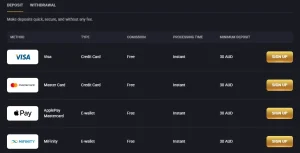
A withdrawal follows the opposite path. The account holder copies a wallet address and enters it in the casino’s withdrawal form. The casino then has to process the request. The blockchain transfer and the operator’s approval are separate steps: a request can remain pending before any Bitcoin is sent, even when the wallet details are correct.
A specialist review reports that most Bitcoin withdrawals are completed within an hour. That is a report from one type of source, not a guaranteed processing time or a service standard. An operator’s approval queue, incomplete checks or batch processing during business hours can extend the wait. The reported transaction time therefore does not establish how quickly a particular operator will approve a withdrawal.
Deposits can also be credited late or fail to appear in the account. Possible operator-side explanations include a reused address, an amount below the required deposit or delayed detection. These are distinct from a transfer being sent to the wrong destination. The first set of issues may concern how the operator identifies or credits a payment; the last concerns where the funds were sent.
A displayed balance is not proof that a withdrawal has been approved, and a pending request does not justify sending more money to release it. If a withdrawal is stuck, depositing additional funds to unlock it adds exposure without resolving the underlying processing issue.
For Australian residents, the transaction mechanics do not change the legal status of the service. Australian law prohibits locally licensed online casinos from providing real-money pokies to residents, and operators discussed in this context hold offshore licences. Australian consumer protection laws do not apply to those offshore operators. This page is affiliate material and may include sponsored links; that disclosure does not alter the legal or financial terms described.
Why a Machine-by-Machine List Cannot Be Verified
A machine-by-machine catalogue depends on being able to identify each entry, not simply attach the Aristocrat name to a broad category. Without specific machine names that can be tied to the company, there is no sound basis for presenting a complete inventory, selecting favourites or ranking titles.
Those are different claims. A complete list asserts that every relevant machine has been captured. A shorter selection still asserts that its entries are identifiable and that the selection has a defensible basis. A ranking adds another requirement: a stated measure by which one title can be placed above another. None of these claims follows from general descriptions of digital pokies or Bitcoin payment methods.
The wording of a list can also conceal uncertainty. A heading such as “all Aristocrat machines” suggests exhaustive coverage; “best Aristocrat machines” suggests comparison. Without identifiable entries and a stated measure, the format supplies confidence that the underlying detail cannot support. A longer list would not correct that problem. It would only make the unsupported claim harder to inspect.
The same distinction applies to references to an Aristocrat slot machine in general. A category label is not an individual title, and a discussion of how online pokies work does not establish which machines belong in a brand-specific catalogue. Treating those as interchangeable would turn a broad description into a specific attribution.
The limitation is one of identification, not a judgement about the quality of any particular game. A catalogue becomes meaningful only when its entries can be named and the basis for inclusion or comparison is clear.
Free Online Play: What the Evidence Establishes
Free play and real-money play are separate modes for online pokies. In free play, the distinction is that play does not use money as the stake; real-money play involves wagering funds. That difference matters, but it does not establish that a particular Aristocrat title can be played online for free.
The phrase “free Aristocrat pokies” can describe an intended format, not a confirmed game or access option. A brand name alone does not show that a title is offered online, that a free mode exists, or that the mode is available in Australia. Those are separate claims, and one cannot be inferred from another.

Free access should also not be confused with a real-money casino service. The existence of a no-money mode would not establish that real-money play is lawful or available to Australian residents. Australian law prohibits locally licensed online casinos from providing real-money pokies to people in Australia.
The practical boundary is narrow: free play is a recognised mode for online pokies, but that general distinction does not verify a free online version of any Aristocrat game. No specific title or platform can be identified on that basis. A claim about a free version would require confirmation of both the game and the mode, rather than a brand name attached to a generic description.
This content is affiliate material and may include sponsored links.
Common Bitcoin Pokie Problems: Verification, Bonuses and Irreversible Transfers
Verification can become a withdrawal condition. Depending on the operator, a second stage may be requested at the first withdrawal or after cumulative deposits reach AUD 2,000–5,000. A specialist review describes possible crypto checks as signing a message from the deposit address or supplying a wallet screenshot showing the sending transaction. These requirements can delay access to funds; they should be distinguished from the blockchain transfer itself.
Bonus terms create a separate calculation risk. Wagering contributions may vary by game: table games can contribute nothing while pokies may contribute fully, and some high-RTP slots may be capped at half contribution. Exceeding a maximum bet limit can void bonus play. If the contribution rules or bet cap are unclear, the advertised bonus value cannot be assessed from its headline amount.
A Bitcoin transfer sent to the wrong address is generally unrecoverable because blockchain transactions cannot be reversed. That is a final loss, not a pending withdrawal. Depositing more money to unlock a stuck withdrawal does not resolve the underlying issue.
This is affiliate material and may include sponsored links. Australian consumer protection laws do not apply to offshore operators. Real-money gambling is for adults aged 18 or over; locally licensed online casinos cannot offer real-money pokies to Australian residents.